
the onsite leadership structure that makes crew throughput repeatable

Crew throughput stays consistent only when the onsite leadership structure that makes crew throughput repeatable sits underneath it: a defined chain from crew lead to foreman to site supervisor, each with a set span of control and a daily reporting rhythm. Warehouse Labor teams that skip this structure see the same crew perform differently every week.
By Humano Team, Logistics & Lumper Specialists
What Does an Effective Onsite Leadership Structure Look Like for a Crew-Based Business
An effective onsite leadership structure gives every job site the same chain of command: a crew lead running the floor, a foreman covering two or three crews, and a site supervisor owning the whole location. That is the onsite leadership structure that makes crew throughput repeatable, because the chain, not any one individual, is what keeps output predictable. When a company builds this structure once and applies it at every location, a new site running the same job type should produce close to the same throughput as the site it was modeled on, whether the crew is loading pallets or hand-stacking a floor-loaded container. The structure is what travels between sites; the people rotate through it.
The correct structure also sets who talks to whom. A crew lead reports to a foreman, a foreman reports to a site supervisor, and only the site supervisor reports back to the client or to company leadership. A crew lead calling the client directly on a required decision is usually the first sign the site needs another layer of leadership before the next location opens.
How Many Workers Should One Crew Lead or Foreman Supervise for the Best Throughput
Span of control for a crew lead usually sits between six and ten workers on a standard lumper or container job, tight enough that the lead can correct a bad loading pattern in real time instead of finding out at the end of the shift. A foreman managing multiple crew leads should own no more than three to four crews at once, roughly 20 to 35 workers total across a location, before response time to a stalled crew starts to slip. For example, a lead running a floor-loaded container needs a lower ratio than one running simple palletized freight, and the right number shifts across different job site settings depending on complexity. Provide crew leads with the tighter ratio on the harder jobs and the wider one on the easier ones, rather than applying one number everywhere the company operates.
What Daily Routines and Check-Ins Keep Crew Output Consistent Across Job Sites
Every site under a working leadership structure runs the same daily rhythm: a short huddle before the first container opens, a mid-shift walk where the crew lead corrects pace or safety issues, and an end-of-shift form the crew lead fills out before leaving. That form does not need to be long. It just needs to capture units moved, any delay, and headcount, in writing, so the site supervisor can compare today's numbers against last week's without asking anyone to remember.
Companies that use on-site whiteboards or a simple paper form at the dock keep this data visible to the whole team, not locked in a phone app only the foreman checks. The team benefits when the same three touchpoints, start, middle, and end, happen the same way at every location, no matter which crew lead is running the shift that day.
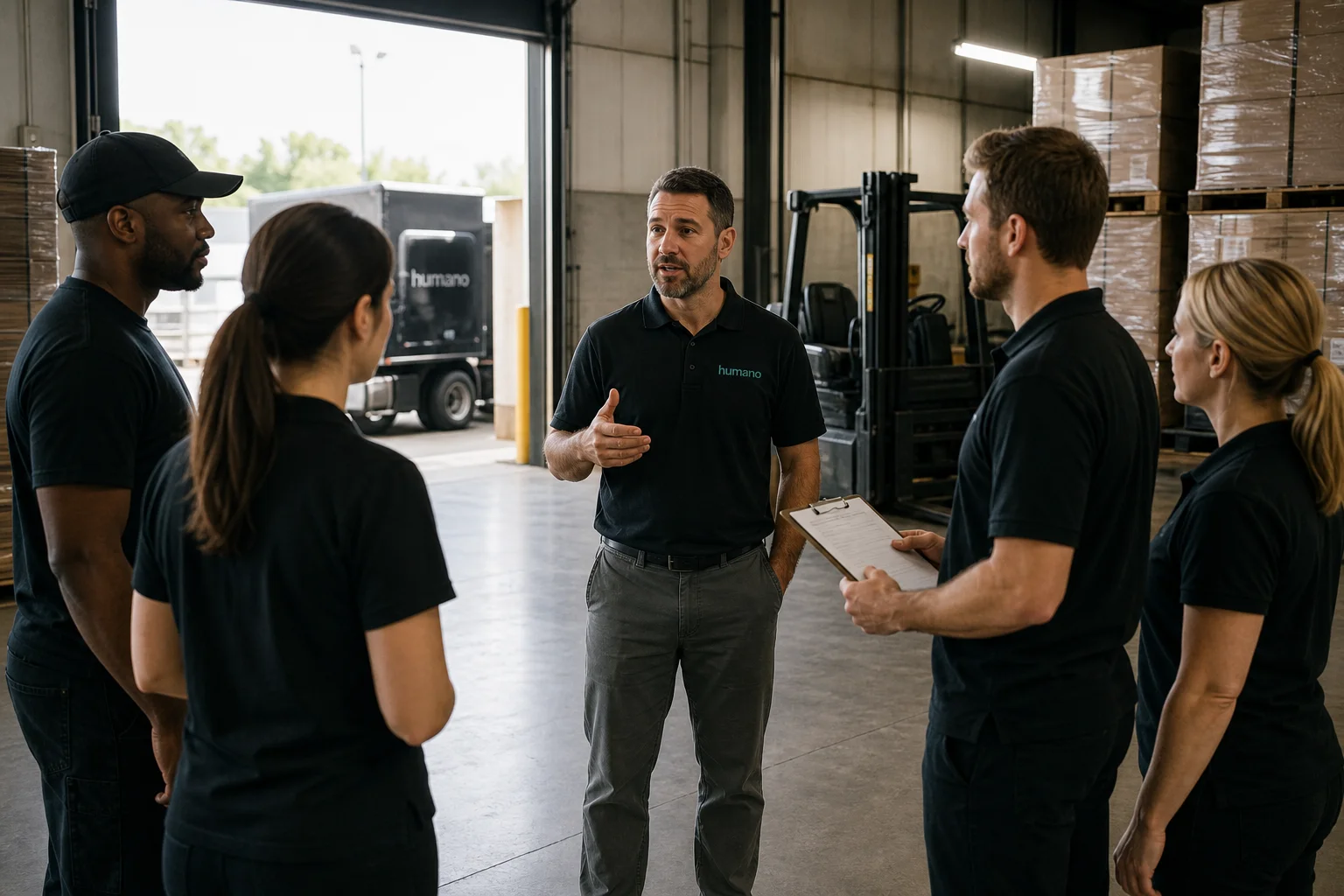
How Do You Train and Promote Crew Leads So Performance Is Repeatable, Not Person-Dependent
A leadership pipeline that depends on one strong personality is not a structure, it is a lucky hire. Companies that keep throughput steady after a crew lead leaves usually run a short, required training path: shadow an experienced lead for two to three shifts, run a crew under direct supervision, then take over a site alone. Logistic Lumper Services crews trained this way hit comparable throughput numbers within their first two weeks working solo, because the training documents the same checklist every new lead studies, not a set of habits one person picked up informally on the job.
Choose candidates for promotion based on the metrics below, not tenure alone, and give each new crew lead a written guide covering the daily routine, the check-in forms, and the escalation path for a stalled crew. In other words, the structure runs the site, not any one person, and a new lead who follows the guide should reach the same throughput as the lead before them within a few weeks of support.
What Metrics Prove Whether the Onsite Leadership Structure That Makes Crew Throughput Repeatable Is Actually Working
Four numbers show whether the structure is doing its job: units or pallets moved per labor hour, the percentage of jobs finished within the scheduled window, damage or mis-load rate, and crew lead turnover. A location where throughput varies more than 10 to 15 percent between crews doing the same job type usually has a leadership gap, not a labor gap, since the workers are drawn from the same pool. Track these by site and by crew lead, not just company-wide, or one strong location can hide a weak one in the average.
How the Onsite Leadership Structure Needs to Change as Crew Count and Job Volume Grow
A structure built for one location rarely survives a jump to five without an added layer. Below roughly 40 to 50 total workers across a company's active sites, a single site supervisor can usually manage every foreman directly, checking in with each one enough to catch a problem early. Past that point, a regional or multi-site supervisor role becomes necessary, because no one person can visit every location often enough to catch a drifting crew before throughput drops. Companies expanding into new markets should add this layer before volume forces it, not after a client complaint does, so the business can still offer onsite support at every location instead of leaning on one senior person to fix every problem across sites that are too far apart to visit in the same day.
Frequently Asked Questions
What's the difference between a crew lead, a foreman, and a site supervisor?
A crew lead runs one crew on the floor and corrects work in real time. A foreman oversees several crew leads across a location, usually three or four crews. A site supervisor owns the whole location, including client communication and the metrics above. The titles are a chain of accountability, not a difference in job type or pay grade alone.
What is the ideal span of control for a crew lead or foreman?
Most crew leads manage six to ten workers well, and a foreman can usually cover three to four crews, or 20 to 35 workers total. Complex jobs like floor loading call for a tighter ratio, while simple palletized work can run a little wider without losing throughput.
How do you fix inconsistent productivity between crews doing the same type of job?
Select the crew lead's throughput numbers first, not the site's, to find the gap. A gap usually traces back to one lead skipping the daily check-in routine or running an informal, undocumented process. Retrain that lead against the same guide every crew lead uses, then confirm the fix by tracking the next two weeks of the same metric.
How often should crew leads report back to management during a job?
Most sites run three touchpoints: a start-of-shift huddle, a mid-shift check on pace and safety, and an end-of-shift form covering units moved and any delay. Longer jobs may add a midday check-in with the site supervisor; shorter jobs can compress to just the start and end.
Can crew throughput be standardized without micromanaging the crew?
Yes. Standardizing the leadership structure, the check-in routine, and the training path controls the variables that actually drive throughput, without dictating how an individual worker moves a pallet. Micromanagement targets the worker; a repeatable structure targets the process around the worker instead.
Build a Leadership Structure That Holds Up at Every Site
A crew is only as consistent as the onsite leadership structure that makes crew throughput repeatable, and that structure has to travel to every new site the same way it worked at the last one. Contact Humano to build a crew leadership plan sized to your current job volume.