
floor-loaded vs palletized container loading: cube, speed and damage
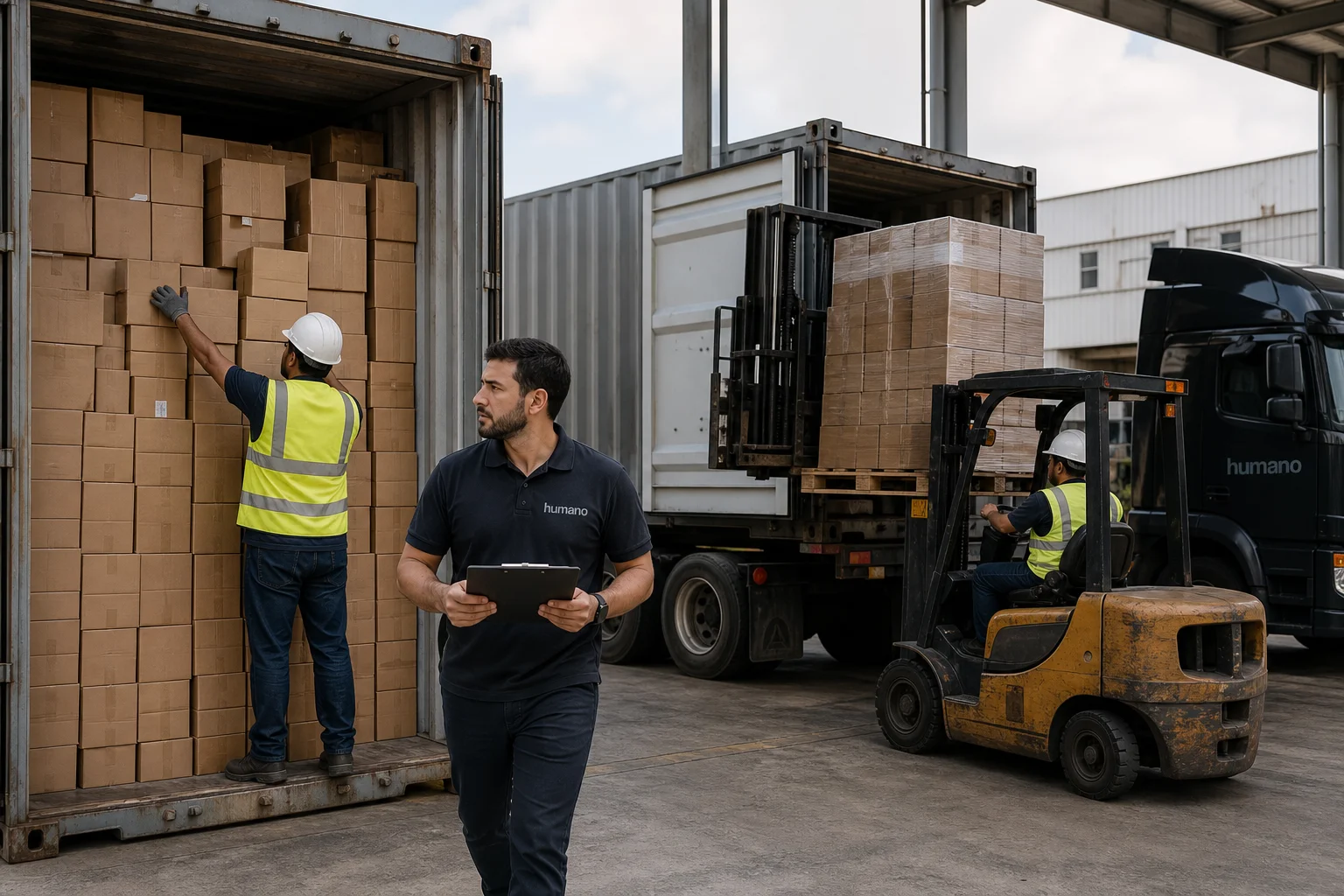
Choosing between floor-loaded vs palletized container loading changes how much freight fits inside a shipping container, how fast the box empties at the dock, and how much product arrives damaged. Floor loading packs cartons directly onto the container floor for maximum cube, while palletized containers trade some space for speed. Our Container Unloaders crews run both setups every week.
By Humano Team, Logistics & Lumper Specialists
What Floor Loading Means Inside a Shipping Container
Floor loading means cartons, bags, or loose cases are stacked directly on the container floor, from wall to wall and floor to ceiling, with no pallets underneath. A floor loaded container can carry noticeably more product than the same box loaded on pallets, because there is no wasted space around pallet decks and no gap left at the top of each stack. Floor loading shows up most often on long ocean routes from overseas factories, where cube matters more at origin than unload speed does once the shipping container finally reaches port. Retailers moving footwear, apparel, and general merchandise lean on floor loading specifically because it lets them fit more units into every container and cut the total number of containers needed for a purchase order. The tradeoff shows up later, at destination: a floor loaded container has to be broken down and unloaded by hand, carton by carton, which is exactly the kind of physical, time sensitive work our Logistic Lumper Services crews are built to handle.
What Palletized Containers Look Like at the Dock
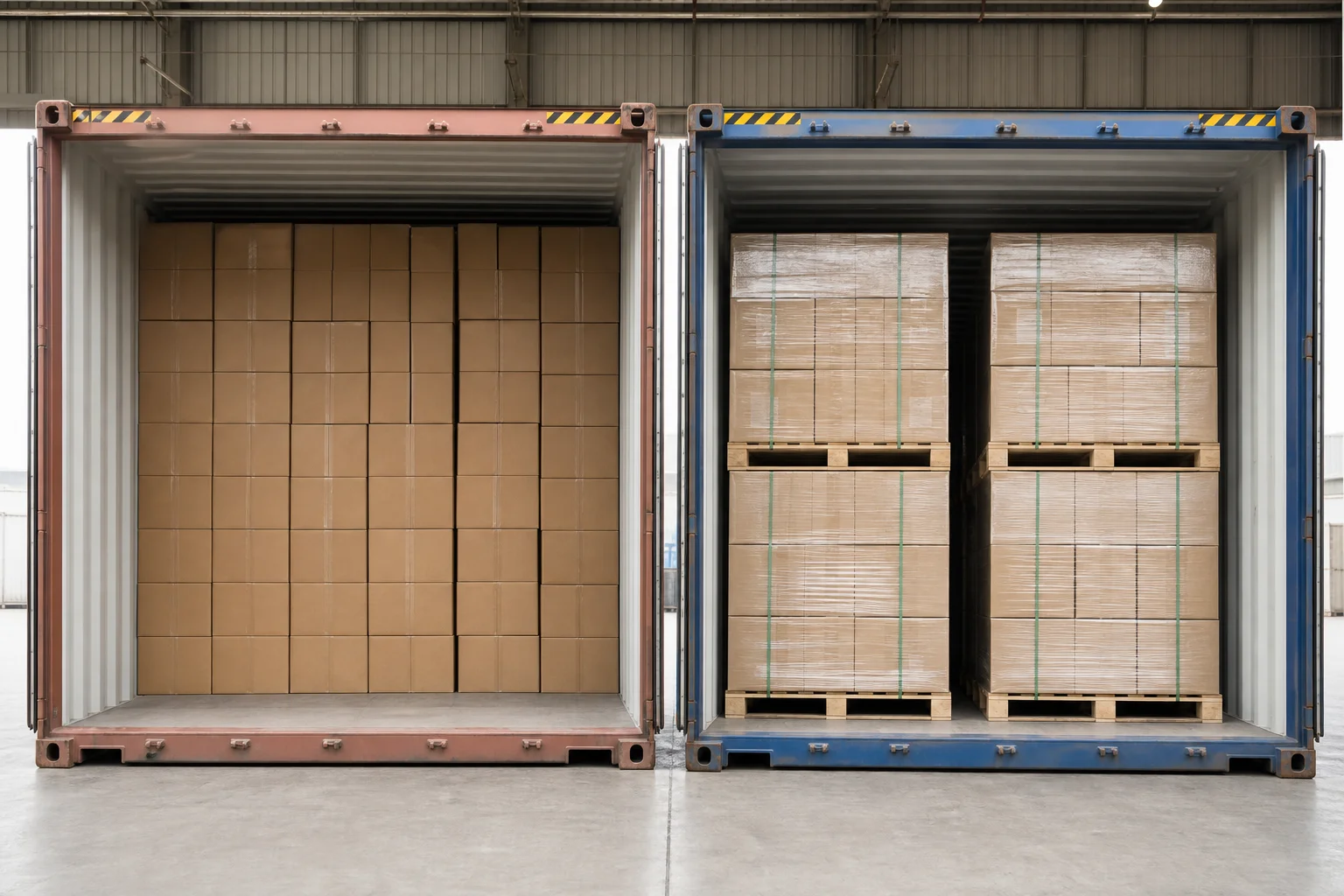
Palletized containers arrive with product already built onto pallets or slip sheets before the shipping container gets sealed at origin. A forklift can drive straight into the container, lift a full pallet in one motion, and set it directly into a trailer or a staging lane without anyone touching an individual case. That is the main appeal of palletized freight: a loaded container built on pallets moves in and out of the dock fast, and it protects product from the crushing and shifting that happens when cases stack directly on top of each other for a three or four week ocean crossing. The tradeoff is cube. Pallets, stringers, and the air gaps around them eat into usable space, so a palletized load rarely matches what a floor loaded container can carry on the same size trailer, which is one reason palletized freight tends to cost more per unit shipped.
Cube Utilization: Which Method Fills More of the Container Floor
When it comes to floor-loaded vs palletized container loading, cube is the real reason floor loading exists in the first place. When cartons are stacked directly on the container floor with no pallets underneath, there is no dead space under a pallet deck and no gap between the top of the load and the container roof. Shippers moving high volume, low value freight, like apparel, footwear, or general merchandise, often choose floor loading specifically to squeeze more product into every shipping container and reduce the number of containers needed per order, which lowers total ocean freight spend. Palletized containers give up some of that cube in exchange for handling speed and product protection, which matters more for fragile, heavy, or high value freight where a single damaged case costs more than the extra container space ever would. Neither approach is universally better. The right call depends on what is inside the container and how it will move once it lands.
Load Unload Speed: Comparing Turn Times at the Dock
Speed is where palletized containers win outright. A crew with a forklift can clear a palletized container in well under an hour, because each lift moves an entire pallet, often dozens of cases, in a single motion. A floor loaded container is a different job entirely: every carton has to be broken down and moved by hand, one at a time, which turns a quick load unload into hours of steady physical work. That is true whether the freight is coming off a truck at a distribution center or straight out of a shipping container at the port. Loading unloading times for floor loaded freight depend almost entirely on crew size and how tightly the load was originally packed, which is why most shippers who choose to floor load also book a dedicated lumper crew before the container ever hits the yard. Trying to unload a floor loaded container with a skeleton crew is one of the fastest ways to blow a dock appointment.
Damage Risk and Labor Costs: The Full Comparison
Floor loading raises damage risk in a specific, predictable way: cartons at the bottom of a tall, tightly packed stack absorb the full weight of everything above them for the length of the trip, and any shifting during transit can crush corners, split cases, or crack fragile contents. Palletized containers spread that weight across a rigid pallet deck and keep cases from bearing directly on each other, which is why fragile or high value freight is rarely floor loaded. Labor costs move in the opposite direction. A floor loaded container needs more people and more time on the dock to load and unload, so labor costs run higher per container even though fewer containers are needed overall for the same order. A palletized load needs fewer hands and less time on site, but the shipper pays for that speed in extra containers and extra ocean freight. Getting crew size right for either method is where dedicated staffing actually pays for itself, and it is worth weighing cost-per-unit lumper crews against hourly temp labor before locking in a crew model for either load type.
Floor-Loaded vs Palletized Container Loading: Choosing the Right Method for Your Freight
Most shippers do not pick one method for every order. High volume, low value goods that can absorb some handling still favor floor loading for the cube savings, while fragile, heavy, or high value freight leans palletized for the protection and the faster load unload turn. Facilities that regularly receive both load types benefit from treating them as two separate staffing plans rather than one generic dock schedule, since a floor loaded container and a palletized container need different crew sizes, different equipment, and different time windows to hit an appointment. Operations that run both through the same facility often lean on labor management software to track productivity across load types, and cross-training lumpers to handle both floor loaded and palletized containers on the same shift keeps crews flexible as the daily mix changes.
Frequently Asked Questions
What does floor loaded mean in a shipping container?
Floor loaded means cartons or cases are stacked directly on the container floor, from wall to wall and floor to ceiling, without pallets underneath. It lets a floor loaded container carry more product per load, but every case has to be loaded and unloaded by hand, which takes more labor than a palletized load moved with a forklift.
Is floor loading cheaper than palletized container loading?
It depends on what you are counting. Floor loading usually needs fewer shipping containers per order because it uses more of the container floor, which can lower freight cost. But labor costs run higher per container since the load unload process is done by hand instead of by forklift, so total cost depends on freight volume, labor rates, and how far the freight travels after the container is unloaded.
Which is faster to unload, floor loaded or palletized containers?
Palletized containers unload faster in almost every case. A forklift can clear a palletized load in well under an hour by lifting full pallets at once. A floor loaded container takes much longer because each carton is broken down and moved by hand, which is why most shippers book a dedicated lumper crew for floor loaded freight before it arrives.
Does floor loading increase damage risk?
Yes, generally. Cartons at the bottom of a tightly packed, floor loaded stack carry the weight of everything above them for the whole trip, and shifting during transit can crush corners or split cases. Palletized containers spread weight across a pallet deck and protect product better, which is why fragile or high value freight is rarely floor loaded.
Can one facility handle both floor loaded and palletized containers?
Yes. Most high volume distribution centers receive both load types regularly and staff each container differently: a floor loaded container gets a larger hand crew, while a palletized container needs fewer people and more forklift time. Matching crew size to load type is one of the biggest drivers of dock efficiency and total labor cost.
Get the Right Crew for Your Next Container Load
Whether you are weighing floor-loaded vs palletized container loading for a single order or your entire program, the right crew size on the right dock day is the difference between a fast turn and a damaged shipment. Talk to our Container Loaders team about staffing your next load unload before the container hits your dock.