
container loading cost per unit: per-container crews vs hourly labor

Container loading cost per unit comes down to one question: are you paying for a load, or paying for time? Dedicated Container Loaders bill per container and finish faster, while hourly crews bill by the clock regardless of pace. The gap between those two models often decides your real shipping costs.
By Humano Team, Logistics & Lumper Specialists
Every shipment starts with the same math: total labor cost divided by items loaded. That's container loading cost per unit in its simplest form, but the inputs behind it vary more than most operations managers expect. A standard container holds a fixed volume, yet the actual payload that fits inside depends on stacking pattern, item dimensions, and how much free space gets wasted around irregular freight. Cargo that loads clean, stacks evenly, and uses the full height of the container drives cost per unit down. Cargo that requires manual handling, hand-stacking, or repeated repositioning drives it up, no matter which labor model you choose.
Shipping container capacity isn't one-size-fits-all either. A standard container and a FEU (forty-foot equivalent unit) hold different volume, which changes how many items a crew can move per hour and how that translates into container loading cost per unit. Comparing rates before you compare crews is what actually makes the difference on your next shipment.
Per-Container Crews: Fixed Cost, Predictable Output
Per-container pricing means you pay a set rate for a completed container load, not for the hours it takes to get there. Our Logistic Lumper Services crews are built around this model: one rate per container, regardless of how many hours the job runs. That structure keeps crew incentive aligned with your goal, get every container loaded correctly, safely, and on schedule, because pay is tied to a finished container load rather than the clock.
This matters most when shipment volume is unpredictable. If a lumper crew finishes a container in four hours instead of six, you still pay the agreed rate, and your cost per unit drops because the same fee gets spread across the same number of items. Container shipping schedules are rarely flexible on the receiving end, so a crew motivated to move fast without cutting corners on stacking or customs paperwork protects both your container loading cost per unit and your dock schedule.
Hourly Labor: Flexible, But Harder to Forecast
Hourly staffing has a real place in warehouse operations, especially for tasks that don't map cleanly to a per-container rate: general handling, inventory prep, or projects with unclear scope. But when the job is container loading, hourly billing turns cost per unit into a moving target. A slower pace, a break mid-shift, or a container that takes longer to plan for stacking all raise your total cost without raising your output.
The unpredictability compounds across a shipping container fleet. If your facility loads a dozen containers a week, hourly prices that look competitive on a rate sheet can produce a very different real shipping cost from one container to the next, and your internal team ends up tracking hours against units just to see the true number. Crews that bill hourly can still do good work, but forecasting your container loading cost per unit this way requires watching actual hours against actual items loaded, container by container. For a deeper breakdown of this trade-off across staffing models, see our guide to staffing the future.
Container Loading Calculator: Comparing the Real Numbers
Run any container loading calculator with your own numbers and the pattern usually holds: as loading time increases, per-container pricing gets more favorable, and as loading time decreases, hourly pricing can look competitive on paper but rarely accounts for overtime, no-shows, or the extra planning time hourly crews need at the start of each shift.
A simple version of the math:
- Per-container crew: flat rate divided by items loaded equals cost per unit, stable regardless of pace.
- Hourly crew: hourly rate multiplied by hours worked, divided by items loaded, equals cost per unit, and it rises with every delay.
Plug in your own numbers, average items per standard container or FEU, your current hourly rate, and your average completion time, then compare the two totals side by side. For most high-volume shippers, the per-container model produces a lower and more predictable container loading cost per unit once you account for a full shift, not just the advertised rate. Tracking this consistently is easier with the right systems in place, which is where our guide to labor management software for warehouses can help teams keep every container's numbers straight. For more on how this same comparison plays out across general lumper staffing, our guide to cost-per-unit lumper crews vs hourly temp labor breaks down the numbers further.
FEU vs Standard Container: How Size Changes Your Cost Per Unit
Container size changes the math on both sides. A standard container (20-foot) holds less volume and fewer items than a FEU (40-foot), so a per-container rate on a standard container needs fewer units to reach the same cost per unit as a larger box. On a FEU, more items fit inside, which usually lowers cost per unit under a per-container rate but adds more hours, and more risk of overtime, under an hourly rate.
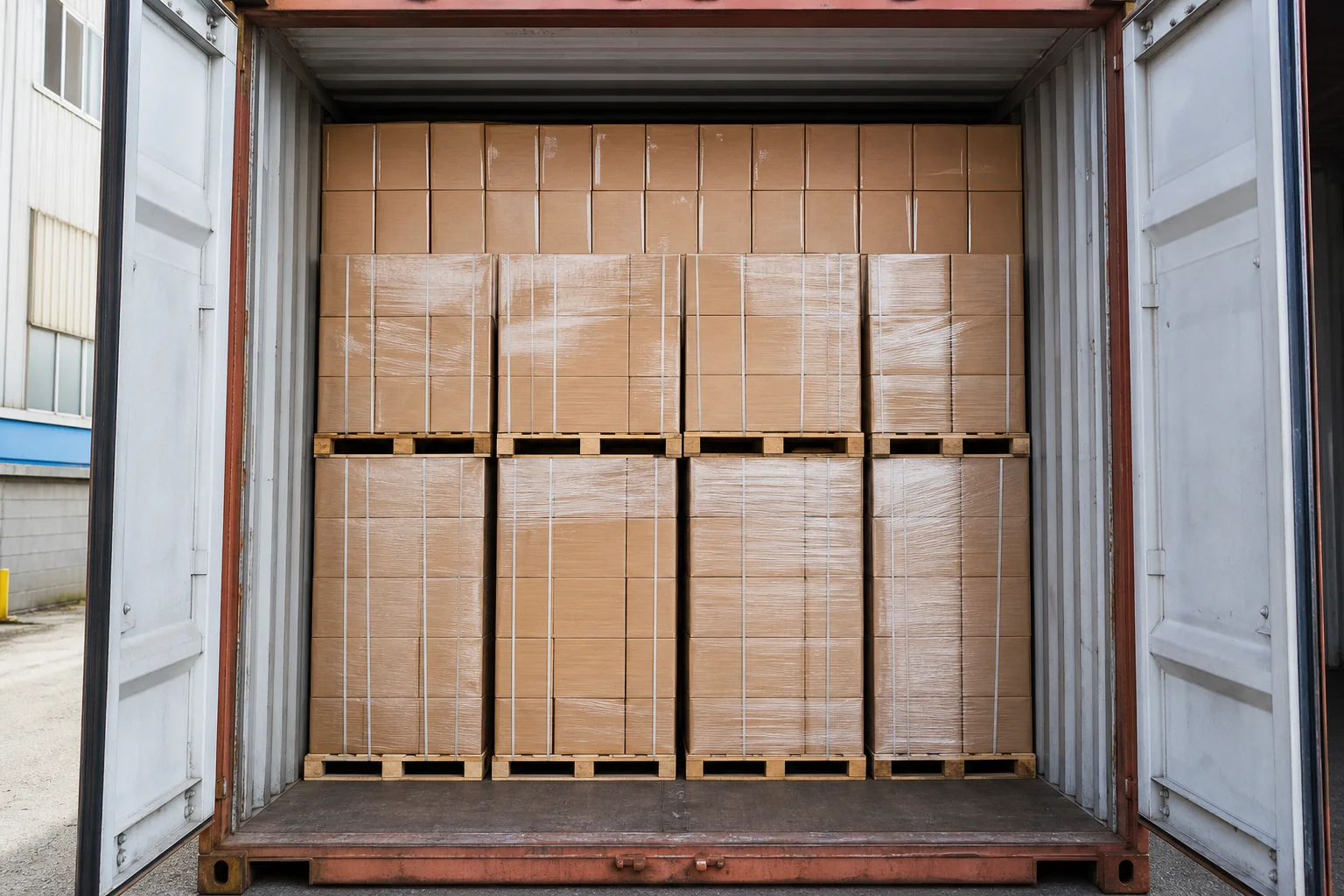
Height matters too. Containers loaded to full height with proper stacking reduce wasted space and raise the number of items per container, which lowers cost per unit under either pricing model. Crews trained specifically in container loading, not general warehouse handling, know how to plan a stacking layout that protects payload and clears customs inspection without gaps that waste space. That expertise is one reason dedicated Container Unloaders and loading crews consistently outperform general labor on both speed and space utilization.
The same fixed rate versus hourly tradeoff shows up across other labor lines too. General lumper crew cost per unit follows the identical logic outside the container yard: a flat per-job rate keeps pricing predictable, while hourly billing drifts with pace, breaks, and planning time.
Frequently Asked Questions
How is container loading cost per unit calculated?
Container loading cost per unit is the total labor cost for a job divided by the number of items loaded. Per-container crews use a flat rate divided by items loaded, which stays stable regardless of pace. Hourly crews multiply the hourly rate by hours worked, then divide by items loaded, so cost per unit rises whenever loading takes longer than planned.
What's the difference between a standard container and a FEU?
A standard container is typically a 20-foot unit, while a FEU (forty-foot equivalent unit) holds roughly double the volume. A FEU generally fits more items, which can lower container loading cost per unit under a per-container rate, but it also takes longer to load, which raises cost under an hourly rate if the job runs past schedule.
Do per-container crews cost more than hourly labor?
Not usually, once you account for the full job. Hourly rates that look lower on paper often produce higher real shipping costs once overtime, slow pace, or planning time gets added in. Per-container pricing keeps cost per unit predictable because the rate is fixed to a completed container, not the hours a crew spends getting there.
Does container height or stacking affect cost per unit?
Yes. Containers loaded to full height with a tight stacking plan fit more items per container, which lowers cost per unit under either pricing model. Poor stacking wastes space, forces partial loads, and increases the number of containers needed for the same shipment, which raises your real cost per unit across the whole job.
Can Humano crews handle customs-ready container loading?
Yes. Our container loading and unloading crews load and stack freight to meet standard customs and carrier requirements, including proper weight distribution and access for inspection. That reduces the risk of holds or repacking fees that quietly raise your container loading cost per unit after the container has already left the dock.
Get a Crew That Protects Your Container Loading Cost Per Unit
Whether you need dedicated per-container crews or flexible support during peak season, Humano staffs container loading jobs to keep your cost per unit predictable. Contact us to schedule a crew, or read our guide to warehouse staffing solutions for more ways to control labor cost across your facility.