
manual vs mechanized container unloading: when each wins
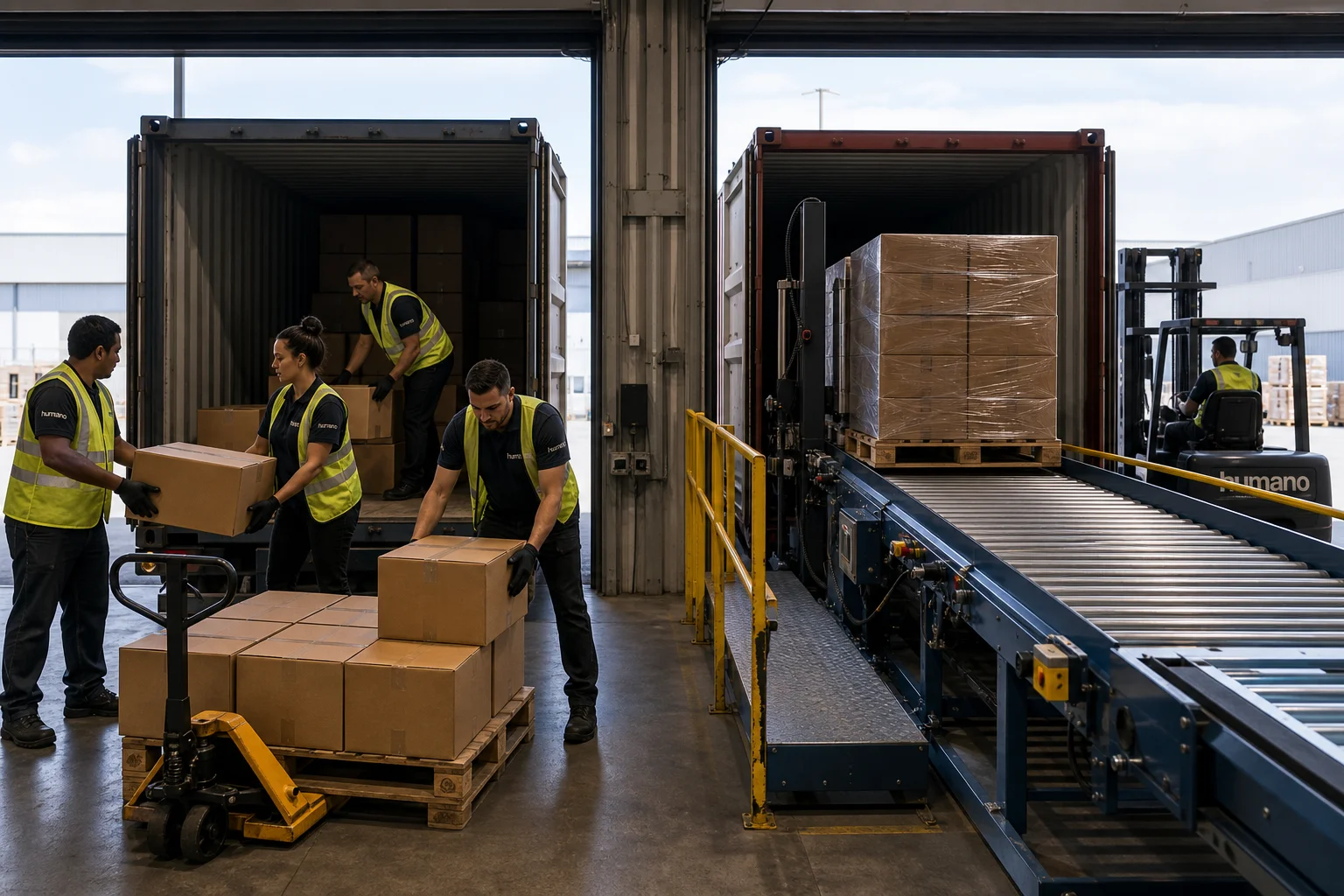
Manual container unloading means a trained crew unloads freight by hand, carton by carton, while mechanized systems rely on conveyors and automated unloading equipment to do the work. Neither method wins every job. The right call depends on cargo type, dock capacity, and how fast the load needs to move, and Humano's Container Unloaders crews run both.
By Humano Team, Logistics & Lumper Specialists
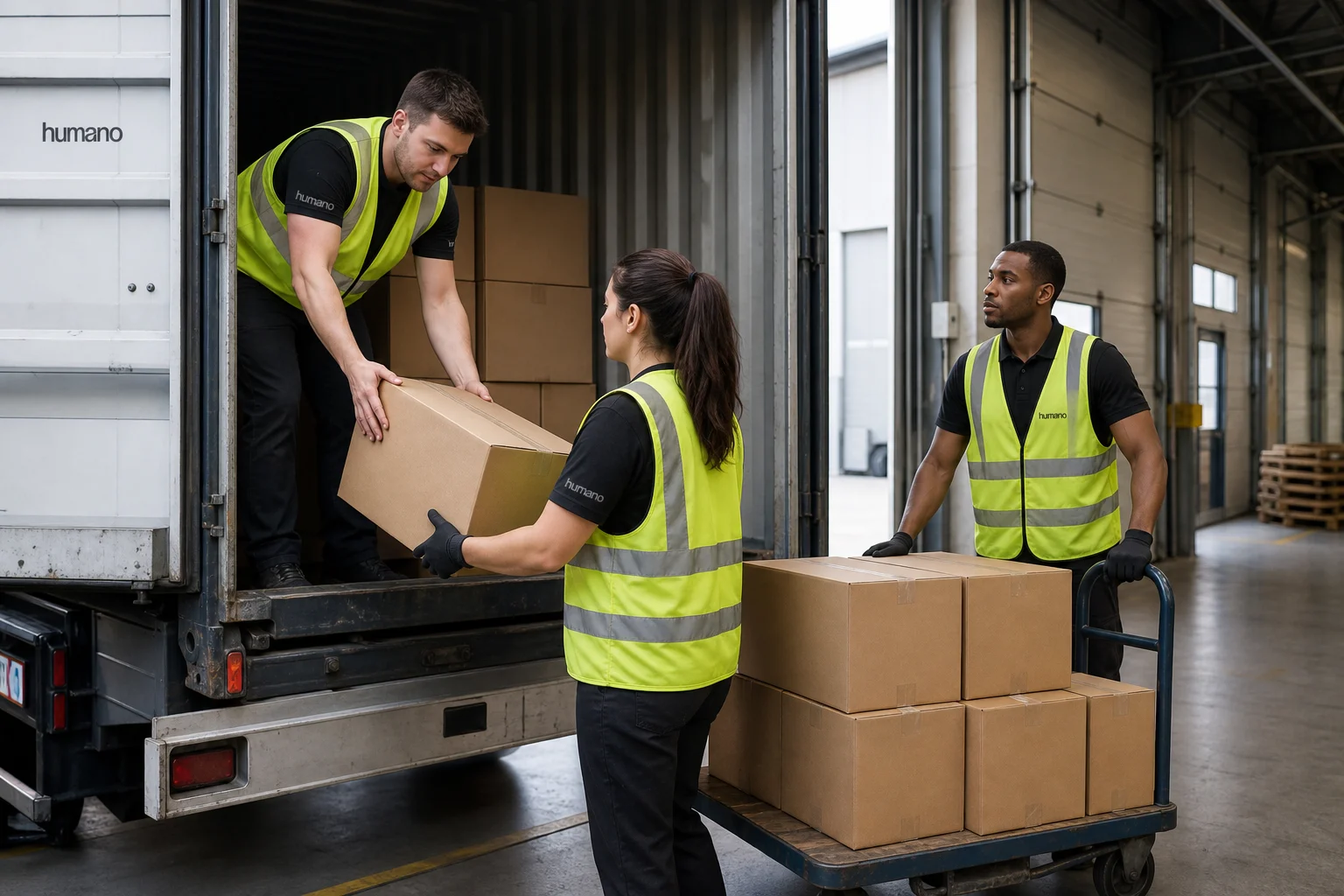
Manual container unloading is the process of a logistics crew physically removing cargo from a shipping container by hand, box by box or case by case, rather than using machinery to pull pallets or cartons out automatically. It is the standard method for floor-loaded containers, where boxes are stacked directly against the container walls with no pallets or slip sheets to grab with a forklift.
How Many Workers Does It Take?
Most manual container unloading jobs run with a crew of three to six workers, depending on the container size, the weight of individual cartons, and the unloading deadline. A standard 40-foot floor-loaded container packed tight can take a four-person crew roughly two to three hours to clear, while lighter, palletized loads move faster with a smaller crew. Humano's Logistic Lumper Services team scales crew size to the load, so warehouses are not paying for six workers on a job that four can finish.
Manual vs Mechanized Container Unloading: How They Differ
The core difference between manual and mechanized container unloading comes down to who, or what, is doing the lifting. Container loading and unloading decisions both hinge on whether freight is floor-loaded or palletized, and both approaches sit on the same spectrum of loading and unloading methods that warehouses choose between based on cargo type and dock layout.
- Manual unloading uses hand labor to remove and sort cargo, works on any container configuration, and adapts on the fly to damaged, mixed, or irregularly stacked freight.
- Mechanized unloading uses automated container unloading equipment, conveyor belts, or robotic arms to pull palletized freight out of a container and onto a dock in one continuous motion, cutting labor hours on high-volume, uniform loads.
Automation changes the equation mainly on repeat freight: warehouses running the same product through automated systems day after day get more value out of the equipment than a distribution center handling one-off, mixed shipments, and the lower-volume solution is usually still a manual crew.
When Manual Unloading Wins and When Mechanized Makes More Sense
When Manual Container Unloading Works Better
Manual container unloading wins when cargo is floor-loaded, mixed SKU, fragile, or irregularly shaped, situations where a machine cannot safely grip or sort the freight. It also wins on low-volume or one-time shipments, where the cost of setting up unloading equipment outweighs the labor cost of a crew. Retailers and manufacturing facilities receiving occasional floor-loaded containers usually find manual unloading is the more practical choice.
When Mechanized Unloading Makes More Sense
Mechanized container unloading makes more sense on high-volume, palletized freight moving through the same dock on a regular schedule. Distribution centers running the same SKU through automated unloading equipment day after day recover the equipment cost quickly through reduced labor hours, better efficiency, and faster dock turnaround. Mechanized systems also help when warehouse capacity is tight and every extra minute a truck sits at the dock costs money.
Can Floor-Loaded Containers Be Unloaded by Machine?
Floor-loaded containers, freight stacked directly on the floor without pallets or slip sheets, generally cannot run through standard mechanized unloading equipment, which is built to grip pallets rather than loose cartons. Some specialized unloaders can handle floor-loaded freight, but they are expensive and still typically need an operator to manage jams and irregular stacking. That gap is also why floor-loaded freight typically costs more and takes longer to clear than palletized loads, a difference that shows up directly in cube utilization and damage rates between the two loading styles.
Cost and Time: Manual vs Mechanized Unloading
Is Manual Container Unloading Cheaper Than Mechanized?
On a single shipment, manual container unloading is usually cheaper than mechanized unloading, since it needs no capital investment in unloading equipment, only labor. Mechanized systems cost more upfront but usually lower the per-container cost over hundreds of loads, because the equipment keeps working long after it pays for itself. For a warehouse running one or two containers a week, manual crews are typically the lower-cost solution; for a distribution center running dozens of containers daily, the math usually flips in favor of automation.
How Long Does Manual Unloading Take Compared to Mechanized?
Manual container unloading typically takes two to four hours for a standard 40-foot container, depending on crew size and cargo density. Mechanized unloading can clear the same container in under an hour when the freight is palletized and uniform, but that speed advantage narrows or disappears on mixed or floor-loaded freight, where machines slow down or cannot run at all.
Cargo Types That Need Manual Handling
What Types of Cargo Need Manual Unloading Instead of Machine Unloading?
Fragile goods, mixed SKU pallets, floor-loaded cartons, oddly shaped freight, and cargo with inconsistent weight distribution generally need manual container unloading rather than machine unloading. Machines are built for repetition and uniform loads; anything that requires a judgment call on how to lift, sort, or stack belongs with a trained crew.
Is Manual Unloading Safer for Fragile or Mixed Cargo?
Yes. Manual container unloading is generally safer for fragile or mixed cargo because a worker can inspect, adjust grip, and reroute damaged cartons in real time, something automated unloading equipment is not built to do. Crews trained in safe freight handling procedures also catch shifted or leaking freight before it reaches the warehouse floor, cutting the damage claims that come with rougher, faster machine handling.
How Do I Decide Between Manual and Mechanized Unloading for My Shipment?
Start with three questions: is the freight floor-loaded or palletized, how often does this container type come through the dock, and how much does an hour of dock time cost. Floor-loaded or one-off shipments usually point toward manual container unloading. High-volume, palletized, repeat freight usually points toward mechanized unloading, or a hybrid approach where a crew handles the exceptions an automated system cannot. Most warehouses land somewhere in between, running manual crews as the default and layering in automation only where volume and cargo consistency justify the equipment cost. This practical set of questions holds up whether the site runs one dock door or twenty, and it is the same guide Humano crews use when scoping a new job.
Frequently Asked Questions
Is manual container unloading still used at high-volume warehouses? Yes. Even warehouses with mechanized unloading systems keep manual crews on hand for floor-loaded, damaged, or mixed-SKU containers that automated equipment cannot safely process, so most sites run a mix of both methods rather than one exclusively.
Does mechanized unloading reduce cargo damage? It depends on the cargo. Mechanized unloading can reduce damage on uniform, well-secured palletized freight, but it can increase damage on fragile or irregularly packed cargo, since the equipment applies consistent force regardless of what is inside each carton.
How much warehouse space does mechanized unloading equipment need? Automated unloading equipment typically needs a dedicated dock lane with clearance for the conveyor or unloader arm to extend into the container, which some older or smaller warehouses were not built to accommodate without a dock modification.
Can a single crew handle both manual and mechanized unloading? Yes, in many cases. Crews cross-trained on both methods can run manual unloading on floor-loaded containers and operate mechanized equipment on palletized freight during the same shift, which is how most distribution centers staff a mixed unloading operation.
Get a Lumper Crew That Handles Both Manual and Mechanized Freight
Humano staffs manual container unloading crews for floor-loaded, fragile, and mixed cargo, and scales up for high-volume palletized freight when the job calls for it. Contact our team to schedule a crew for your next container.