
pick and pack cost per unit at a new jersey fulfillment center
Understanding pick and pack cost per unit at a New Jersey fulfillment center depends on labor efficiency, facility overhead, and the complexity of your SKU catalog. Operations managers evaluating Services in the region need clear benchmarks before committing to a contract. This guide breaks down what drives per-order rates and where you can control costs.
By Humano Team, Logistics & Lumper Specialists
What Goes Into Pick and Pack Cost Per Unit
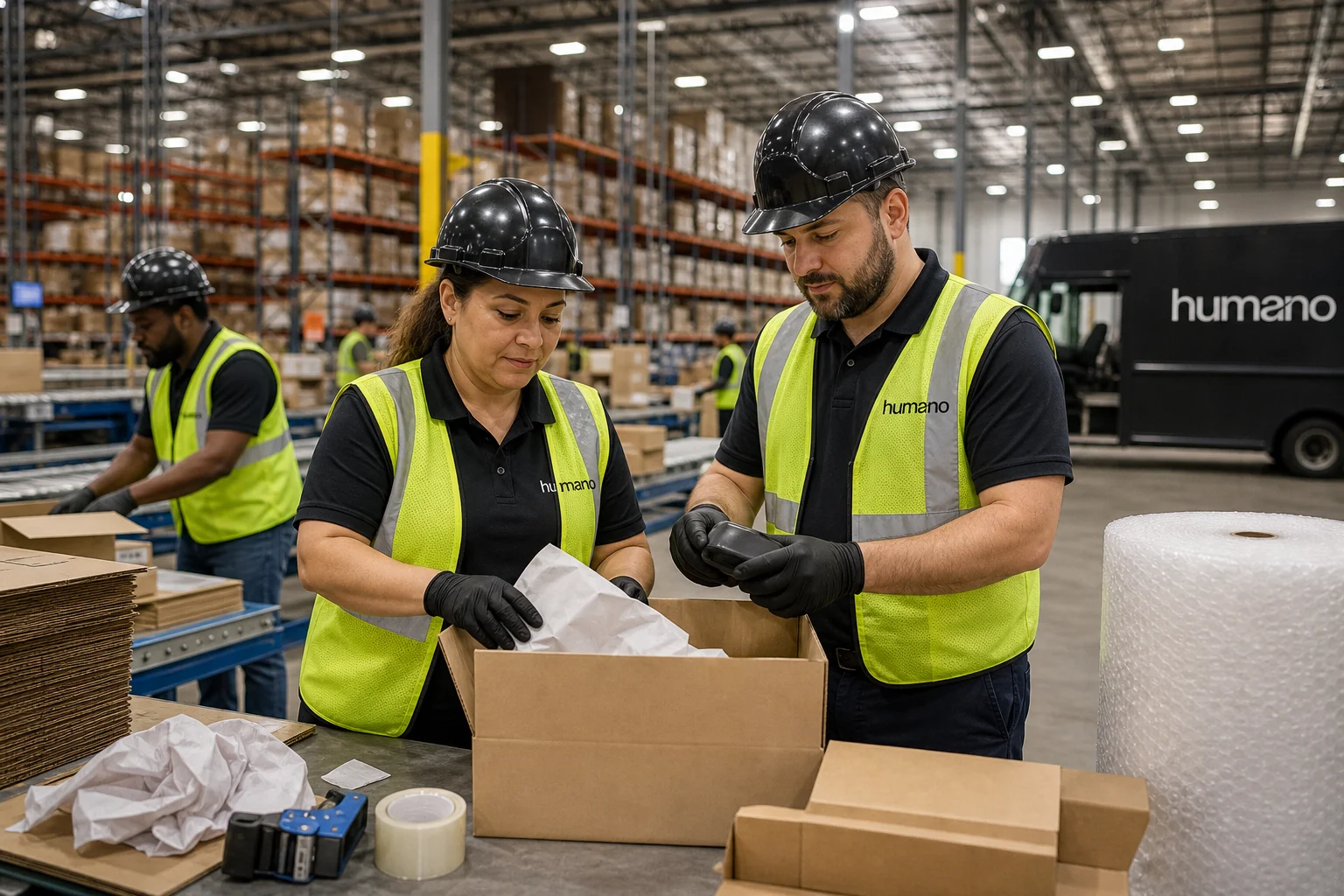
Pick and pack cost per unit at a New Jersey fulfillment center is driven by a handful of operational variables that operations managers can directly influence. The pick pack process is the labor-intensive core: a worker pulls an item from a shelf, assembles the order, applies packaging materials, and prepares it for shipment. Every step in that sequence adds to your per order cost.
The main cost drivers:
SKU complexity. Single-SKU orders with uniform packaging materials move faster than multi-SKU orders requiring custom inserts, special wrapping, or fragile handling procedures. The type of order complexity you handle sets your baseline labor rate.
Order volume. Higher throughput generally reduces cost per unit through better labor utilization and zone picking optimization.
Packaging materials. Boxes, void fill, labels, and custom inserts all contribute to per-order costs. These are either bundled into the pick rate or charged as a pass-through, depending on the provider.
Inventory management setup. How your SKUs are slotted, replenished, and tracked within the warehouse management system directly affects picking speed and the rate of picking errors that trigger costly rework.
Most New Jersey fulfillment services price pick pack work on a per-order or per-unit basis, with add-on fees for kitting, special handling, or returns processing.
Why New Jersey Is a Strategic Fulfillment Hub
New Jersey's geographic position is one of the clearest arguments for placing your fulfillment center there. The region provides direct delivery paths to one of the most densely populated corridors on the East Coast, shortening transit times and supporting home delivery windows that improve the customer experience. For brands prioritizing delivery dates over carrier cost, this geography pays off quickly.
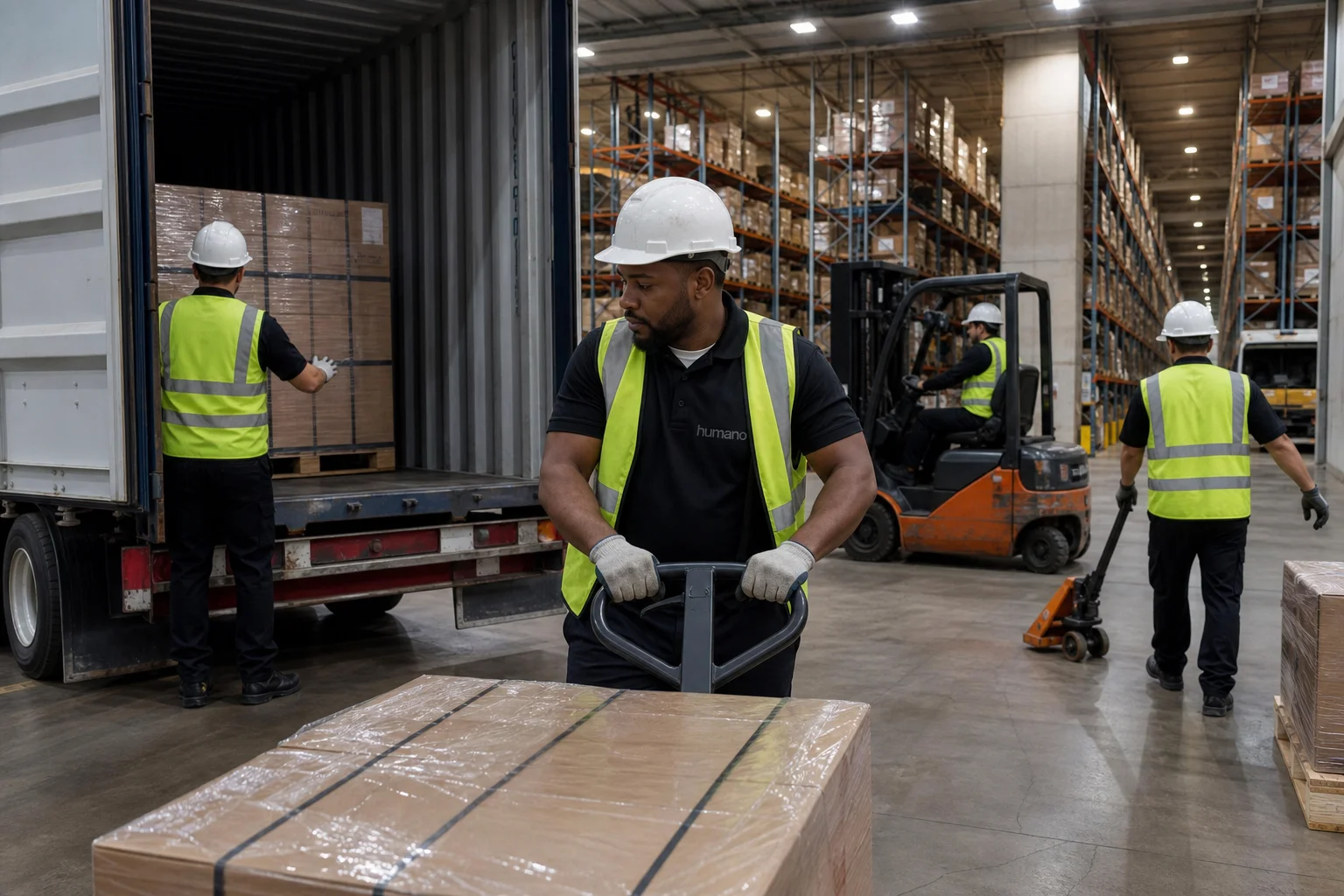
Port access strengthens the case further. Freight arriving through the Port of Newark and Port Elizabeth moves quickly from vessel to warehouse when the receiving facility is close. Each point of entry into the fulfillment center, from inbound container receiving to outbound order staging, runs more efficiently when the facility sits near port infrastructure. Operations that use Container Unloaders to process inbound containers efficiently can shave meaningful time and cost off the receiving cycle, putting goods on the pick face sooner.
For brands building direct-to-home shipping programs, the selection criteria that matter most when evaluating a regional hub include delivery window coverage, proximity to port and highway infrastructure, and the depth of the local labor pool. New Jersey scores well on all three, which is why so many DTC brands weigh it heavily when picking a fulfillment partner.
Breaking Down the Per-Order Rate
Fulfillment services providers structure pricing differently, but most per order quotes include the same core components. Understanding each one lets you compare providers with an open mind and make a real decision based on total cost rather than the headline pick rate.
Receiving fees. Charged per pallet or per SKU when inbound freight arrives at the fulfillment center.
Storage fees. Billed monthly per bin, shelf, or pallet position based on your inventory management footprint. Higher SKU counts and slower-moving products drive this line up.
Pick and pack fees. The core labor cost, priced per item picked or per order fulfilled. Multi-unit orders typically carry a per-item fee after the first unit, so total pick pack cost scales with average order size.
Packaging materials. Either included in the per-order rate or billed separately. The type of packaging materials matters: custom branded boxes cost more than plain corrugated stock.
Account management. Some providers charge a monthly account management fee covering access to warehouse management software, reporting dashboards, and dedicated support contacts.
Shipping. Usually passed through at negotiated carrier rates. Multi-carrier strategies create leverage in negotiations.
Operations managers can pick and choose from among these fulfillment services components when evaluating providers. A lower headline pick rate can be offset by high packaging materials fees or rigid account management minimums, so total cost is the right measure.
How Warehouse Management Affects Your Cost Per Unit
Efficient warehouse management is the biggest lever on per-unit cost that most operations managers overlook when evaluating fulfillment center options. Warehouse design and slotting strategy both affect how long each pick takes, and poor replenishment cycles add friction to every pick pack order processed.
High-performing fulfillment centers use slotting strategies that place fast-moving SKUs in the most accessible locations, reducing walking time per order. A strong warehouse management system tracks inventory in real time and translates that data into action quickly, so picking staff are not hunting for items listed as in-stock but physically misplaced. Facilities with active slotting review processes consistently outperform those using static bin assignments on labor time per pick, according to benchmarking research published by the Warehousing Education and Research Council (WERC, 2022).
Error-free picking also reduces the cost of returns processing, which adds up when mis-picks or damaged goods require credit, re-ship, or restocking labor.
Warehouse roles directly shape throughput and cost control, from how pickers are cross-trained to how shifts are structured around peak volume. The warehouse duties breakdown lays out how each role feeds into cost control for operations managers benchmarking their fulfillment setup.
Scaling Order Fulfillment Without Losing Cost Control
As order fulfillment volume grows, the relationship between scale and per-unit cost should improve, but that improvement is not automatic. Adding volume without restructuring labor, updating slotting, or renegotiating packaging materials contracts simply amplifies existing inefficiencies.
Key levers for scaling while holding cost:
Labor model. Dedicated teams with consistent crew composition outperform rotating temp workers on speed and accuracy. Familiarity with the SKU catalog and facility layout reduces picks that miss, cuts training overhead, and keeps throughput predictable. Dedicated crews typically win on total cost once training and error reduction are factored in, not just the hourly rate. The lumper crew cost breakdown lays out the math behind each model.
Batch picking. Collecting multiple orders in a single pass through a warehouse zone reduces travel time and keeps pickers away from cross-zone bottlenecks.
Kitting upstream. Pre-assembling high-velocity bundles before peak demand periods reduces per-order assembly time when volume spikes.
Carrier mix. Single-carrier dependency is a pricing vulnerability. Multi-carrier strategies give you negotiating leverage and backup capacity during peak seasons.
Automation and labor management software are reshaping cost structures across modern fulfillment operations, from voice-directed picking that cuts training time to labor management systems that flag underperforming shifts before they inflate per-unit cost. Facilities that pair these tools with a strong labor model tend to hold cost per unit steady even as volume climbs.
Frequently Asked Questions
What is the typical pick and pack cost per unit at a New Jersey fulfillment center?
Per-unit rates vary based on order complexity, volume commitments, and provider type. Every fulfillment center structures its pricing differently, and a rate created for one brand's SKU profile does not translate directly to another. The most accurate number comes from requesting a quote based on your specific order profile, average items per order, and monthly volume.
Does packaging materials cost get included in the per-order rate?
It depends on the provider. Some fulfillment services bundle basic packaging materials into the per-order fee. Others bill them separately at cost-plus margins. Clarify this before signing a contract and ask whether supplying your own branded packaging reduces this line item.
How does inventory management software affect my fulfillment costs?
A strong warehouse management system reduces picking errors, improves replenishment timing, and provides real-time inventory visibility. These factors reduce labor hours per order and shrink the rate of costly returns caused by mis-picks or damaged goods, which lowers your effective cost per unit over time.
What is account management and do I need it?
Account management typically means a dedicated contact at the fulfillment center who handles escalations, monitors performance metrics, and coordinates changes to your SKU catalog or packaging setup. For brands with complex operations or high order volumes, a dedicated account management contact helps catch problems before they affect the customer experience.
How does New Jersey geography affect customer experience?
New Jersey's location within the Northeast Corridor allows ground shipping to reach major East Coast population centers faster than from Midwest or Southeast locations. Shorter delivery windows have a direct impact on customer experience, reducing delivery complaints and supporting repeat purchase rates.
Partner With a Fulfillment Team Built for This Work
Controlling pick and pack cost per unit at a New Jersey fulfillment center starts with choosing a partner whose labor model, warehouse management practices, and fulfillment services align with your operational requirements. Humano provides the trained crews and logistics expertise to keep your fulfillment center running at the throughput and accuracy levels your business demands. Connect with the Warehouse Labor team to discuss your requirements.