
dtc pick and pack cost per unit: the managed cpu staffing model

DTC pick and pack cost per unit pricing turns fulfillment labor from a variable cost into a predictable line item. The managed CPU staffing model gives direct-to-consumer brands a fixed rate per unit processed, so every order carries a known cost before it ships. Explore Services built for the logistics demands of high-volume DTC fulfillment.
By Humano Team, Logistics & Lumper Specialists
The managed CPU (cost per unit) model is a fulfillment pricing structure where a brand pays a fixed rate for each unit moved through the pick pack workflow, rather than an hourly rate for labor time. Inside a fulfillment center, that rate covers picking items from bin locations, packing them to specification, and staging shipments for carrier pickup.
For DTC brands, this distinction matters. Hourly billing disconnects labor cost from output. A crew that picks 400 units in six hours costs the same as one that picks 250. Under a managed CPU arrangement, the rate per unit creates alignment between the staffing provider and the operation. When throughput rises, the math holds. When volume dips, cost per order stays proportional to actual work completed, not hours on the clock.
Logistic Lumper Services apply the same cost-per-unit principle to container loading and unloading, where labor is deployed and billed against measured output rather than clock time.
Breaking Down DTC Pick and Pack Cost Per Unit Components
Understanding what sits inside a CPU rate helps operations managers evaluate quotes and identify hidden costs before signing a fulfillment contract.
Pick and Pack Fees
The core pick pack fee covers the labor to locate each item in the fulfillment center, pull it from the correct bin, and place it into the correct shipping container. This is typically quoted per unit, per order, or as a blended rate that accounts for average items per order. Brands with multi-item orders should understand whether the fee scales per unit or is capped per order, because the distinction significantly affects fulfillment costs at volume.
Per Pallet Handling and Storage
Most managed CPU agreements include a per pallet per month rate for inventory storage. This covers the physical space your products occupy in the fulfillment center and the labor to receive inbound freight, organize it by SKU, and make it accessible for pick pack operations. Brands carrying large safety stock or bulky items need to model per pallet costs alongside per-unit pick fees to calculate total fulfillment costs accurately.
Carrier Rates and Packaging Accuracy
CPU labor pricing is always separate from carrier rates, the fees charged by shipping carriers for final-mile delivery. However, managed CPU staffing affects carrier rates indirectly. Correctly labeled packages with accurate weights ship without dimensional surcharges. Packaging errors generate carrier rate adjustments, return labels, and added shipping costs that raise the true cost per order well above the stated CPU figure.
This same cost per unit versus hourly tradeoff shows up across warehouse labor generally, not just pick and pack: cost per unit crews tend to hold their pricing advantage over hourly temp labor as volume scales.
How DTC Brands Use CPU Pricing to Control Fulfillment Costs
Direct-to-consumer brands across apparel, beauty, supplements, and subscription boxes operate on margins where fulfillment pricing is a strategic decision, not just an operational one. When a product's contribution margin is measured in single digits, the cost per order at the fulfillment center level matters.
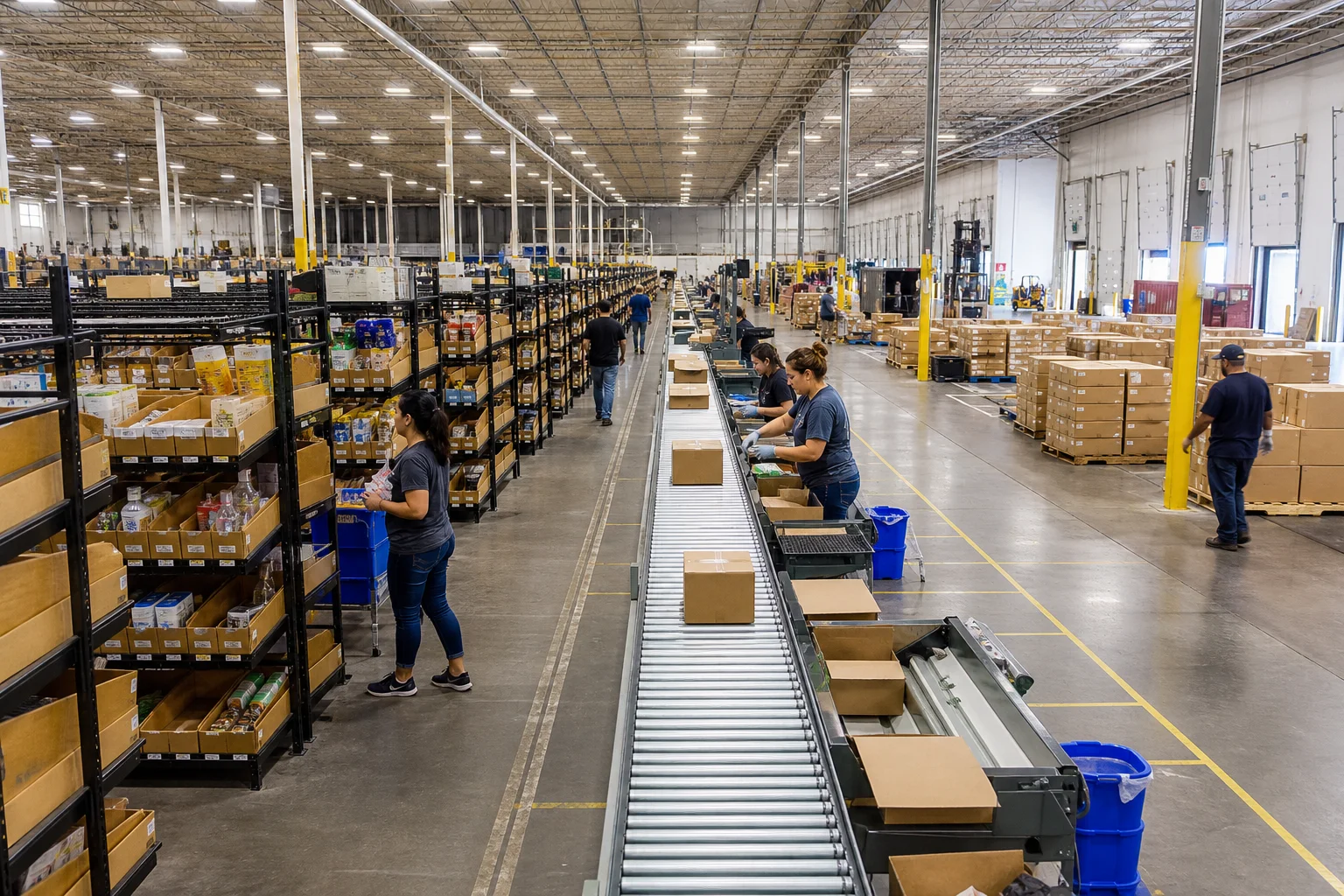
CPU pricing gives DTC brands three advantages hourly staffing rarely delivers.
Predictability at the order level means finance teams can model margin before a campaign goes live. If a product retails at a set price and the fulfillment cost per order is a known figure, contribution margin is calculable. With hourly staffing, that same math requires estimating throughput rates and hoping they hold under promotional volume.
Accountability comes from the structure itself. When a fulfillment partner earns revenue per correctly processed unit, quality control becomes a business priority tied directly to the provider's margin. That alignment is absent in hourly arrangements, where throughput accuracy is a management effort rather than a financial incentive.
Scalability without overhead creep. Established DTC brands running promotions or expanding their SKU line need labor capacity that grows with volume. Managed CPU contracts typically accommodate surge volume within a defined notice window, so brands avoid renegotiating rates mid-peak or absorbing idle-time costs during slow periods.
Account Management as a CPU Performance Lever
Managed CPU pricing delivers its full value when backed by dedicated account management. An account manager embedded in the fulfillment relationship serves as the operational link between a brand's volume forecasts and actual staffing deployment on the warehouse floor.
Effective account management in a CPU model includes weekly throughput reviews tied to planned order volume, proactive labor planning ahead of promotions and new SKU launches, root cause analysis when return rates rise above baseline, and transparent reporting so brands can verify that billed units match processed orders.
Without this layer, CPU pricing can become opaque. A rate that looks competitive on a quote may not reflect actual throughput if account management is not catching staffing mismatches or processing bottlenecks before they compound into billing disputes or service failures.
Brands evaluating fulfillment partners should weigh more than pricing structure alone. A broader fulfillment partner checklist covers the questions that matter most before committing to a managed CPU arrangement, many of which bear directly on how account management is structured.
How Managed CPU Staffing Helps Reduce Costs Over Time
The immediate appeal of CPU pricing is cost predictability. The longer-term value is the structural pressure it creates to reduce costs through operational improvement rather than rate renegotiation.
Accuracy, Return Rates, and the Real Cost Per Order
High return rates are one of the largest hidden cost drivers in DTC fulfillment. A wrong item shipped, a damaged product, or a mislabeled package generates a return, a replacement shipment, and often a customer service interaction. Each event carries a real cost that does not appear in the stated CPU rate but directly increases cost per order across the operation.
When managed CPU staffing creates accountability for throughput accuracy, quality control gets resourced as a business function. Providers operating under CPU agreements invest in pick accuracy protocols and pack-out verification because their margin depends on correct output, not just output volume. The result is lower error rates and lower return rates over time, which benefits both the provider and the brand.
Fulfillment Pricing and Ecommerce Growth
For established ecommerce brands scaling from tens of thousands to hundreds of thousands of units per month, fulfillment pricing clarity is essential to financial planning. CPU models let DTC brands set a cost floor on a per unit basis and build their growth model around it, rather than absorbing labor cost volatility each month. That stability enables long-range volume commitments, which can qualify brands for improved carrier rates through consolidated shipping programs.
Warehouse staffing models are shifting in parallel, moving away from purely hourly crews toward structures that tie labor cost to measurable output. Brands scaling ecommerce volume benefit from providers who apply that same output-based thinking across the entire fulfillment center, not just pick and pack, so cost per unit stays consistent as complexity grows.
Frequently Asked Questions
What is a typical dtc pick and pack cost per unit breakdown?
Managed CPU rates vary by order complexity, SKU count, kitting requirements, and fulfillment center location. A complete dtc pick and pack cost per unit quote should separate pick pack fees from per pallet storage, carrier rates, kitting charges, and return processing costs. Comparing providers on bundled rates without this breakdown makes it difficult to identify where cost differences actually originate.
How does per pallet per month storage affect total fulfillment costs?
Per pallet per month storage is billed separately from pick pack CPU rates and reflects the space your inventory occupies in the fulfillment center plus the labor to receive and organize inbound freight. Brands carrying deep safety stock or slow-moving SKUs should model storage turns when evaluating total fulfillment costs, since per pallet fees can represent a significant share of the true cost per order for low-velocity products.
Can managed CPU staffing handle kitting and custom packaging?
Yes. Most managed CPU agreements accommodate kitting, bundle assembly, and custom packaging at an additional per unit rate that reflects added labor time and materials handling. Brands running subscription boxes or promotional bundles should discuss kitting pricing during the account management onboarding phase, before inventory arrives at the fulfillment center, to avoid unexpected line items in the first billing cycle.
How does CPU pricing help reduce return rates?
CPU staffing creates accountability for output accuracy. When a provider's revenue is tied to correctly processed units, pick accuracy and pack-out verification become built-in operational priorities. Lower error rates directly reduce return rates, which lowers the true cost per order across the entire fulfillment operation. Brands should ask prospective providers how accuracy is measured and reported as part of standard account management.
What should operations managers look for in account management within a CPU arrangement?
Look for transparent reporting on throughput versus billed units, proactive staffing adjustments ahead of volume peaks, and a clear process for reviewing carrier rates and return data together. Strong account management surfaces operational issues before they compound and identifies opportunities to reduce costs on a per order basis over time.
Scale Your DTC Fulfillment with the Managed CPU Staffing Model
If your team is evaluating managed CPU staffing for DTC pick and pack operations, the starting point is a clear picture of your current order volume, SKU complexity, and true cost per order today. Contact the Humano team to discuss how a managed CPU staffing model can support your fulfillment center needs and growth targets.