
savannah dtc fulfillment: pick and pack cost per unit near the port
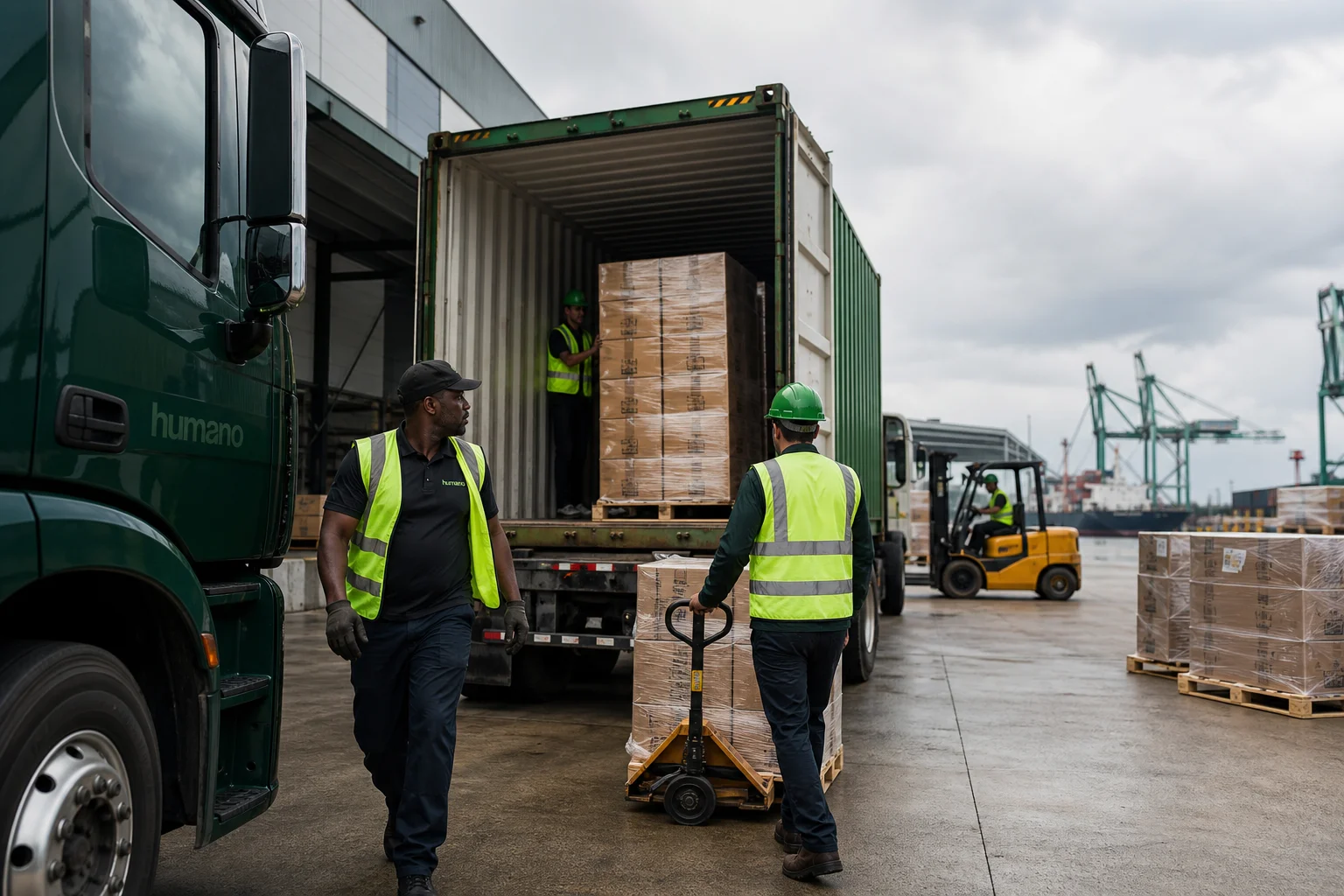
Savannah DTC fulfillment costs less per unit when your 3PL operates close to the Port of Savannah, cutting drayage, transit time, and inbound receiving fees before an order reaches the pick line. This guide breaks down how pick and pack pricing works, what drives cost per unit, and which Services matter most for port-adjacent fulfillment.
By Humano Team, Logistics & Lumper Specialists
Why the Port of Savannah Changes the Math on DTC Fulfillment
The Port of Savannah is one of the busiest container ports on the East Coast, processing millions of TEUs annually. For brands selling direct to consumer, proximity to that port is a concrete operational advantage. When your fulfillment center sits within a short haul of the Garden City Terminal, containers move from ship to shelf in hours rather than days.
Shorter drayage means lower inbound freight costs. Lower inbound costs mean a smaller number baked into your per-unit fulfillment rate. Most shippers underestimate how much inbound logistics inflate the pick and pack cost per unit they see on a monthly invoice. A fulfillment provider hundreds of miles from port absorbs and passes along long-haul drayage, container storage, and cross-docking fees. A Savannah-adjacent partner eliminates most of that before a single unit is picked.
The Savannah region also benefits from a dense logistics labor market, purpose-built warehousing infrastructure along the I-16 and I-95 corridors, and a growing base of DTC-focused 3PLs who understand ecommerce pick rates, SKU proliferation, and same-day or next-day cut-off windows.
How Pick and Pack Pricing Works at a Port-Adjacent 3PL
Pick and pack pricing for Savannah DTC fulfillment typically layers several line items: a per-order handling fee, a per-unit pick fee, packaging material costs, and an outbound postage pass-through. Some providers add a receiving fee per pallet or per carton on the inbound side.
The cost per unit you pay reflects how efficiently a warehouse can process your specific SKU mix. High-SKU, low-volume brands see higher per-unit rates because each pick requires more travel time and bin-location management. Low-SKU, high-velocity brands see lower rates because pick paths are shorter and labor throughput is higher.
Port-adjacent providers have a structural edge on inbound receiving costs. When containers arrive directly at the facility, the warehouse team unloads, counts, and putaways product without an intermediate cross-dock stop. That streamlined inbound process is where Savannah DTC fulfillment outperforms inland alternatives on a cost-per-unit basis. Labor is the other major lever: dedicated crews billed per unit typically outperform hourly temp labor once training time and error rates are factored in, and our crews versus hourly labor comparison breaks down the full math.
Breaking Down the Per-Unit Cost Model
A working cost-per-unit model includes these main components:
- Receiving: charged per pallet or carton on inbound
- Storage: charged per pallet position per month or per cubic foot
- Pick fee: per unit or per order depending on the 3PL model
- Pack fee: per order, may vary by box size or kit complexity
- Outbound freight: carrier rate, often passed through at cost or with a small markup
The total cost per unit is the sum of all these divided by units shipped per month. Volume is the biggest lever available. Higher volume spreads fixed costs across more units, including receiving setup, account management, and system integration, driving the blended rate down significantly over time.
Container Unloading and Lumper Labor at the Port
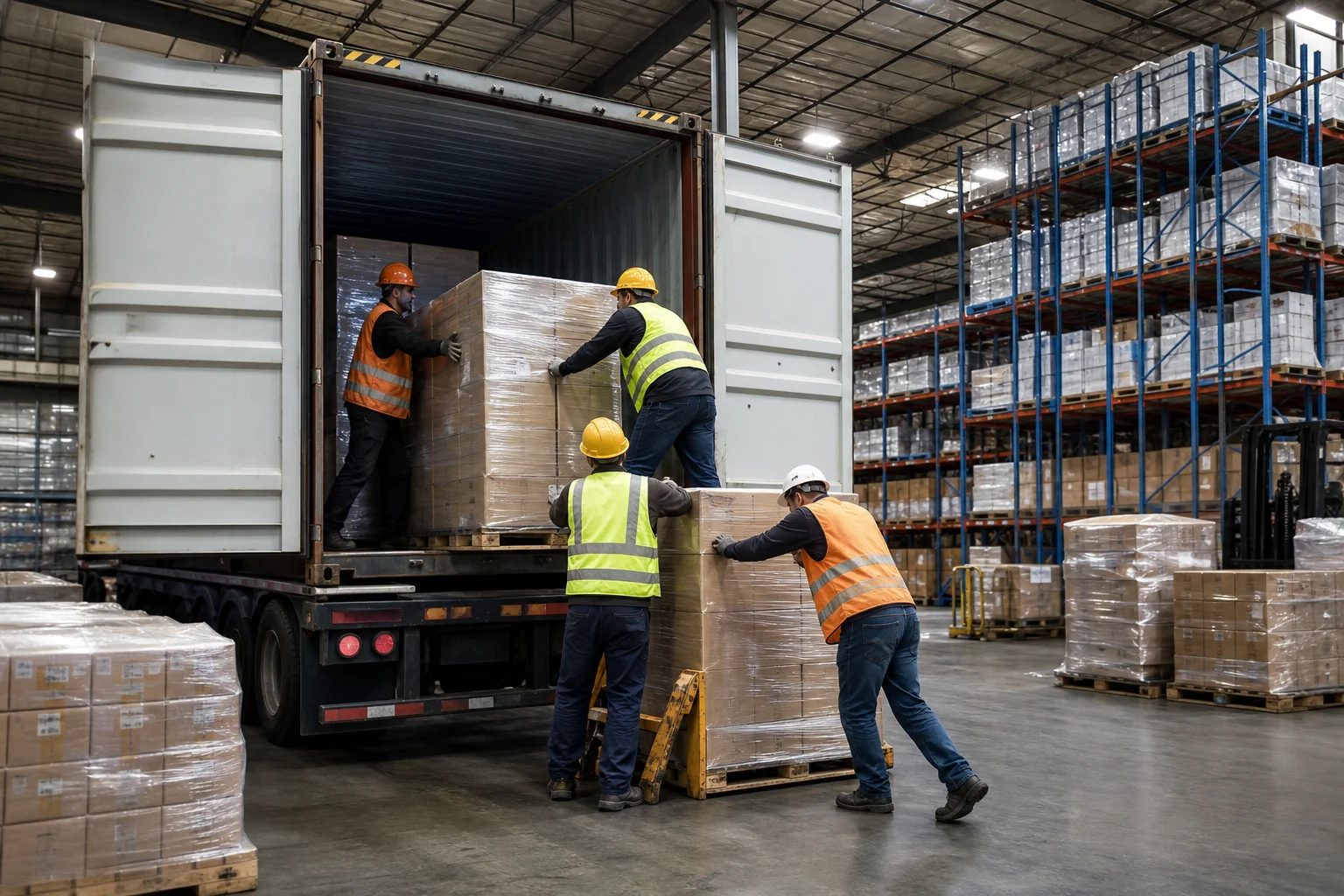
Getting product off a container and into a fulfillment-ready state is where operations can stall or accelerate. Container Unloaders are the specialists who bridge the gap between a sealed import container and a sorted, counted, and shelved inventory. At a port-adjacent facility, this work happens on-site rather than at a separate cross-dock, saving handling time and reducing the risk of damage or count discrepancies during transfer.
Professional lumper crews working at Savannah-area distribution centers are trained on freight count verification, load integrity documentation, and exception reporting. Those practices directly protect the accuracy of your inventory records, which in turn protect the accuracy of your pick and pack cost per unit calculations. Errors in receiving inflate effective costs invisibly, often without appearing as a line item until a discrepancy audit surfaces them months later.
For brands moving large import volumes through the port, dedicated logistic lumper services are not a commodity decision. The speed and accuracy of the unload team sets the baseline for everything downstream: storage efficiency, putaway accuracy, and fulfillment readiness.
Warehouse Labor Scalability and DTC Seasonality
DTC brands face predictable volume spikes: Q4, promotional windows, product launches. A Savannah DTC fulfillment partner needs to scale labor to match those spikes without degrading per-unit throughput. Understaffed warehouses during peak periods slow pick rates, extend order cycle times, and can push same-day cut-off windows out of reach.
Warehouse labor solutions at port-adjacent facilities in Savannah are designed to flex. Providers who staff from a trained labor pool can scale headcount in hours rather than days, which is the practical difference between maintaining service levels during a flash sale and issuing delay notifications to customers.
The staffing model your 3PL uses matters as much as its warehouse location. Providers who rely on transactional staffing agencies for overflow labor introduce a skills gap that shows up in error rates and throughput. Providers with dedicated, cross-trained fulfillment crews maintain consistent pick accuracy regardless of volume.
What to Look for in a Savannah DTC Fulfillment Partner
Proximity to the port is the starting point, not the finish line. Before selecting a Savannah DTC fulfillment provider, operations managers should evaluate the following:
Inbound receiving speed: How quickly does the 3PL move product from dock to available inventory? Delays at receiving inflate effective carrying costs even if the storage rate looks competitive on paper.
System integration: Does the warehouse management system connect directly to your ecommerce platform? Real-time inventory visibility is a baseline requirement for DTC operations, not a premium add-on.
Packaging capabilities: Can the provider handle branded unboxing experiences, kitting, or gift wrapping? DTC brands increasingly treat packaging as a customer touchpoint, not just a protective layer.
Reporting granularity: Can you see per-SKU pick rates, error rates, and order cycle times? Providers who offer that level of data give you the ability to optimize. Providers who give you only invoice totals leave you without a lever to pull.
Transloading capacity: If your containers require transloading from international carriers, does your partner have that capability on-site or nearby? Transloading adds value when it lets you consolidate freight into more efficient domestic loads or reach a market your ocean carrier cannot serve directly, and it adds cost the moment it introduces an extra handling step and dwell time. A partner with on-site capability removes that extra transfer point entirely.
Labor model: Dedicated crews versus temp overflow is not a trivial distinction. Ask prospective partners directly how they staff for peaks and what their lead time is.
A structured evaluation beats a gut-feel decision. Our 12 qualifying questions walk through the full process in detail.
Frequently Asked Questions
What is the average pick and pack cost per unit for Savannah DTC fulfillment?
Per-unit pick and pack costs vary by SKU count, order size, and volume commitments. Port-adjacent providers in Savannah can compress inbound costs meaningfully compared to inland alternatives. Brands shipping several thousand units per month should request a detailed rate card from any prospective 3PL rather than relying on published averages, since your specific SKU mix and order profile drive the actual number.
How close to the Port of Savannah should my fulfillment center be?
Most port-adjacent DTC fulfillment facilities in the Savannah area operate within 15 to 20 miles of the Garden City Terminal. That proximity eliminates long-haul drayage and gives access to same-day container availability in most cases. Facilities further than 40 miles begin to lose the meaningful inbound cost advantage that makes Savannah-area 3PLs competitive.
Do I need dedicated container unloaders for port-adjacent fulfillment?
For high-volume imports or time-sensitive container releases, dedicated unloading crews protect both speed and accuracy. A professional lumper team that specializes in container unloading reduces count errors and speeds putaway, which directly affects how quickly your inventory becomes fulfillment-ready and how accurately your cost per unit is calculated.
How does Savannah DTC fulfillment handle peak season volume spikes?
The best Savannah providers build scalable labor models into their baseline offering. Ask prospective partners how they ramp headcount for Q4 or promotional events, what their lead time is for staffing up, and whether they use dedicated crews or staffing agencies for overflow. The answer tells you how much operational risk you are absorbing as the shipper.
Can a Savannah 3PL handle both import container unloading and outbound DTC shipping?
Yes. Port-adjacent 3PLs in the Savannah market are typically structured to handle the full container-to-consumer workflow: inbound unload, receiving, storage, pick and pack, and outbound carrier handoff. Some also offer value-added services like kitting, repackaging, and returns processing that matter to DTC brands managing customer experience at scale.
Get a Clear Picture of Your Savannah Fulfillment Costs
If you're evaluating Savannah DTC fulfillment options and want to understand what port-adjacent lumper and logistics services can do for your cost per unit, Contact us to start the conversation.