
Warehouse Duties Explained: A Comprehensive Guide for Operations Managers
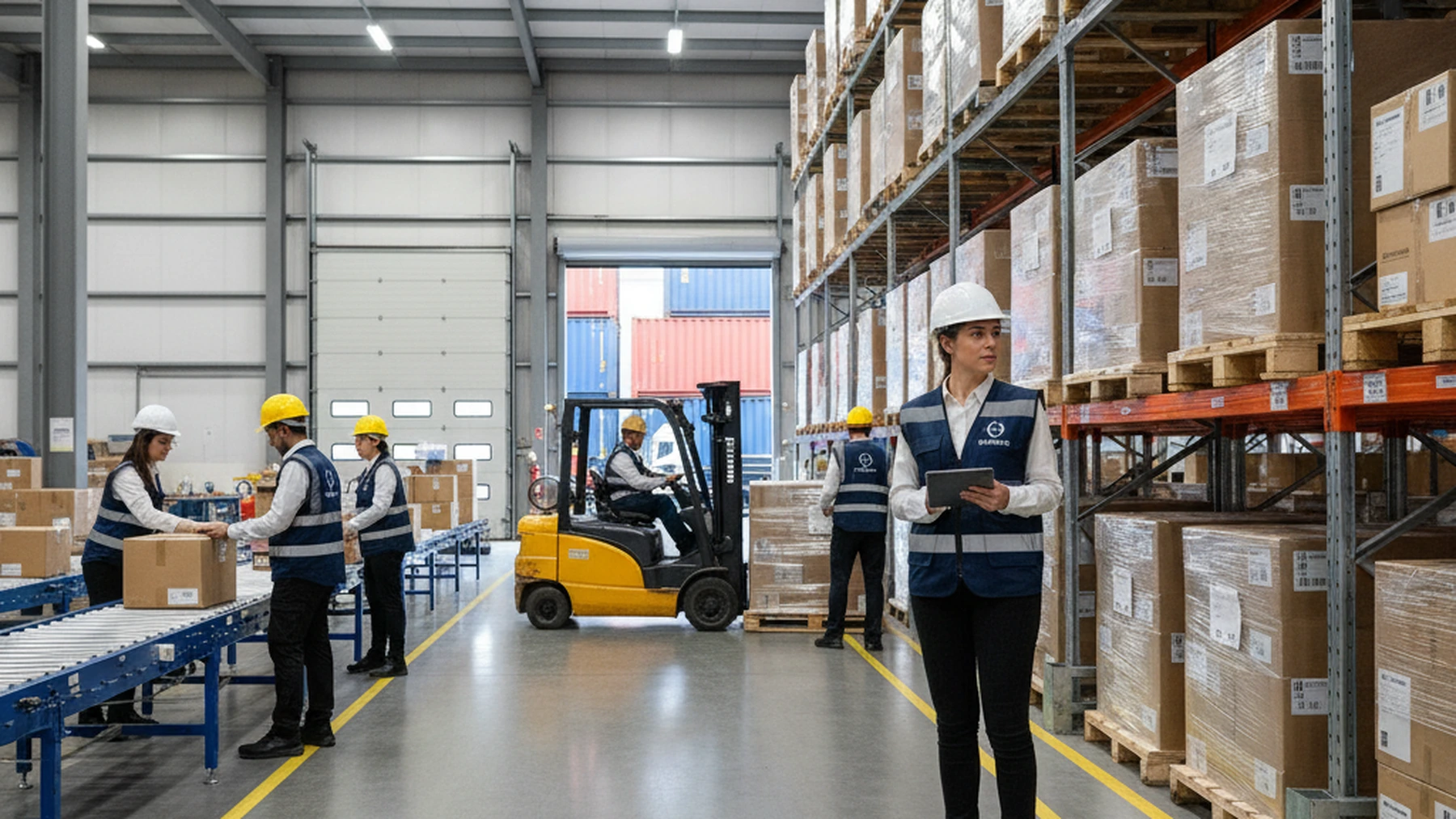
Warehouse duties encompass the full range of tasks that keep a distribution or storage facility running smoothly. These responsibilities span inbound receiving, inventory control, order fulfillment, container loading and unloading, and safety compliance. For operations managers, understanding each duty is the foundation of a well-staffed, efficient warehouse.
What Are Warehouse Duties?
Warehouse duties are the specific job functions assigned to workers and supervisors responsible for moving, storing, and tracking goods within a facility. These duties vary by operation size and industry, but they share a common goal: keep product flowing accurately, safely, and on schedule.
Operations managers use warehouse duties as the framework for hiring, training, scheduling, and performance evaluation. When duties are clearly defined, labor gaps become visible, productivity targets become measurable, and compliance becomes manageable.
Broadly, warehouse duties fall into six categories:
- Receiving and inbound processing
- Inventory management and stock control
- Order picking, packing, and fulfillment
- Container loading and unloading
- Labor support and lumper services
- Safety, sanitation, and facility compliance
Each category carries its own set of skills, physical demands, and operational dependencies. A well-run operation maps every duty to a trained worker, a written procedure, and a measurable output.
Core Receiving and Inbound Logistics Responsibilities
Receiving is where every product enters your system. Warehouse worker duties at the inbound dock include verifying shipments against purchase orders, inspecting for damage, scanning or logging items into the warehouse management system (WMS), and staging freight for putaway.
Key receiving tasks include:
- Cross-referencing bill of lading (BOL) against actual delivery
- Counting units and confirming lot numbers or SKUs
- Flagging shortages, overages, or damaged goods for documentation
- Applying warehouse labels and routing to correct bin or zone
- Coordinating with carriers on appointment scheduling and dock door assignment
Accuracy at receiving directly impacts inventory integrity downstream. A mislabeled pallet at inbound becomes an unlocatable product at fulfillment. Operations managers should treat inbound receiving as the quality checkpoint for the entire facility. Dedicated receiving clerks or cross-trained dock workers reduce discrepancies and compress dwell time at the dock door.
Inventory Management and Stock Control
Once product is received and put away, ongoing inventory management becomes a continuous warehouse operations responsibility. This includes cycle counting, maintaining storage locations, and reconciling physical counts against system records.
Core inventory duties include:
- Executing scheduled cycle counts by zone, product category, or velocity tier
- Investigating and resolving inventory discrepancies in the WMS
- Managing FIFO (first in, first out) or FEFO (first expired, first out) rotation protocols
- Monitoring storage capacity and flagging overcrowding or slotting inefficiencies
- Coordinating with purchasing or procurement on reorder triggers
- Maintaining bin label integrity and location accuracy
Warehouse worker duties in inventory often include replenishment tasks: pulling from bulk storage to forward pick locations and reporting damaged or expired stock for disposition.
Tight inventory management reduces carrying costs, prevents stockouts, and improves order accuracy. For operations managers, the goal is maintaining a low variance rate on cycle counts and a high location accuracy score in the WMS. Slotting reviews, conducted quarterly, keep high-velocity SKUs in accessible pick positions and reduce travel time per order.
Order Fulfillment and Outbound Operations
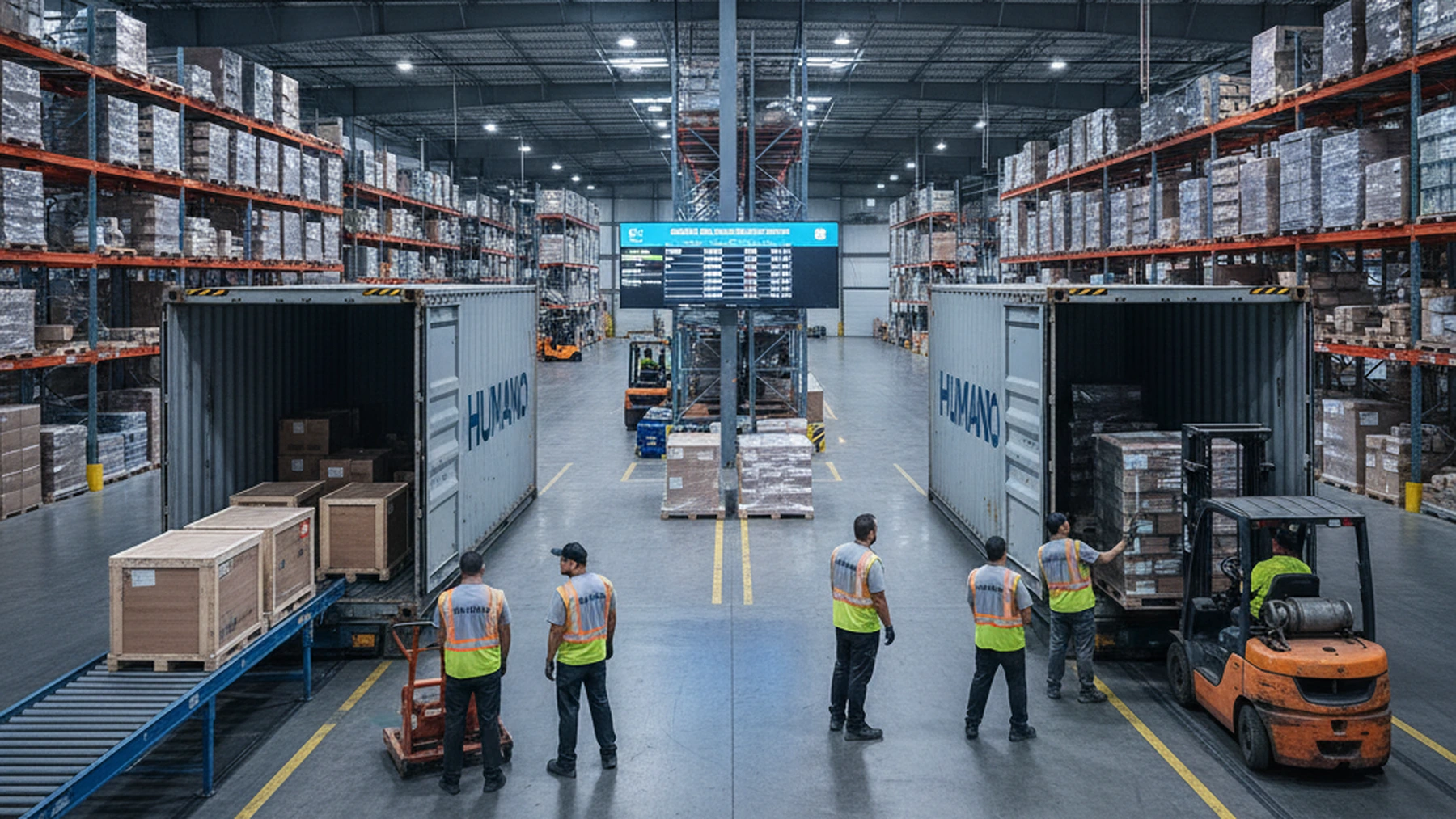
Order fulfillment is typically the highest-volume activity in a warehouse and covers every step from pick release to carrier handoff.
Fulfillment duties include:
- Picking orders from single or multi-zone pick paths
- Batch picking, zone picking, or wave picking based on order volume
- Packing to carrier specifications (dimensional weight, fragility, hazmat compliance)
- Applying shipping labels, manifesting packages, and confirming in the WMS
- Staging outbound shipments by carrier, route, or scheduled pickup time
- Managing returns receiving and processing (reverse logistics)
Operations managers must balance pick accuracy against pick rate. Achieving consistently high accuracy requires clear workflows, verification steps such as scan-to-confirm or pick-to-light, and trained staff who understand the consequences of a mispick in a B2B fulfillment environment.
Outbound duties also include preparing shipping documentation, BOLs for LTL freight, and pallet manifests for multi-SKU orders. Dock supervisors coordinate carrier arrivals, load sequencing, and trailer sealing to meet outbound cut times without disrupting the pick floor.
Container Loading and Unloading Duties
Container loading and unloading is a physically demanding warehouse operations responsibility that requires both skill and coordination. These duties apply to import containers arriving from port, domestic intermodal shipments, and outbound export loads.
Unloading duties include:
- Stripping containers floor-to-ceiling by hand or with mechanical assistance
- Sorting and staging product by SKU, pallet type, or delivery location
- Identifying damage during unload and documenting with photos for freight claims
- Moving freight to receiving staging or directly to storage locations
- Communicating container content discrepancies to supervisors immediately
Loading duties include:
- Palletizing and wrapping product to container specifications
- Floor-loading cartons to maximize cube utilization
- Sequencing the load by delivery stop for multi-drop container runs
- Securing the load to prevent in-transit shifting or damage
- Completing load confirmation paperwork and sealing the container
Container work often requires a team working in tight coordination. Warehouse worker duties during container operations typically include a designated team lead who manages pace, safety, and count accuracy while the crew strips or loads.
humano provides trained container unloading and loading teams through its container loading and unloading services. These crews are experienced in high-volume port-adjacent operations and understand the speed requirements of container turn times.
Lumper Services and Labor Support
Lumper services are a specialized category of warehouse duties focused on freight offloading, commonly used in grocery, retail, and food distribution environments. A lumper is a contract labor worker brought in to unload trailers or containers, typically compensated per load rather than per hour.
Lumper duties include:
- Offloading trailers by hand, pallet jack, or electric pallet rider
- Sorting product by store, department, or delivery location
- Building display pallets or store-ready merchandising units
- Scanning product for receiver verification
- Completing lumper receipts for carrier billing reconciliation
Operations managers frequently use lumper services when inbound volume spikes, when specific carriers require it as a condition of delivery, or when internal labor capacity cannot absorb a surge without overtime exposure.
humano's logistic lumper services are built for facilities that need dependable, trained labor without the administrative burden of direct hire. Teams arrive ready to work, familiar with trailer unloading standards and dock safety protocols.
Safety Compliance and Housekeeping Standards
Warehouse safety is not a separate function; it is embedded in every warehouse duty. Operations managers are responsible for enforcing safety protocols at every step of the workflow.
Core safety responsibilities include:
- Maintaining clear aisle widths per OSHA clearance standards
- Enforcing proper lifting techniques and PPE requirements
- Conducting pre-shift safety briefings and equipment inspections
- Reporting and documenting near-misses, incidents, and injuries
- Keeping emergency exits, fire suppression access, and first aid stations unobstructed
Housekeeping is a warehouse worker duty that often gets deprioritized under volume pressure. Cluttered aisles, unsecured pallets, and debris accumulation are direct contributors to recordable incidents. A clean warehouse is a faster and safer warehouse. Operations managers should hold teams accountable for housekeeping as part of the normal workflow, not as an end-of-shift afterthought.
Regular safety audits, near-miss reporting culture, and visible management engagement in daily safety briefings are the operational levers that keep incident rates low and facility certifications intact.
How humano Supports Your Warehouse Operations
Staffing the full range of warehouse duties requires flexible labor solutions that scale with volume, not with headcount overhead. humano provides warehouse labor staffing for operations managers who need reliable workers without the cost and complexity of direct hire.
humano's warehouse labor services cover inbound receiving, inventory support, order fulfillment, and outbound shipping across a range of facility types. Whether you need a consistent team or surge capacity for peak season, humano deploys trained workers who understand warehouse operations responsibilities from day one.
If your operation handles containers, transloading, or requires lumper services, humano's specialized crews are ready to support. All workers arrive familiar with dock safety, WMS scan procedures, and the physical demands of high-output warehouse environments.
Contact humano to discuss staffing solutions for your facility.
Frequently Asked Questions
What are the primary warehouse duties for a warehouse worker?
Primary warehouse worker duties include receiving and inspecting inbound shipments, putaway and inventory management, order picking and packing, container loading or unloading, and maintaining safety and housekeeping standards. Specific duties depend on the facility type and shift assignment.
What is the difference between warehouse duties and warehouse operations responsibilities?
Warehouse duties refer to individual job tasks performed by workers, such as picking, receiving, or loading. Warehouse operations responsibilities refer to the broader management functions: scheduling, compliance, productivity oversight, and process optimization. Operations managers hold both their own responsibilities and accountability for the duties their teams perform.
How are lumper services different from standard warehouse labor?
Lumper services are contract labor specifically for unloading trailers or containers, typically billed per load. Standard warehouse labor covers a broader range of duties across the full warehouse workflow. Lumpers are often engaged when carriers require it as a delivery condition or when inbound volume spikes beyond internal labor capacity.
What qualifications should warehouse workers have for container unloading?
Workers performing container unloading should be trained in manual material handling techniques, familiar with pallet jack and electric pallet rider operation, and understand freight documentation including BOLs and packing lists. Physical stamina and the ability to work in variable temperature environments are also important for container operations.
How do operations managers measure warehouse worker performance?
Key performance indicators for warehouse worker duties include pick accuracy rate, units per hour, receiving processing time, cycle count variance, and safety incident rate. Benchmarks vary by facility type, but consistent tracking against targets is the foundation of accountability in high-volume warehouse operations.