
14 questions to ask a lumper provider before they touch your inbound dock
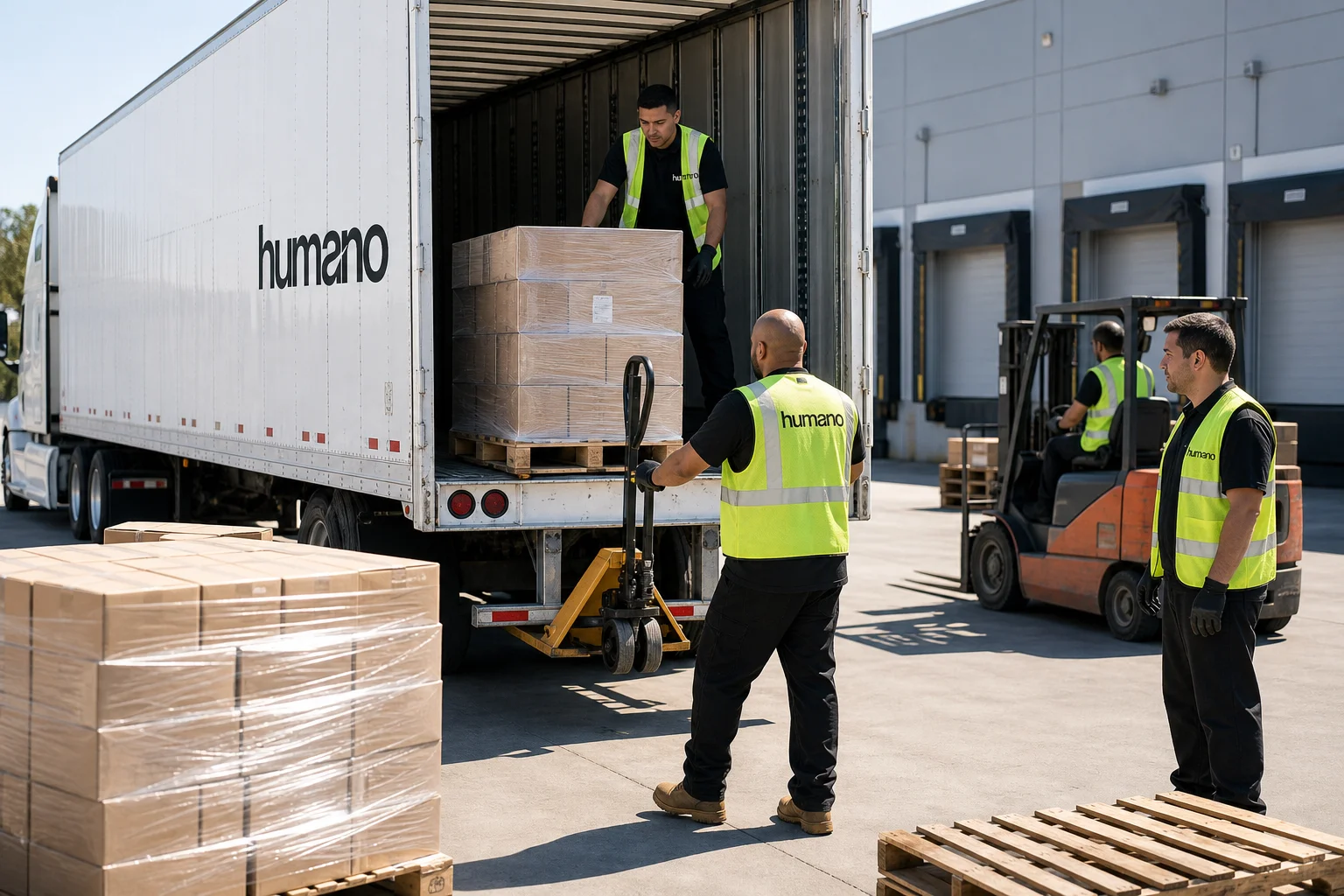
Handing your inbound freight to the wrong crew costs more than a bad load, it costs damaged product and delayed trucks. Before signing with any Logistic Lumper Services, operations managers should run through these 14 questions to ask a lumper provider before they touch your inbound dock.
By Humano Team, Logistics & Lumper Specialists
A lumper provider is a third-party labor company that sends a crew to physically load or unload freight from a trailer or container at your facility, so your drivers don't have to unload freight themselves and their truck can get back on schedule. Lumpers handle floor-loaded and palletized freight, break down mixed pallets, and stage product for putaway, usually within a set window tied to the appointment time. Because that crew is on your dock, in your facility, and responsible for your freight the moment they open the trailer doors, a bad hire creates real exposure: workers' comp claims, damaged product, slow turn times, and disputes over who pays. That is exactly why we built this list. Run through these 14 questions to ask a lumper provider before they touch your inbound dock, and you will catch the gaps that cause carriers, warehouses, and lumper companies to end up in a dispute after the trailer is already unloaded.
How Much Do Lumper Services Cost Per Load?
Lumper service pricing depends on load type, freight weight, and how the trailer was loaded when it arrived. A floor-loaded trailer packed tight to the ceiling takes longer to strip than a cleanly palletized load, and that labor time is what carriers and receivers are paying for. Pricing typically covers the full loading and unloading process at that stop, not just part of it. Ask whether additional fees apply for detention, driver assist, or after-hours unloading, since a quote that looks low can grow once those extras are added. Most lumper companies price per load rather than by the hour, though the exact structure varies by provider and by facility.
What Is the Average Lumper Fee for a Full Truckload?
There is no single average lumper fee that applies everywhere. Fees shift with region, freight type, trailer condition, and whether the crew handles floor-loaded product, palletized product, or a mixed load. A carrier or receiver should ask for a written rate sheet up front rather than accepting a verbal quote, since a clear rate sheet is what prevents a dispute at the dock door when the invoice does not match what was expected.
Is the Lumper Provider Licensed, Bonded, and Insured?
Ask for proof before the crew shows up, not after an incident. A legitimate lumper company should be able to produce a general liability policy, workers' compensation coverage for its own crew, and, in many cases, a surety bond. Licensing requirements vary by state, so confirm what your state and your facility actually require rather than assuming a provider's home-state paperwork covers work performed elsewhere.
Do Lumper Companies Need to Carry a Certificate of Insurance?
Yes, in nearly every facility a lumper company is required to provide a certificate of insurance before its crew is allowed on the dock. The certificate should name your facility as a certificate holder, list current workers' comp and general liability limits, and be renewed on schedule, not handed over once and forgotten. If a provider hesitates to produce one, that hesitation is the answer.

Who Is Liable If a Lumper Is Injured or Damages Your Freight?
Liability usually depends on what the service agreement says and who exercised control over the work at the time of the incident. In most arrangements, the lumper company carries its own workers' compensation coverage, so an on-site injury is handled through that policy rather than becoming the carrier's or the facility's claim, provided the coverage was verified in advance. This is exactly why the licensing and insurance questions above come first: a lumper company that can't produce proof of coverage shifts that risk onto whoever let its crew onto the dock.
What Happens If a Lumper Damages Freight During Unloading?
A written service agreement should spell out how a damage claim is filed, what documentation is required (photos, a signed exception report, the bill of lading), and what timeframe applies. Facilities that skip this step in writing often find themselves negotiating after the fact with no clear process, which is a much weaker position than having the terms set before the trailer doors open.
How Do You Verify a Lumper Company's Safety Record and OSHA Compliance?
Ask directly for the provider's OSHA recordable incident rate and whether it has had any citations in the last few years; a company with a clean, verifiable record will usually share this without hesitation. Confirm that crew members complete safety training specific to dock work, covering proper lifting technique, trailer entry procedures, and equipment use around forklifts and pallet jacks operating in the same space, to ensure the crew and your own team stay safe on a shared floor. A facility can also ask for references from other warehouses the provider currently services, and call them. For inbound freight arriving in ocean containers rather than dry van trailers, ask specifically about that provider's Container Unloaders experience, since container stripping carries its own pace and safety considerations that a standard trailer crew may not be trained for.
What Belongs in a Lumper Service Agreement, and How Long Should Unloading Take?
A solid lumper service agreement should cover rate structure, insurance requirements, safety expectations, liability and damage procedures, and how disputes get resolved, all in writing before the first load. Putting this in writing helps ensure both sides know what to expect instead of relying on a verbal understanding, which is the most common source of billing disputes in this industry.
How Long Does It Take a Lumper Crew to Unload a Full Trailer?
Turn time depends heavily on how the trailer was loaded. A palletized load with a forklift-accessible layout can often be cleared in under an hour, while a floor-loaded trailer packed by hand may take two to four hours or more for a full crew to strip by hand. Ask any provider what their average turn time looks like for your typical load type, and hold them to it.
Can a Carrier Refuse to Pay a Lumper Fee?
A carrier can dispute a lumper fee, but refusing to pay outright is rarely the right first move. Most receivers require payment at the dock before the trailer is released, and an unpaid lumper fee can become a separate collections matter between the carrier and the lumper company. The better move is documenting the dispute, a rate mismatch or service not rendered as agreed, and raising it through the facility or provider's process rather than withholding payment on the spot.
Are Lumper Fees Reimbursable or Tax Deductible for Carriers?
Lumper fees are generally treated as an ordinary business expense for a carrier and may be deductible, though the specifics depend on how the fee was documented and the carrier's own tax situation. Carriers should keep the lumper receipt with the load paperwork and talk to their accountant or tax professional about how to categorize it, since this is a tax question a lumper provider cannot answer for them.
Frequently Asked Questions
Do carriers have to use a lumper service, or can drivers unload the trailer themselves?
Many receivers require a lumper service for freight arriving floor-loaded or above a certain weight, since driver-unload creates detention and injury exposure. Some facilities allow drivers to unload and reimburse them instead. Check the specific facility's unloading policy before dispatch, since requirements vary by receiver and are usually noted on the appointment or routing guide.
How do I find a reliable lumper provider near my facility?
Start with a provider that already services other warehouses and carriers in your area, ask for current references, and confirm licensing and insurance before the first load. A reliable lumper provider will produce its certificate of insurance and safety record without hesitation. Word of mouth from other operations managers at nearby facilities is usually the fastest way to a trustworthy option.
What is a lumper receipt, and why does a carrier need one?
A lumper receipt documents the fee paid for unloading services and is required for reimbursement through most carrier settlement or factoring processes. It should list the amount, date, facility, and provider name. Carriers should keep this receipt with the load's paperwork, since a missing receipt is one of the most common reasons a lumper fee reimbursement gets delayed or denied.
Can a lumper company refuse a load?
Yes. A lumper crew can decline a load that appears unsafe to unload, such as a trailer with shifted freight, damaged flooring, or hazards blocking access, and a legitimate provider should have a documented process for reporting and resolving that refusal rather than walking away silently.
Get a Lumper Crew That Answers Every One of These Questions Before You Sign
Humano's crews arrive licensed, insured, and trained for dock-level safety, and we walk through our rates, coverage, and service terms before your first load ships. Contact our team to schedule your inbound dock.