
Transloader Services: When and Why Your Business Needs Them
When freight needs to move between transportation modes before reaching its final destination, transloader services provide the connection point. Businesses relying on ocean containers, rail networks, or regional distribution use transloading services to cut transit time, reduce drayage costs, and maintain supply chain continuity without routing every shipment through a central hub.
What Transloader Services Are and How They Work
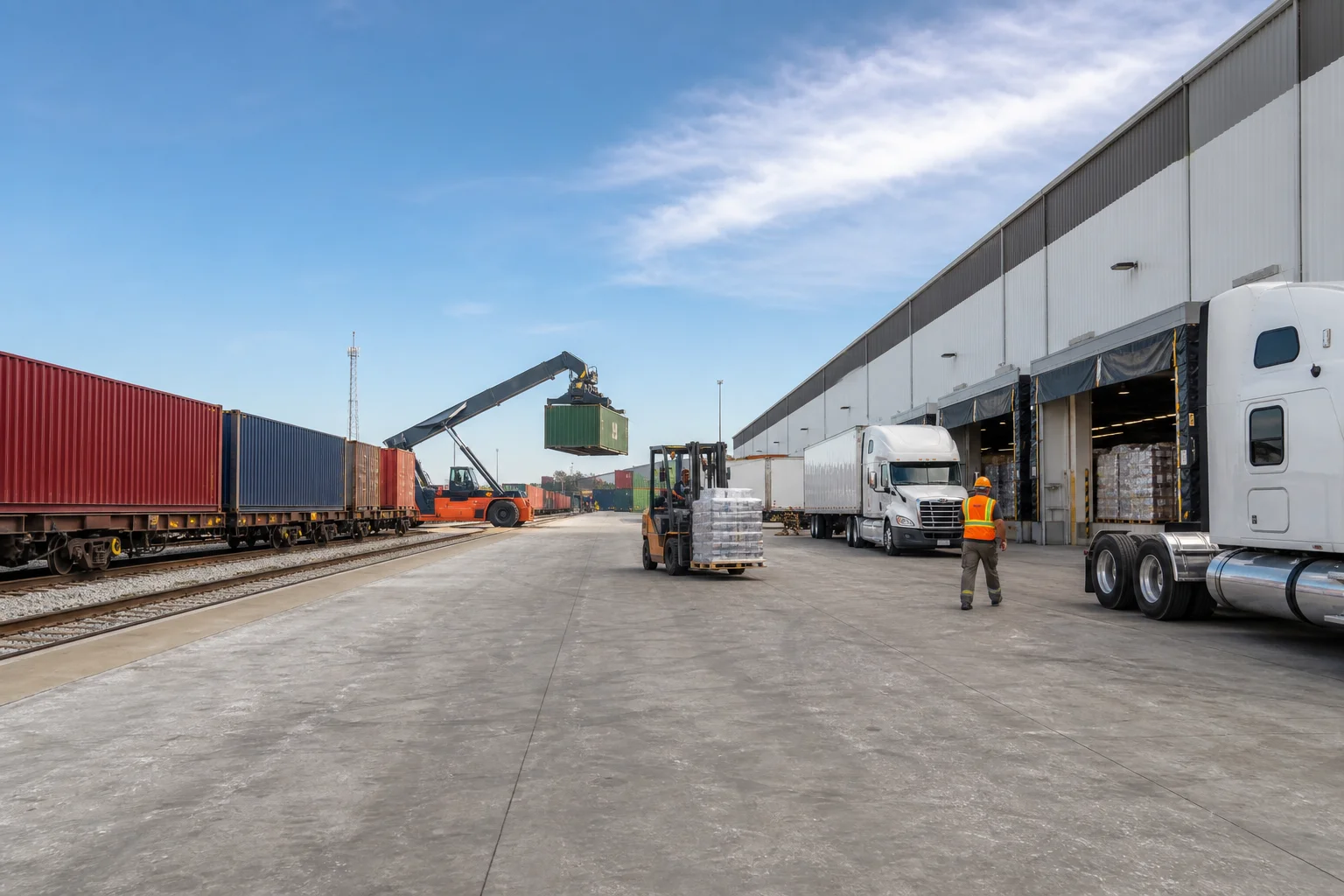
Transloading is the process of transferring freight from one transportation mode to another at a strategically located facility. A container arriving by rail gets offloaded and reloaded onto trucks for last-mile delivery. The same logic applies in reverse: over-the-road freight consolidates at a transload facility before moving to rail for the long-haul segment.
The core value is geographic flexibility. Instead of routing every shipment through a distant distribution center, companies use transload services usa networks to position product closer to end customers. This approach works especially well for businesses that ship goods in high volumes across corridors where rail and trucking infrastructure overlap.
A standard transload operation involves four steps: receiving inbound freight by container, railcar, or truck; unloading and staging product; cross-docking or short-term storage when required; and reloading onto outbound transport in the correct configuration. The labor intensity of this work is significant. Experienced crews handle the physical transfers, ensuring freight arrives undamaged and ready for the next transport leg.
When Your Business Actually Needs Transloading Services
Not every shipping operation benefits from transloading. The clearest use cases share a few common characteristics.
You Ship Full Container Loads but Deliver in Smaller Quantities
Ocean containers arrive packed to capacity, but customers often need palletized deliveries rather than full containers. A transload facility lets you break down container loads and redistribute product into truck-friendly configurations without sending the container directly to each delivery point.
Your Rail Access Ends Before the Final Destination
Rail transportation is cost-effective for moving large freight volumes across long distances, but most distribution centers and warehouses are not rail-served. Transload services bridge that gap: freight moves by rail as far as the network allows, then transfers to truck for final delivery. This saves time money on routes where rail rates significantly undercut over-the-road pricing.
You Need Regional Inventory Positioning
Companies operating on a just-in-time model need product positioned near demand centers before orders arrive. Staging inventory at strategically placed transload facilities lets you respond to regional demand spikes without holding excess stock at a single central warehouse.
Supply Chain Advantages of Transload Services
The business case for transloading comes down to cost and operational resilience. Research from the Council of Supply Chain Management Professionals (CSCMP, State of Logistics Report, 2023) identifies freight mode optimization as one of the most consistent levers companies use to reduce logistics spend.
Transloading delivers on that in several ways.
Lower freight costs on long hauls. Rail transportation typically costs less per ton-mile than truck for distances over 500 miles. Shifting long-distance freight to rail and reserving truck for short-haul delivery allows companies to save time money on transportation without sacrificing service levels.
Reduced container dwell costs. Ocean containers sitting at a port or warehouse accumulate demurrage and detention fees. Moving goods quickly from container to truck or rail cuts those fees and frees container equipment faster.
Faster regional delivery. Products staged at a regional transload facility ship to end customers on shorter truck routes, compressing transit time compared to a centralized distribution model.
Routing flexibility during disruptions. When a port backs up or a rail line faces delays, a network of transload facilities gives operations managers alternative routing options. That built-in redundancy is difficult to achieve with a single-hub setup.
What to Look for in a Transloading Services Provider
Choosing the right transload partner is not just a matter of geography. Operational capability matters as much as location.
Labor Quality and Throughput
The speed and accuracy of any transload operation depends directly on its workforce. High-turnover environments create inconsistency in how freight is handled and staged. Look for providers with experienced crews who understand freight handling requirements, weight distribution, and loading configurations across transport modes. Humano's logistic lumper services are staffed by teams trained specifically for logistics and container handling environments.
Certifications and Compliance
Depending on the products you ship, your transload partner may need specific certifications: food-grade facility status, hazmat compliance, or customs-bonded approval. Confirm these requirements before committing to any provider.
Data Visibility and Technology Integration
Modern transload facilities offer data integration with transportation management systems and warehouse management platforms. Real-time visibility lets your team view shipment status at each stage of the transloading process and respond to exceptions before they turn into delivery delays.
Scalability
Seasonal businesses and growing companies need a transload partner that can scale labor and dock capacity on short notice. Providers that offer flexible staffing models are more valuable to operations with volume swings than those locked into fixed throughput capacity.
How Transloading Connects Rail and Truck Networks
The intermodal freight market in the United States depends on efficient transload facilities to function. Rail carriers move freight in bulk across long corridors; truck carriers handle regional and last-mile distribution. The connection between these two networks is the transload operation.
For shippers, this means transloading is not just a tactical workaround for logistics gaps. It is a structural component of how goods move through the supply chain at scale. Companies that treat transload services usa networks as a core part of their transportation strategy, rather than an emergency fallback, consistently achieve more stable service levels and lower total freight costs over time.
Frequently Asked Questions
What is the difference between transloading and cross-docking?
Cross-docking moves freight directly from an inbound dock to an outbound dock with minimal storage, typically between trucks within the same facility. Transloading specifically involves a change of transportation mode, such as rail to truck or container to flatbed. Both reduce handling time, but transloading addresses mode-switching while cross-docking focuses on distribution consolidation.
How long does a typical transload operation take?
Timeframes depend on freight volume, labor availability, and equipment. A standard container transload with an experienced crew typically completes in two to four hours. Operations involving multiple containers or specialty freight take longer. Communicating freight specs to your provider in advance keeps turnaround predictable and cost-controlled.
Do I need a dedicated transload facility or can I use a shared one?
Most shippers use shared transload facilities operated by third-party logistics providers. Dedicated facilities make sense for very high-volume shippers or those with specialized handling requirements. For the majority of businesses, a shared facility with flexible capacity is the more cost-effective approach.
What types of freight work best for transloading?
Transloading works well for bulk commodities, consumer goods arriving in ocean containers, building materials, and any freight that moves in full truckload or railcar quantities but needs regional redistribution. Products with fragile or high-value characteristics can be transloaded successfully with proper equipment and trained crews.
How does transloading affect freight liability?
Liability transfers at each custody handoff during the transloading process. Confirm that your freight insurance covers multimodal transfers and that your transload provider carries adequate liability coverage. Review contracts carefully and clarify responsibility at each stage before the first shipment moves through the facility.
Humano provides experienced logistics labor for transloading operations, container loading and unloading, and warehouse support across the United States. Contact Humano to discuss your freight handling requirements and build a workforce solution that fits your operation.