
Working in a Warehouse: What to Expect and How to Succeed
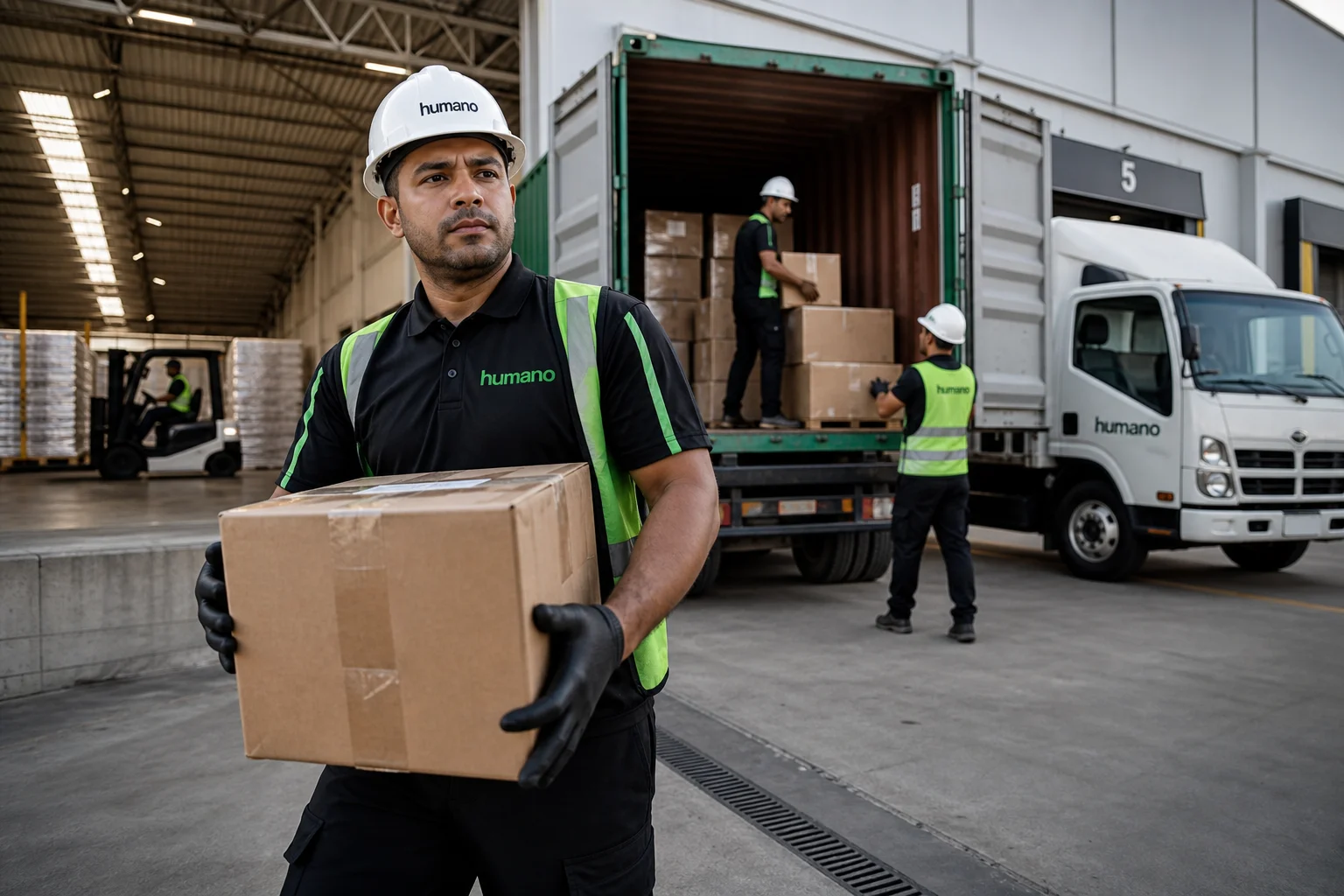
Working in a warehouse is physically demanding, skill-building, and one of the fastest paths into a stable logistics career. Whether you are exploring Warehouse Labor for the first time or looking to advance within supply chain operations, this guide covers what the job actually involves and how to set yourself up for long-term success.
By Humano Team, Logistics & Lumper Specialists
What Working in a Warehouse Looks Like Day to Day
Warehouse jobs are not uniform. A distribution center handling consumer goods operates very differently from a cold-storage facility or a large fulfillment operation. That said, most warehouse work shares a core set of tasks: receiving inbound shipments, organizing storage, picking and packing orders, and preparing outbound freight for loading.
Most shifts begin with a team briefing covering safety protocols, daily targets, and any workflow updates. Workers then move to their assigned zones, which may rotate based on operational needs. Productivity metrics such as units picked per hour or order accuracy rates are tracked consistently, so workers who stay focused and organized tend to advance faster.
Entry-level positions often involve repetitive physical tasks, but the variety increases quickly as workers gain familiarity with inventory management systems, warehouse management software, and equipment such as pallet jacks or forklifts. Understanding how each task connects to the broader shipping and storage operation helps new workers adapt faster.
Physical Demands and Safety on the Warehouse Floor
Working in a warehouse is a physical job. Most roles require standing for extended periods, lifting items ranging from a few pounds to 50 or more, and moving continuously throughout a shift. Workers who underestimate this aspect often struggle in their first weeks.
Safety is not optional. OSHA regulations govern warehouse environments, and well-run operations follow those rules closely. Research published by the National Institute for Occupational Safety and Health (NIOSH) confirms that ergonomic training programs reduce musculoskeletal injury rates among workers in physically demanding warehouse environments. Proper lifting technique, personal protective equipment, and clear aisle management are standard expectations at every professional operation.
Before starting any role, workers should:
- Learn the site's safety procedures and emergency exits
- Wear required PPE including steel-toed boots and high-visibility vests
- Report hazards or equipment issues immediately to management
- Use proper body mechanics for all lifting and carrying tasks
Operations that take safety seriously see lower turnover and fewer lost-time incidents, which benefits everyone on the floor.
Skills That Set Warehouse Workers Apart
The most effective warehouse workers bring more than physical ability. Certain skills consistently separate top performers from average workers across all warehouse positions.
Attention to detail matters because errors in packing or labeling create downstream problems. A mislabeled shipment can delay delivery or trigger a costly return.
Reliability is the most valued trait among warehouse supervisors. Showing up on time and completing tasks without constant supervision builds trust quickly.
Communication keeps the floor moving. Workers who flag problems early, coordinate with teammates, and follow verbal instructions accurately prevent bottlenecks that slow the entire operation.
Technical aptitude is increasingly important. Modern warehouses rely on barcode scanners, WMS software, and in some facilities, automated picking systems. Workers who learn these tools faster get more responsibilities and greater career opportunities.
Training programs vary by employer, but many offer on-the-job certifications for forklift operation, hazardous materials handling, and inventory management that transfer across employers and industries.
Career Growth Starting from Warehouse Work
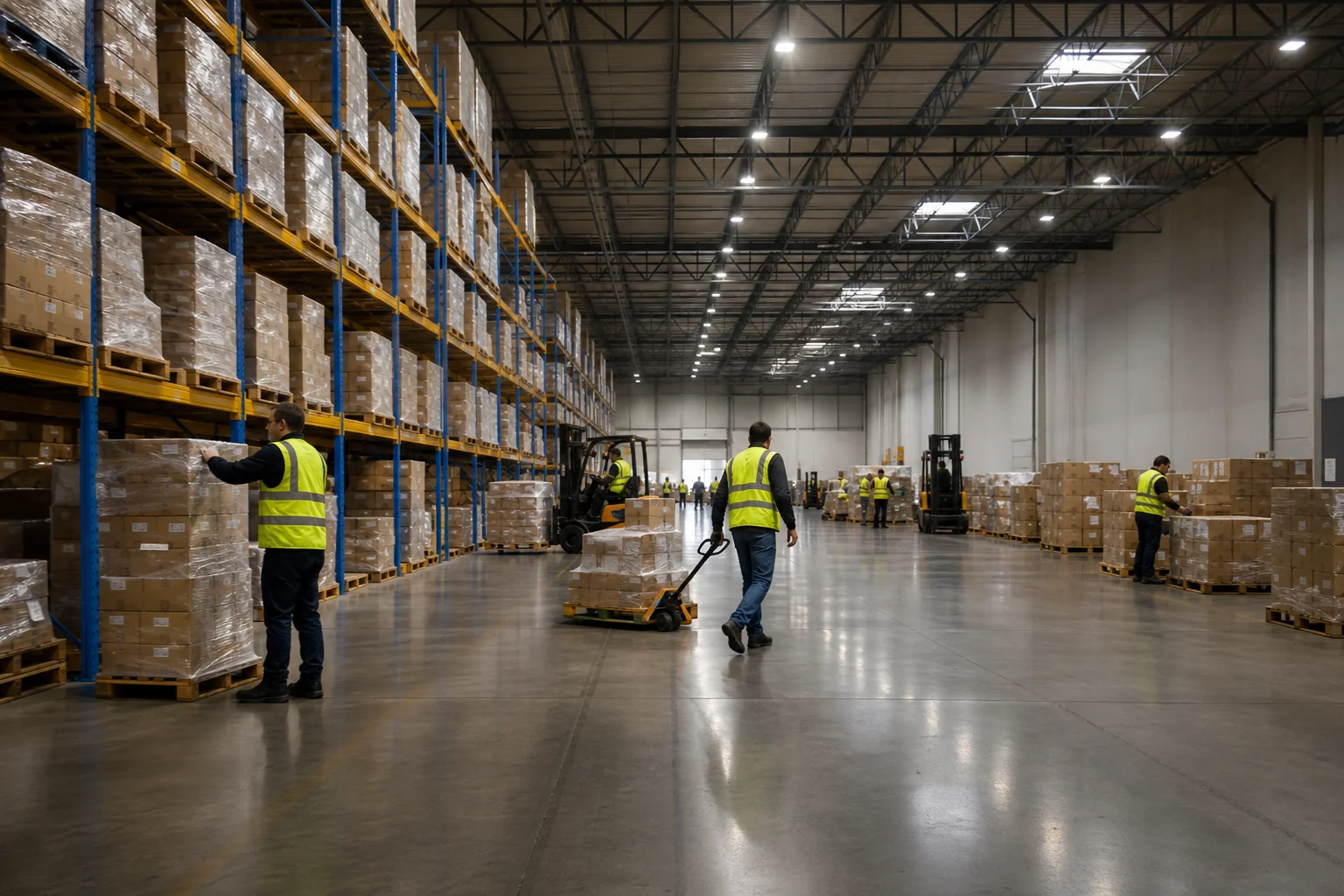
Working warehouse roles are entry points, not endpoints. Many operations supervisors, logistics coordinators, and supply chain managers started their careers picking orders or unloading freight. The skills built on the warehouse floor translate directly into higher-responsibility positions.
Common advancement paths include:
- Team Lead or Shift Supervisor: Manages a group of workers, assigns tasks, and reports to operations management
- Inventory Specialist: Handles cycle counts, discrepancy resolution, and system accuracy
- Warehouse Manager: Oversees staffing, throughput targets, safety compliance, and budget management
- Logistics Coordinator: Works across inbound and outbound functions, interfacing with carriers and vendors
Workers who pursue certifications and demonstrate initiative tend to be considered for internal promotions within their first year. Employers at distribution centers prefer internal candidates because they already understand systems, culture, and physical layout.
Staffing arrangements also provide flexibility for workers exploring different environments, letting them build skills across multiple operations through temporary staffing placements before committing to a permanent role.
For workers interested in container operations, Container Unloaders represent a high-demand specialization with strong career potential in freight and distribution.
Freight unloading from trucks specifically calls for strict protocols and steady pacing to keep crews safe and on schedule, detailed further in truck unloading practices.
Understanding Different Warehouse Worker Roles and Responsibilities
Not every warehouse worker performs the same tasks. Understanding the distinct positions helps both job seekers and managers plan effectively.
Receiver: Checks incoming shipments against purchase orders, inspects items for damage, and enters data into inventory systems.
Picker/Packer: Retrieves items from storage based on order lists and prepares them for shipping, including packing and labeling.
Loader/Unloader: Handles the physical movement of goods onto and off trucks or containers, often working in tight time windows that require speed and coordination.
Forklift Operator: Certified to move pallets and heavy loads using powered equipment. This role requires documented training and ongoing safety compliance.
Each position contributes to the broader logistics chain. Workers who understand how their role connects to the next step perform better and earn faster advancement.
Operations involving multi-modal container moves add another layer to that chain, since containerized freight often passes between rail, truck, and warehouse handoffs before reaching its final destination. Seeing that bigger picture helps warehouse workers understand exactly where their own role fits into the larger shipping timeline.
Frequently Asked Questions
Is working in a warehouse physically demanding?
Yes. Most warehouse jobs require standing, lifting, and repetitive motion throughout an entire shift. Workers who prepare physically, use correct lifting technique, and follow safety guidelines reduce their injury risk significantly. Many experienced warehouse workers maintain long careers by consistently applying ergonomic principles and using available PPE from day one.
What qualifications do I need for warehouse jobs?
Most entry-level warehouse jobs require no formal education beyond a high school diploma or equivalent. Employers prioritize reliability, physical fitness, and a willingness to learn. Forklift certification and experience with warehouse management software are valuable assets, but many employers offer on-the-job training for qualified candidates.
How long does it take to advance from an entry-level warehouse job?
Workers who demonstrate reliability, accuracy, and initiative often see advancement opportunities within six to twelve months. Pursuing additional certifications and cross-training in multiple areas accelerates this timeline. Many employers at mid-sized distribution centers actively promote from within, making the warehouse floor a genuine career launch point.
Are warehouse jobs a good path for a long-term career?
Yes. Warehouse work builds transferable skills in logistics, inventory management, and operations that apply across many industries. The career paths are real and varied. Many logistics managers, warehouse supervisors, and supply chain directors began in entry-level warehouse jobs and advanced through consistent performance and industry certifications.
What should I expect on my first day working in a warehouse?
Expect an orientation covering safety rules, facility layout, and your assigned role. You will likely shadow an experienced worker before handling independent tasks. Wear supportive footwear, arrive ready to move, ask questions early, and focus on accuracy over speed until you know the workflow well.
Build Your Warehouse Operations Career with Humano
Humano connects operations teams and job seekers with reliable, experienced warehouse workers ready to contribute from day one. Whether you are staffing a growing distribution center or starting your first logistics role, Contact us to find the right fit for your operation.