
Unloading Reefer Containers at a Cold Storage DC: What to Require From a Contracted Crew
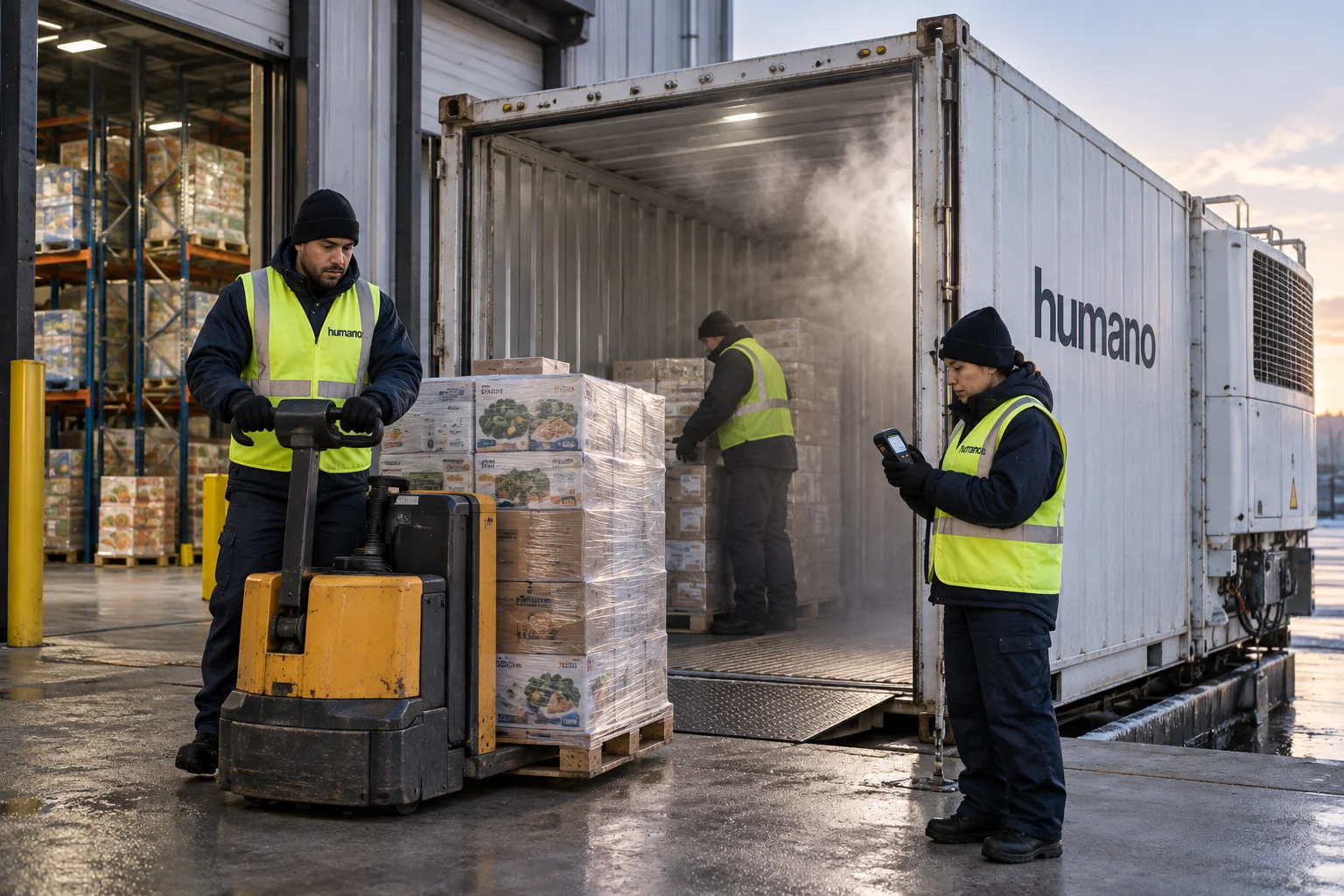
Unloading a reefer container at a cold storage DC without breaking the cold chain takes more than a forklift and a few hands. A cold storage facility needs a reefer container unloading crew, built the way Humano staffs its Logistic Lumper Services teams, that shows up certified and treats temperature control as the job.
By Humano Team, Logistics & Lumper Specialists
What Does a Reefer Container Unloading Crew Actually Do at a Cold Storage DC?
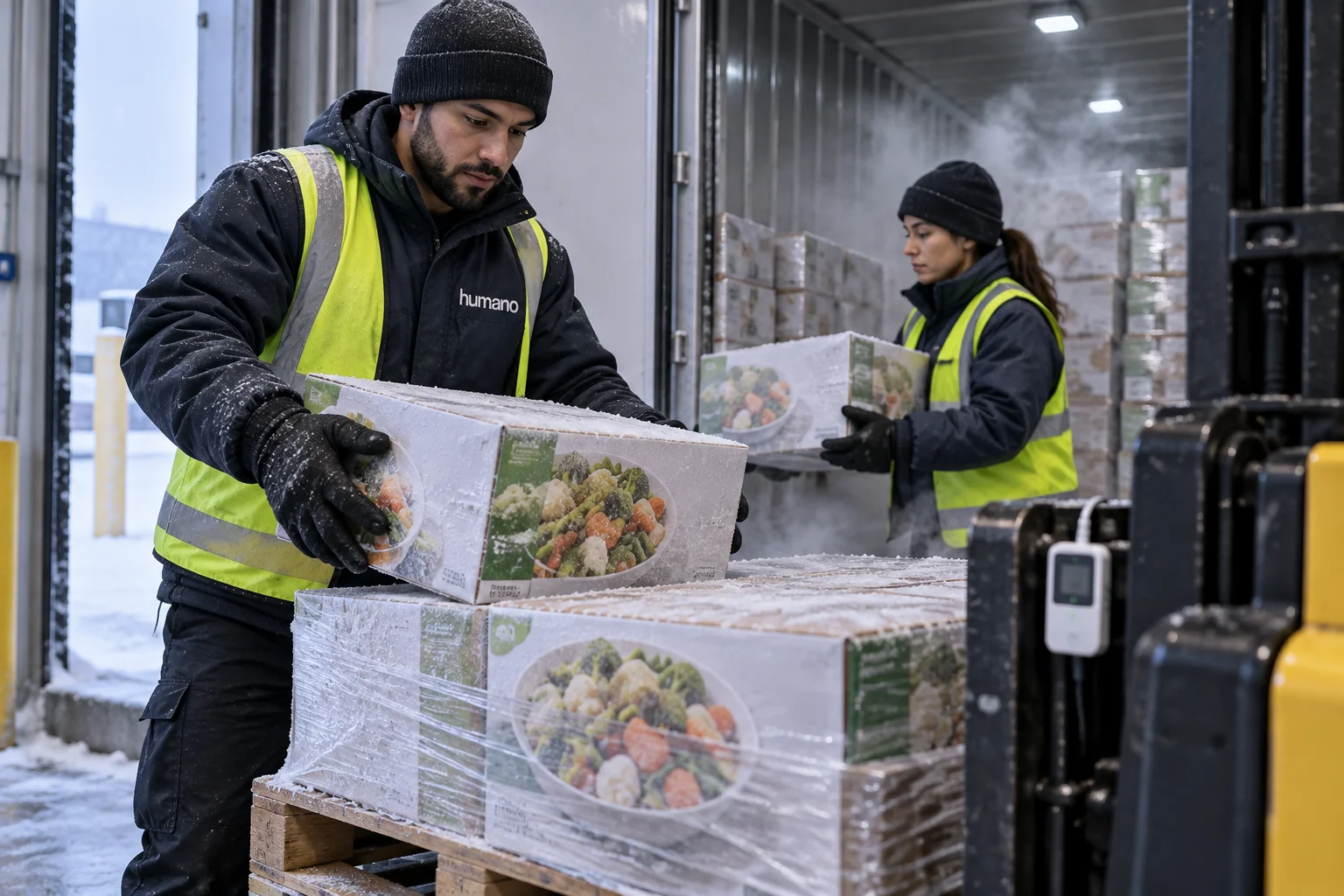
A reefer container unloading crew breaks the container seal, checks the internal temperature against the bill of lading, and confirms the reefer unit is holding its set point before a single pallet moves. From there, the crew stages product by SKU and moves cartons off the container floor by hand or with pallet lifts, transferring everything into cold storage as fast as the layout allows. Every minute the doors stay open, warm air works its way in, so the crew's job is really two jobs at once: physical labor and cold chain protection, including checking for temperature abuse indicators, sorting damaged or thawed goods away from good product, and documenting anything that looks off before it becomes a claim. This work also touches food safety: frozen proteins, dairy, and fresh produce carry different tolerance windows, and a crew that doesn't understand the difference can turn a routine unload into a rejected load. That's the standard a dedicated Container Unloaders crew should be held to on every reefer job, not just the ones a manager happens to walk by.
Qualifications, Certifications, and Safety Protocols to Require
Certifications and OSHA or Forklift Requirements
Anyone operating a forklift or electric pallet lift inside a reefer container needs a valid powered industrial truck certification under OSHA's general industry standard, on file before the crew shows up. Beyond forklift credentials, look for training in cold storage specific hazards: cold stress recognition, safe footing on frost-slick floors, and safe handling around a running generator or compressor unit. A provider that can produce training records for its crew, not just a company-wide policy, is the one worth keeping.
Safety Protocols Inside a Refrigerated Container
Working inside a refrigerated container differs from a standard dry van: air exchange is limited, floors ice over fast when a seal breaks, and cold stress sets in quicker than most crews expect. A reliable crew rotates workers on a schedule that allows warm-up breaks, issues insulated gloves and slip-resistant footwear, and never runs a fuel-powered generator inside a closed container because of carbon monoxide risk. Protocols should also cover how the crew responds if the reefer unit's temperature control fails mid-unload, including who gets notified and how fast.
Equipment, Speed, and Temperature Control During Unloading
Equipment, timing, and temperature control all interact during a reefer unload, and a crew that gets one wrong can undercut the other two.
Equipment a Contracted Crew Should Bring
A contracted crew should arrive with its own pallet jacks or electric lift equipment rated for a reefer container's floor load, portable temperature loggers to spot-check the load as it comes off, dock levelers or bridge plates sized to the trailer height, and door seals or dock shelters that block outside air once the doors open, along with confirming the reefer unit's alarm and display features work before the doors open at all. Some cold storage DCs run reefer container unloading almost entirely by hand for delicate or mixed-SKU pallets, while others bring in electric lifts or conveyor-assisted setups for high-volume frozen loads, and the right call between manual versus mechanized unloading methods usually comes down to load type and how fast the dock needs to turn.
How Fast a Reefer Container Needs to Come Off the Dock
There's no single number that fits every load, but a standard reefer container carrying palletized frozen or fresh goods usually needs to be fully unloaded within about two hours of the doors opening to keep the product inside its traveling temperature range. A live unload, where the crew works while the driver waits, typically runs faster than a drop and hook because the truck can't leave until the job is done. Distribution centers with tighter dock schedules often set their own internal targets, and a crew's actual speed should be measured against units per hour, not just total container count.
Target Temperature During Unloading
Frozen freight usually needs to stay at or below 0°F, fresh produce and dairy typically run in the 34 to 40°F range, and pharmaceuticals or other temperature-sensitive products may need a narrower band set by the shipper. The goal during unloading isn't to hold the exact number on the display the whole time, that isn't realistic with the doors open, but to limit how long product sits above its safe threshold and maintain enough buffer that nothing crosses into an unsafe range before reaching cold storage.
Live Unload vs. Drop and Hook: What Changes for Reefer Freight
A live unload keeps the tractor attached to the reefer container the entire time the crew works, with the driver waiting on-site until the last pallet is off. A drop and hook has the driver drop the container, often on a genset or plugged into shore power to keep the unit running, and leave, with the crew unloading on their own schedule and a different truck hooking up later. For cold storage freight, drop and hook adds a variable dry freight doesn't have to worry about as much: someone has to monitor the container's power source and temperature control the entire time it sits, not just during the unload window. A live unload trades that monitoring burden for a tighter timeline, since the clock runs on driver detention the moment the truck backs in.
Vetting a Labor Provider and What Belongs in the Contract or SLA
What to Look for When Vetting a Reefer Unloading Provider
Ask any prospective provider how many cold storage DCs they currently service, not just general warehouse labor; reefer container unloading has enough of its own hazards and pace requirements that dock labor experience doesn't automatically transfer. Look for proof of insurance that covers cargo damage, a track record of low no-show rates, and on-site leadership that can make real-time calls if a load shows up compromised. A provider that can scale a crew up during peak season without dropping its safety standards is more valuable long-term than one that's simply cheaper per hour.
What Belongs in the Contract or SLA
A solid SLA spells out a minimum units-per-hour benchmark for reefer container unloading, required temperature logging at set intervals, and clear liability language for who eats the cost if product is damaged because the crew left doors open too long or mishandled a pallet. It should also set staffing minimums per shift, insurance certificate requirements, and a defined process for reporting a temperature excursion the moment it's discovered, not at the end of the shift. Cost terms should state plainly whether the provider bills per container or by the hour, since that line changes how the crew is incentivized to work.
What It Costs to Hire a Contracted Reefer Unloading Crew
Pricing for reefer container unloading crews usually runs on one of two models: a flat rate per container, sometimes called per-container devanning, or an hourly crew rate billed against however long the job takes. Per-container pricing gives a DC predictable costs and pushes the incentive toward speed, while hourly pricing shifts more of the risk onto the buyer if a load runs into trouble. Neither model is universally cheaper, and the right one usually depends on how consistent your reefer container volume is week to week, a distinction that plays out further in per-container versus hourly pricing for container unloading generally. Whatever the billing model, ask what's included: standard equipment, temperature logging, and cleanup should typically be bundled rather than billed as extras.
Frequently Asked Questions
Can a reefer container stay powered on while it's being unloaded?
Yes, and in most cases it should. Keeping the reefer unit running during unloading helps maintain internal temperature control for whatever product hasn't come off yet. The crew typically only needs power to the reefer unit itself, from the tractor, a genset, or shore power at the dock, not from the trailer's engine idling the whole time.
What happens to product if the cold chain breaks during unloading?
Product that spends too long outside its safe temperature range during unloading can be flagged, quarantined, or rejected outright, depending on the shipper's food safety policy and how long the excursion lasted. A reliable crew documents the temperature and duration of any exposure immediately, since that record usually determines whether the load gets accepted, discounted, or refused at receiving.
Do lumper crews handle reefer containers, or only dry freight?
Lumper crews handle both. Reefer container unloading calls for the same core lumper skills, hand-stacking, sorting, and staging, plus added training around cold storage hazards and temperature-sensitive freight. A logistics provider that only staffs dry van work usually isn't the right fit for a cold storage DC's needs.
Is a live unload safer than drop and hook for refrigerated freight?
Not inherently, but it removes one variable: nobody has to monitor the container between the unload and the next haul. Drop and hook works fine for refrigerated freight as long as the container stays on reliable power the entire time it sits, with someone checking its temperature control on a set schedule rather than assuming the unit is fine.
Get a Reefer Crew That Protects Your Cold Chain
If your cold storage DC needs a contracted crew that treats temperature control as non-negotiable, talk to Humano about bringing in a reliable reefer container unloading crew for your next shipment. Contact our team to walk through your dock's volume, shift schedule, and turnaround requirements.