
cross-docking in new jersey: same-day port-to-dc flow
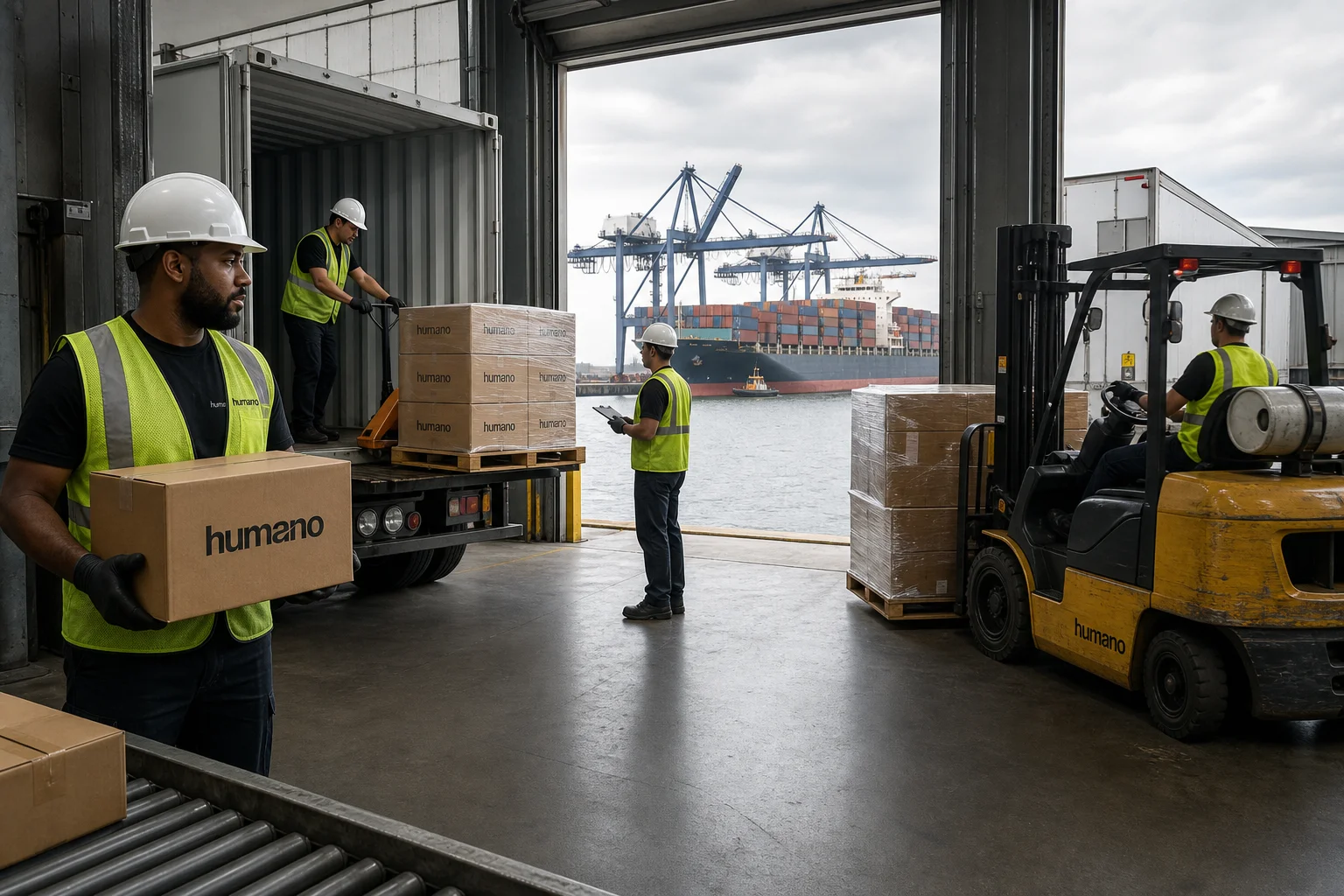
Cross docking in New Jersey moves inbound freight from a shipping container onto an outbound trailer within hours, skipping long-term storage altogether. For shippers pulling cargo through Port Newark and Elizabeth, that same-day flow depends on a crew of Container Unloaders who can clear a container as fast as the terminal releases it.
By Humano Team, Logistics & Lumper Specialists
What Is Cross-Docking and How Does It Work
Cross-docking is a freight handling method where inbound shipments move directly from an arriving trailer or container to an outbound trailer, with little or no time in storage. Instead of putting pallets away on warehouse racking, a cross dock facility receives freight at one set of dock doors, sorts it by destination, and loads it out the opposite doors, often the same shift it arrived. The goal is speed: less handling, less dwell time, and freight that keeps moving toward final delivery instead of sitting on a shelf.
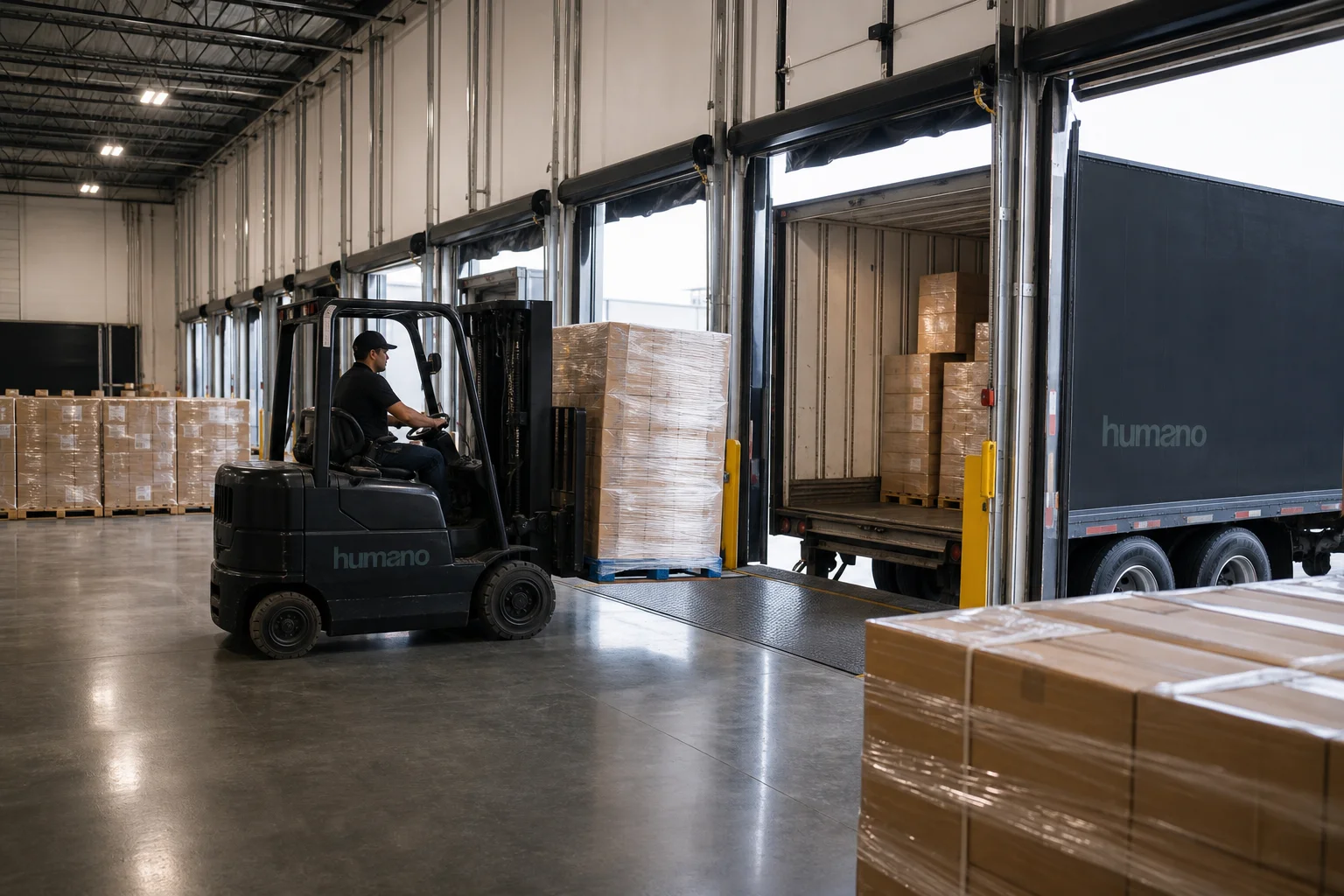
A cross-dock operation still needs real infrastructure: enough dock doors to receive and ship at once, forklifts and pallet jacks to move freight across the floor, and a labor crew that can unload, sort, and reload without creating a bottleneck. What it doesn't need is deep storage racking or a pick-and-pack process built around long-term inventory, the core difference from a traditional warehouse.
Cross Docking in New Jersey: How the Port-to-DC Flow Works
A typical cross docking flow in New Jersey starts the moment a container clears the terminal at Port Newark or the Elizabeth Marine Terminal. A drayage carrier hauls it a short distance to a cross-dock facility near the port, where a crew breaks it down, checks freight against the manifest, and sorts it by outbound destination. Freight bound for the same distribution center or retail region gets consolidated onto one outbound trailer that leaves for the DC the same day the container was unloaded.
Because the ports sit inside a dense industrial corridor, drayage runs are measured in minutes rather than hours, which makes the same-day model possible. A cross dock further inland adds transit time on both ends, eating into the same-day window before freight reaches the sorting floor.
Can Cross Docking Really Happen Same-Day From a New Jersey Port
In many cases, yes, but same-day flow depends on a few conditions lining up: the container usually needs to clear customs before or shortly after arrival, the facility needs an open appointment and enough crew on the floor, and the freight needs to allow fast sorting, meaning palletized or clearly labeled rather than loose and mixed. When those pieces line up, a container that hits the dock in the morning can be reloaded and rolling toward its distribution center by the afternoon.
How Quickly Can Freight Move From the Port to a Distribution Center
Most port-to-DC moves through a New Jersey cross dock land somewhere between same-day and next-day, depending on drayage scheduling, sorting complexity, and how close the outbound DC sits. A single-SKU load moves fastest, while a mixed container split across several retail destinations takes longer to sort but still typically clears the dock within 24 hours.
Why New Jersey Is a Hub for Cross Docking Near the Ports
New Jersey sits next to the Port of New York and New Jersey, the busiest port complex on the East Coast, the main reason cross-docking activity concentrates here instead of further inland. Freight coming off ships at Port Newark or Elizabeth reaches a cross dock facility in minutes, not hours, and the state's highway network, the Turnpike, I-95, and I-78, puts tens of millions of consumers within a single day's drive.
That combination of port access and highway density is also why the region's logistics footprint clusters along the Exit 8A corridor and the ports themselves. A shipper running cross docking near the port cuts out an extra inland drayage leg that would otherwise add a full day before freight reaches a store shelf or fulfillment center.
Industries That Use Cross Docking Services in New Jersey
Retail and apparel importers, grocery and perishable food distributors, e-commerce and DTC brands managing inbound container volume, and industrial or automotive parts suppliers all lean on cross docking in New Jersey to keep freight moving instead of paying for storage they don't need. Humano's Warehouse Labor crews support this mix directly, staffing the dock during peak season so freight doesn't stall waiting on hands to unload it.
What Freight and Costs Look Like for Cross Docking in New Jersey
What Types of Freight Are Best Suited for Cross Docking
Cross docking works best for freight that's already palletized or labeled by destination, moves in predictable, repeatable volume, or is time-sensitive or perishable and can't sit in storage. Retail-ready freight, already tagged and packed for a specific store or DC, is an especially strong fit since it needs almost no additional handling once it's off the container. Freight needing significant repackaging, relabeling, or quality inspection is usually a better fit for a traditional warehouse, where there's time built in for that extra work.
How Much Does Cross Docking Cost in New Jersey
Cross docking cost usually comes down to a handful of variables: freight volume, how labor is structured (a per-container crew rate versus hourly labor), how much sorting is required, and how long freight dwells on the dock before it goes back out. A straightforward, single-destination container costs less than a mixed load split six ways. Because those variables shift from one shipment to the next, providers typically quote cross docking solutions per project rather than off a flat rate card, so it's worth getting a quote based on your actual freight profile.
Cross Docking Versus Traditional Warehousing
The core difference between cross docking and traditional warehousing is time in storage. A cross dock is built around throughput: freight in one door and out another within hours or a day, with minimal racking and no real inventory layer. A traditional warehouse is built around storage: freight gets put away, tracked, picked, and shipped out later, sometimes much later, based on demand rather than arrival.
Is Cross Docking Cheaper Than Storing Inventory in a Warehouse
For freight that moves fast and doesn't need to sit, cross docking is usually cheaper since it avoids storage fees, put-away labor, and the pick-and-pack process altogether. That said, businesses needing a buffer of safety stock, or freight that arrives faster than it sells, often still need some long-term storage alongside a cross-dock flow. The right answer depends on how predictable your outbound demand is, worth discussing directly with your provider rather than assuming one model fits every SKU.
How to Choose a Cross Docking Provider Near the Port of New York/New Jersey
Look for a provider with a facility genuinely close to Port Newark and the Elizabeth Marine Terminal, since every extra mile of drayage eats into the same-day window. Beyond location, ask about crew scalability during peak season, how the facility handles appointment scheduling with steamship lines and drayage carriers, and whether the team has direct experience with your freight type, be it retail-ready cartons, palletized grocery freight, or industrial parts. A provider already running Logistic Lumper Services alongside cross docking tends to flex crew size faster when volume spikes.
Do You Need a Customs Broker for Cross Docking at New Jersey Ports
Usually, yes. Customs clearance is typically handled by a licensed customs broker before or shortly after a container leaves the port, and a cross-dock provider doesn't replace that role. A good partner coordinates closely with your broker and drayage carrier so the container moves to the dock as soon as it clears, rather than burning the same-day window while paperwork catches up.
Frequently Asked Questions
What is the difference between cross docking and transloading?
Cross docking moves freight from an inbound container straight to an outbound trailer with minimal sorting, usually for freight already organized by destination. Transloading typically involves moving freight between two different transport modes, such as ocean container to domestic trailer, and often includes more repacking. Many New Jersey facilities handle both under one roof.
How long does cross docking take at a New Jersey facility?
Most cross-dock moves clear within the same day to about 24 hours, depending on sorting needs and how quickly drayage delivers the container from the port. Simple, single-destination loads move fastest, while mixed containers bound for several DCs take a bit longer to sort.
Does cross docking work for LTL freight?
Yes, cross docking is common for less-than-truckload freight, since a cross dock can consolidate several smaller LTL shipments bound for the same region onto one outbound trailer, often more efficient than shipping each one separately.
Is cross docking available near Port Newark and Elizabeth specifically?
Yes, proximity to Port Newark and the Elizabeth Marine Terminal is the main reason cross docking clusters in this part of New Jersey rather than further inland, since it keeps drayage time to a minimum on both ends.
What happens if freight cannot be sorted the same day it arrives?
If freight needs more sorting or inspection than a same-day window allows, it usually shifts into short-term storage rather than staying on the dock, then goes out on the next available outbound trailer once it's ready.
Get a Cross Docking Team That Moves With the Port
Freight sitting on a dock is freight not making money, and a crew that cannot keep pace with your container schedule turns a same-day plan into a two-day delay. Contact Humano to staff your next New Jersey cross-dock run with a crew built for port timelines.