
how to vet a container unloading provider: safety, throughput, billing
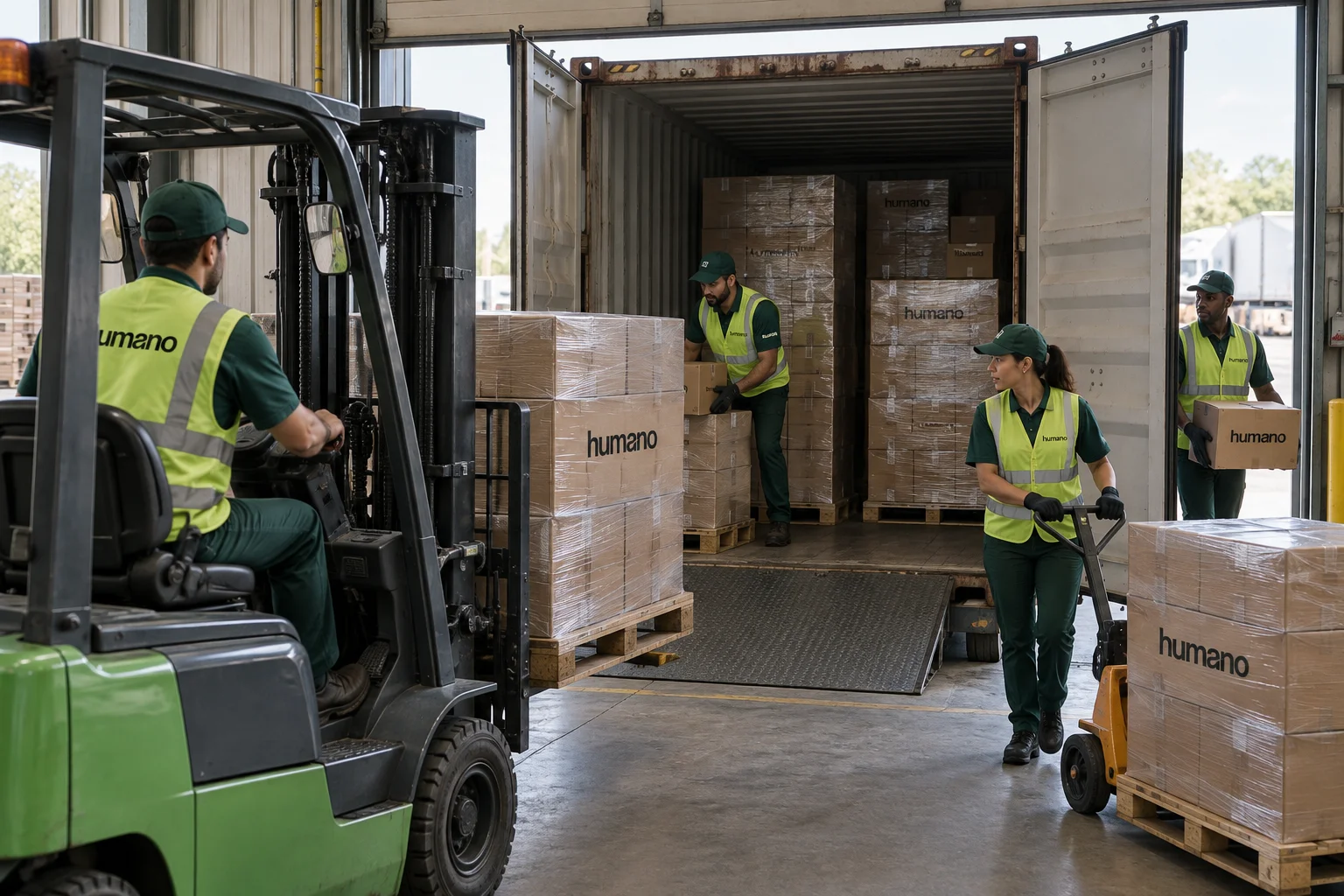
Choosing the right partner comes down to three things: how they handle safety, how fast their crews move product, and how clearly they bill for it. This guide walks through how to choose a container unloading service, from checking insurance and certifications to comparing bids from Container Unloaders providers, so you can hire with confidence.
By Humano Team, Logistics & Lumper Specialists
How to Choose a Container Unloading Service
Every unloading provider will tell you they're fast, safe, and affordable. The way to test that claim is to look at three specific areas before you sign anything: safety practices and insurance coverage, realistic throughput numbers for your container types, and a billing structure you can audit against the invoice. A provider who can't produce a written safety record, a clear per-container or hourly rate, and references from other operations managers isn't ready to run your unloading process at scale. Ask for documentation up front rather than taking a sales pitch at face value, and treat any hesitation to share safety or pricing details as a warning sign, not a formality to work around later.
How Do You Evaluate a Container Unloading Company's Safety Practices and Record?
Ask for the provider's recordable incident rate and how it compares to the labor-services industry average, not just a claim that they're safety-first. A company that tracks and shares this number is managing safety as a metric, not an afterthought. Also ask how new lumpers are trained before they're allowed on a live unloading job. OSHA's general industry standards cover manual material handling, powered equipment, and container or trailer work, and a serious provider trains new hires against those standards before day one rather than relying on on-the-job learning alone.
What Licensing, Certifications, and Insurance Should a Container Unloading Company Carry?
At minimum, confirm the provider carries general liability insurance, workers' compensation coverage in every state they staff, and commercial auto coverage if their crews or equipment travel between your facilities. Ask whether forklift operators hold current powered industrial truck certification, since OSHA requires operator training and evaluation for that equipment specifically. A provider that can produce certificates of insurance and training records within a day of asking is one that keeps its paperwork current, which usually tracks with how it runs a crew on your dock too.
What Insurance Should a Container Unloading Company Have Before You Hire Them?
Beyond the certificates above, ask what the policy actually covers: cargo damage during the unloading process, injury to a lumper on your property, and damage to your equipment or racking. Get the certificate holder language updated to name your facility before the crew's first shift, not after an incident. If a provider can't add you as a certificate holder quickly, their insurance relationship is likely thinner than the policy limits suggest.
What Unloading Speed and Throughput Can You Expect From a Container Unloading Provider?
Throughput depends heavily on how the container was packed. A floor-loaded 53-foot container packed tight to the ceiling takes a crew considerably longer than the same container palletized and loaded with air gaps. Ask a provider for their typical crew size and hours for both configurations, and ask them to walk through a recent job with similar freight to yours rather than a generic fast-turnaround answer.
How Long Does It Take to Unload a Full Container?
A four-to-six person crew can typically clear a standard floor-loaded 40 or 53-foot container in a few hours, while a palletized container of the same size often moves faster because the crew is offloading pallets rather than hand-stacking cartons. Actual time varies with freight weight, damage rates you require them to document, and whether product needs to be sorted or scanned during unloading. The right benchmark is your own historical numbers, not an industry average, since dock layout and freight mix affect it more than crew skill alone.
Manual crews adapt to irregular cartons and mixed SKUs in ways a mechanized line can't, but that flexibility costs raw speed once a container is uniform and palletized, which is why manual and mechanized unloading trade off differently depending on the load.
How Is Container Unloading Typically Priced or Billed?
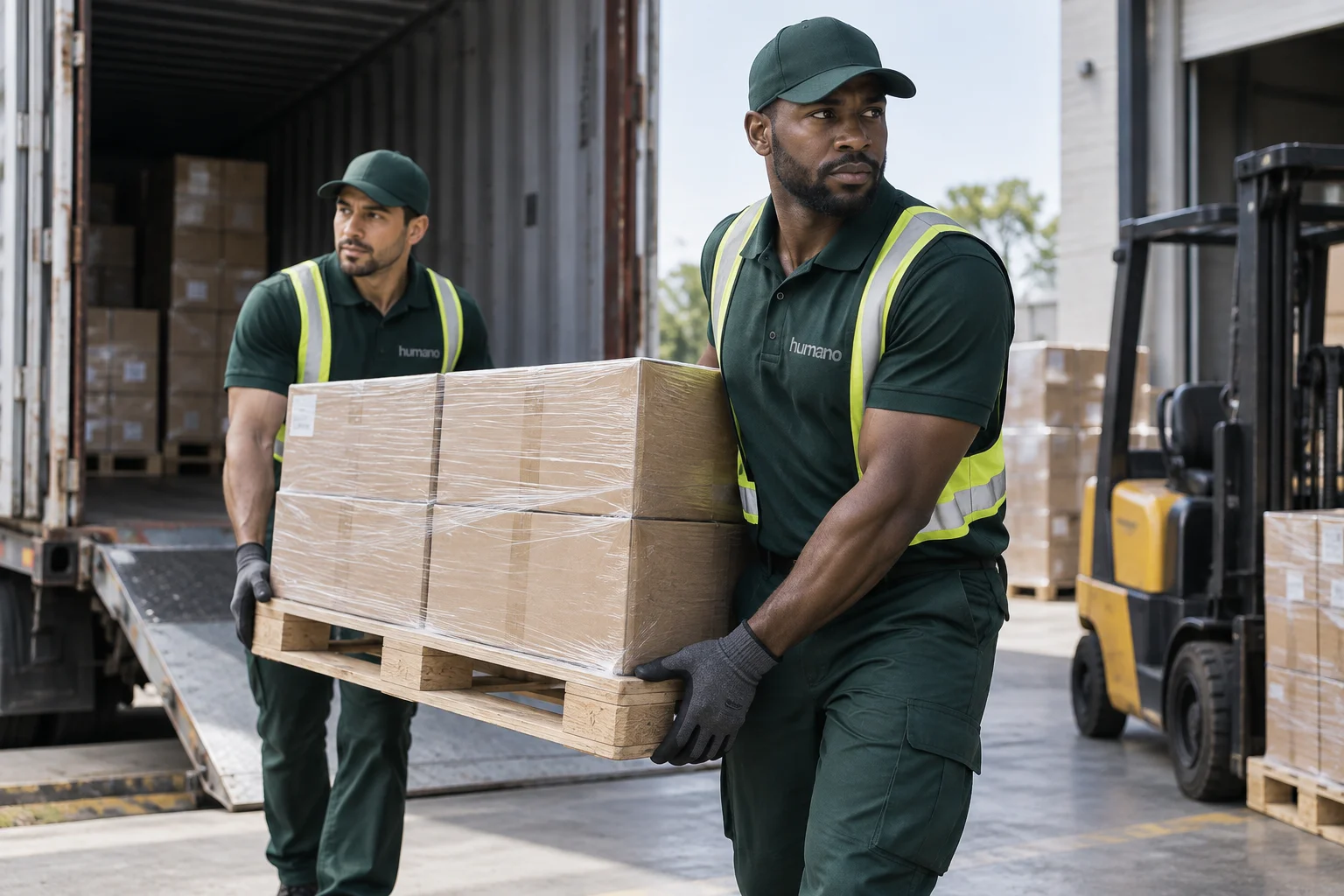
Providers usually bill one of two ways: a flat per-container rate that covers the full devanning regardless of hours worked, or an hourly rate based on crew size and time on site. A per-container rate is easier to budget against because you know the cost before the truck arrives, while hourly billing can work better for irregular freight where hours vary week to week. Ask which model a quote uses before comparing it to another provider's number, since a lower hourly rate can still add up to a higher total cost on a slow container.
How Much Does It Cost to Unload a Shipping Container?
Cost depends on container size, whether freight is floor loaded or palletized, freight weight, and your local labor market, so there's no single number that applies everywhere. What matters more than the headline rate is what's included: whether sorting, scanning, damage documentation, and trash removal are part of the base price or billed as add-ons. Two quotes that look close on the surface can differ significantly once those inclusions are accounted for, which is why weighing per-container pricing versus hourly billing matters before you sign anything.
What Questions Should You Ask Before Hiring a Container Unloading Provider, and How Do You Compare Quotes?
Beyond safety, throughput, and billing, ask a few practical questions. How many crews can run at your facility at once during peak season? If a job runs long, does overtime kick in automatically or does someone call first? Who documents cargo damage, and how quickly do you get that report? Can you call current clients with a similar freight profile as a reference? Knowing how to choose a container unloading service comes down to how directly a provider answers questions like these, not how polished the sales pitch sounds.
How Do You Compare Quotes and Bids From Different Container Unloading Companies?
Line up quotes side by side using the same units: cost per container, not cost per hour, unless every bid uses hourly billing. Confirm each quote covers the same scope, crew size, equipment, insurance minimums, and what's included versus billed separately. The lowest number on paper isn't the lowest cost if it comes from a thinner crew that takes twice as long or a provider that bills separately for services a competitor includes.
What's the Difference Between Floor Loaded and Palletized Container Unloading, and Who Supplies the Labor and Equipment?
Floor loading means cartons or product are hand-stacked directly on the container floor and walls to maximize cube space, with little or no pallet structure inside. Palletized containers arrive with product already built onto pallets, usually carrying less total freight per container because pallets take up volume. Floor-loaded containers require more hand labor and take longer to devan; palletized containers unload faster but usually need a forklift or pallet jack and enough dock clearance to stage pallets as they come off.
Do Container Unloading Companies Supply Their Own Labor and Equipment?
Most established providers supply their own crews, forklifts, pallet jacks, and basic safety gear, and bring their own workers' compensation and liability coverage rather than relying on yours. That matters for both liability and staffing consistency: a provider who shows up with trained lumpers and their own Logistic Lumper Services crew doesn't leave you scrambling for headcount during a peak week, and equipment they own and maintain is one less thing your facility has to inventory and repair.
Frequently Asked Questions
How do you check a container unloading company's safety record before hiring them?
Ask for their recordable incident rate, request references from clients with similar freight, and confirm active insurance certificates naming your facility. A provider that hesitates to share safety metrics or delays getting you added as a certificate holder is telling you something about how they'll perform once your freight is on their dock.
What's typically included in a container unloading rate?
A base rate usually covers the crew, basic equipment, and standard devanning, but sorting, scanning, damage documentation, and trash removal are sometimes billed separately. Ask for a written scope with every line item before comparing quotes, since two similar-looking rates can cover very different amounts of work once the add-ons are counted.
Can one provider handle both floor-loaded and palletized containers?
Yes, most full-service providers staff and equip for both, though crew size, equipment, and time required differ. Ask a provider directly how their approach and pricing change between the two before assuming one quote covers both scenarios.
How quickly can a lumper crew unload a standard shipping container?
A typical four-to-six person crew often clears a standard container in a few hours, though exact timing depends on whether freight is floor loaded or palletized, total weight, and whether damage needs to be documented during the process. Ask a provider for their average time on freight similar to yours rather than a generic estimate.
What certifications should lumper crews have before working in my facility?
Forklift operators should hold current powered industrial truck certification, and crews should be trained on manual material handling and container-specific hazards consistent with OSHA's general industry standards. Ask for training records, not just a verbal assurance, and confirm the provider retrains crews periodically.
Get a Straight Answer on Your Unloading Needs
If you're comparing container unloading providers for an upcoming peak season or a new lane, a quick conversation about your container mix, dock layout, and volume is the fastest way to get a realistic throughput and pricing estimate instead of a generic quote. Contact our team to walk through your unloading needs and get a straight answer on crew size, timing, and cost.