
best lumper service providers for high-volume grocery and food dcs
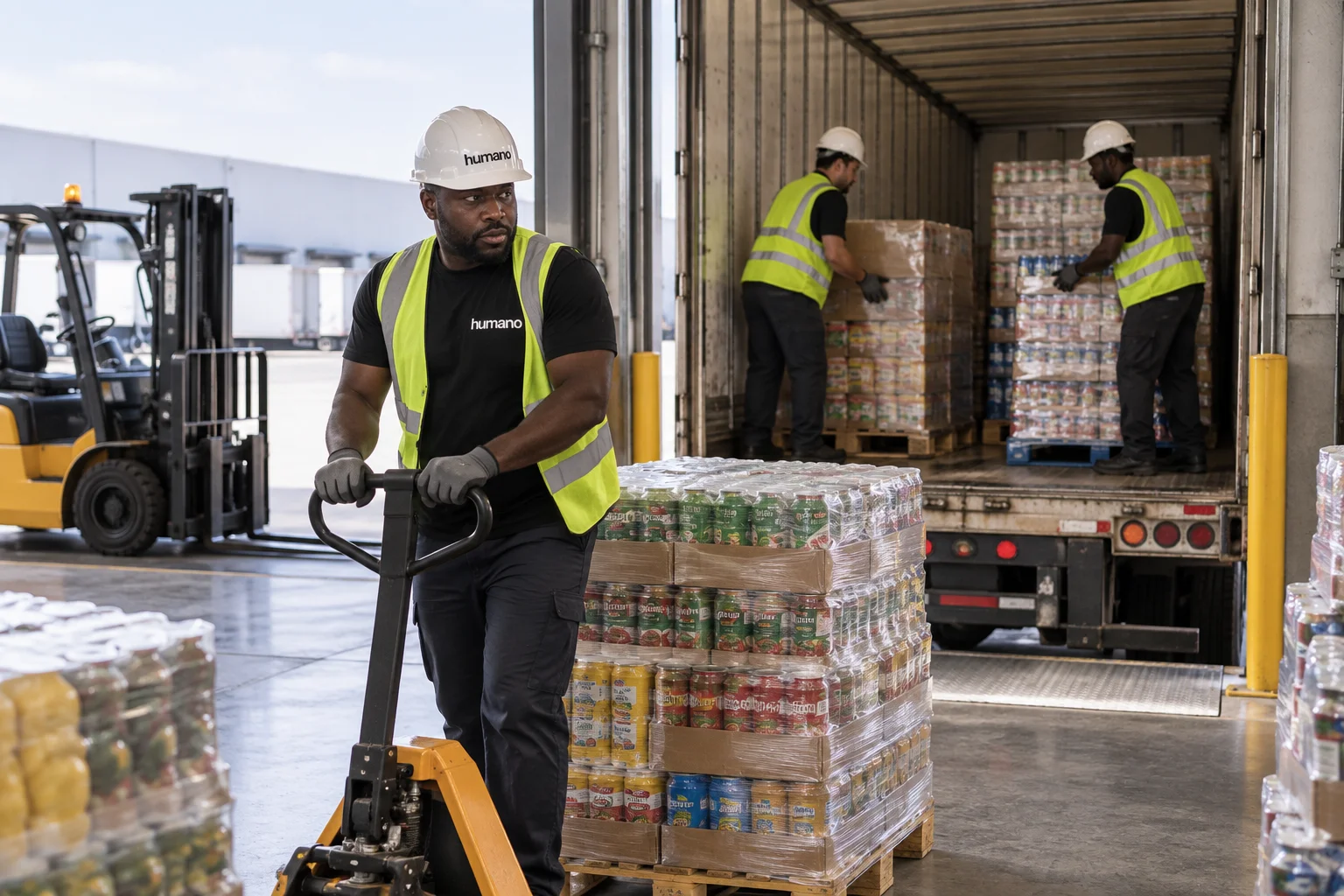
Grocery and food distribution centers run on tight receiving windows, so the best lumper service providers for high-volume grocery and food DCs are the ones who can staff a dock reliably, unload fast, and keep detention off the invoice. Humano's Logistic Lumper Services build crews around that exact standard, seven days a week.
By Humano Team, Logistics & Lumper Specialists
What Is a Lumper Service and How Does It Work at a Grocery or Food Distribution Center?
A lumper service is a third-party labor crew hired to load or unload freight from a trailer at a warehouse or distribution center, so the truck driver never has to touch the freight themselves. At a grocery or food DC, that work usually means breaking down mixed pallets, sorting product by aisle or department, and staging it for putaway, all within a receiving window measured in minutes rather than hours. Lumper services exist because grocery freight is dense, temperature-sensitive, and mixed-SKU in a way that slows down a standard forklift-only unload. A crew of trained lumpers works the trailer in a coordinated sequence: floor loaders pull cases, a sorter directs product to the right lane, and a lead confirms count against the bill of lading before the driver leaves the dock.
What Should You Look for When Choosing the Best Lumper Service Provider for a High-Volume DC?
Choosing among the best lumper service providers for high-volume grocery and food DCs starts with staffing depth, not price. A provider that leans on the same six lumpers for every account will leave your dock exposed the first time volume spikes or someone calls out. Look for a bench deep enough to swap crew members without slowing a receiving window, and a track record specific to grocery and food, not general freight.
Before signing with any crew, confirm workers' comp certificates, cargo insurance limits, and backup staffing for call-outs, the core vetting questions for lumper providers that separate a stable partner from a one-truck operation.
Insurance, Bonding, and Certifications to Verify
A legitimate lumper service provider carries general liability and workers' compensation coverage that names your facility, plus cargo or bailee insurance covering product damaged during the unload. Many grocery and food DCs also require food-safety awareness training for crews handling open cases, plus background checks for anyone working inside a secured facility.
Finding a Reliable Crew Near Your Distribution Center
The fastest way to find a reliable lumper service provider near a specific distribution center is to ask the DC's receiving manager, since most facilities keep an informal list of crews that show up on time. A national provider with an established presence near your address solves the same problem, because dispatch already knows the facility's dock layout and appointment system.
What Are the Best Lumper Service Providers for High-Volume Grocery and Food DCs?
There is no single national ranking of lumper crews, but the best lumper service providers for high-volume grocery and food DCs share a few traits: multi-facility coverage, a dedicated account manager instead of a call center, and pricing built around your actual freight mix rather than a flat rate copied from a dry-van account. Humano staffs container and trailer crews built specifically for retail and grocery receiving, with lumpers trained on mixed-pallet breakdown and cold-chain product handling.
Provider size cuts both ways: a national brand brings standardized training across every distribution center, while a smaller regional crew can move faster on schedule changes at a single site. The difference in day-to-day operations usually comes down to a managed cost-per-unit crew model versus a flat per-hour billing arrangement, and a DC running high volume should ask each finalist which one they're quoting before comparing rates.
What Is a Lumper Fee, and How Much Do Lumper Services Cost at High-Volume DCs?
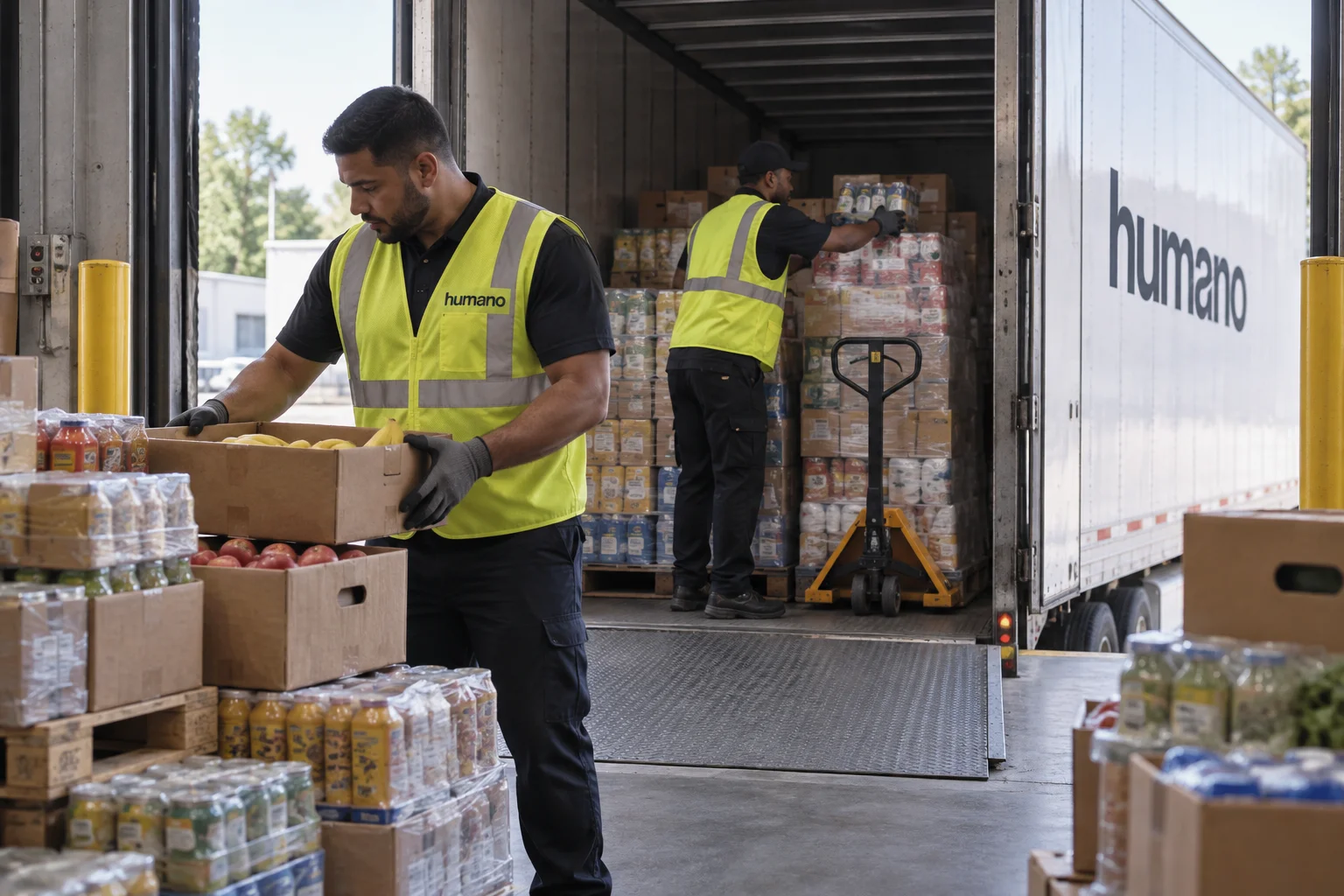
A lumper fee is the charge a shipper, receiver, or carrier pays to the crew that unloads a trailer, and the amount depends on trailer size, product mix, and how much sorting the freight needs once it's off the truck. Grocery and food DCs tend to sit at the higher end of typical industry lumper pricing because mixed-SKU pallets and temperature-sensitive product take longer to break down and stage than a single-SKU dry-van load.
Most high-volume DCs move away from paying a lumper fee per load and instead contract a lumper service provider on a monthly or per-unit basis, smoothing costs across the full receiving schedule. Whoever holds the contract, usually the DC or the third-party logistics provider managing the facility, pays the lumper fee; it is not automatically the truck driver's expense once a facility has its own contracted crew.
Third-Party Lumper Services vs an In-House Unloading Crew: What Actually Changes?
An in-house unloading crew means warehouse employees, already on payroll for putaway and picking, get pulled onto the dock whenever a trailer arrives. That works at low volume, but at a high-volume grocery or food DC it competes directly with the fulfillment work those employees are supposed to be doing. A third-party lumper service keeps unloading staffed separately, so warehouse labor stays focused on orders instead of getting reassigned every time a trailer backs in.
The other difference is accountability. A contracted crew carries its own insurance, safety training, and performance standard tied to the contract, while an in-house team's unloading quality is just one more thing a warehouse manager has to supervise. If your DC already runs lean on headcount, Humano's Warehouse Labor teams can supplement pallet building and put-away alongside a dedicated lumper crew, typically staffed within days of a signed agreement.
How Lumper Services Reduce Detention Time and Dock Delays
Detention charges start piling up the moment a driver sits past their scheduled appointment window waiting for a dock to open, and a slow or understaffed unload is one of the most common reasons that happens at busy grocery and food DCs. A dedicated lumper crew works the trailer the moment it's backed in, rather than waiting for warehouse staff to finish a competing task first, which cuts the single biggest variable in how long a driver sits at the dock.
Dock delays ripple through the rest of the supply chain, since a late trailer at the DC often means a late outbound load somewhere else, and repeated detention on a lane can push a carrier to stop serving that facility altogether. Providers that specialize in freight unloading at high-volume DCs also stagger crew shifts around known peak appointment windows, the scheduling discipline that actually improves turnaround and reduces detention.
Frequently Asked Questions
Is charging a lumper fee legal for freight carriers and drivers?
Yes. Lumper fees are legal under federal law as long as the carrier reimburses the driver for a properly disclosed and documented charge. The Federal Motor Carrier Safety Administration does not prohibit lumper fees; it requires carriers to reimburse drivers for legitimate, documented charges rather than leaving the cost on the driver personally.
How do truck drivers pay for lumper services at a DC?
Drivers typically pay with a company fuel card, a prepaid lumper service like Comchek or EFS, or cash, then submit the receipt to their carrier for reimbursement. Many high-volume DCs with a contracted lumper service provider skip driver payment entirely, since the facility settles directly with the crew instead of collecting from each driver at the dock.
What's the difference between a lumper fee and a detention fee?
A lumper fee pays the crew that physically loads or unloads the trailer. A detention fee compensates the carrier for the driver's time sitting at a facility beyond the scheduled appointment window. They can both apply to the same load, but they are billed to different parties for different work.
How fast can a lumper crew unload a truckload at a high-volume grocery or food DC?
Turnaround varies by trailer size and product mix, but a dedicated crew working a standard mixed-pallet grocery load usually finishes well inside a typical appointment window, often close to an hour for a full trailer. Temperature-sensitive or heavily mixed-SKU freight can run longer, since it needs more sorting before it's staged for putaway.
Can drivers refuse to pay a lumper fee?
A driver can refuse to pay out of pocket, but most carriers require drivers to pay at the dock and submit the receipt for reimbursement, since refusing can mean the trailer doesn't get unloaded and detention starts accumulating instead. Facilities with a contracted lumper service provider avoid this friction because the fee never lands on the driver.
Get Your High-Volume DC Staffed With a Dedicated Lumper Crew
A dock that depends on whichever warehouse employee is free that hour is not built for high-volume grocery and food receiving. Reach the Humano team through Contact to get a lumper crew quoted against your dock's freight mix and turnaround targets.