
why dtc brands sign annual cost-per-unit fulfillment contracts
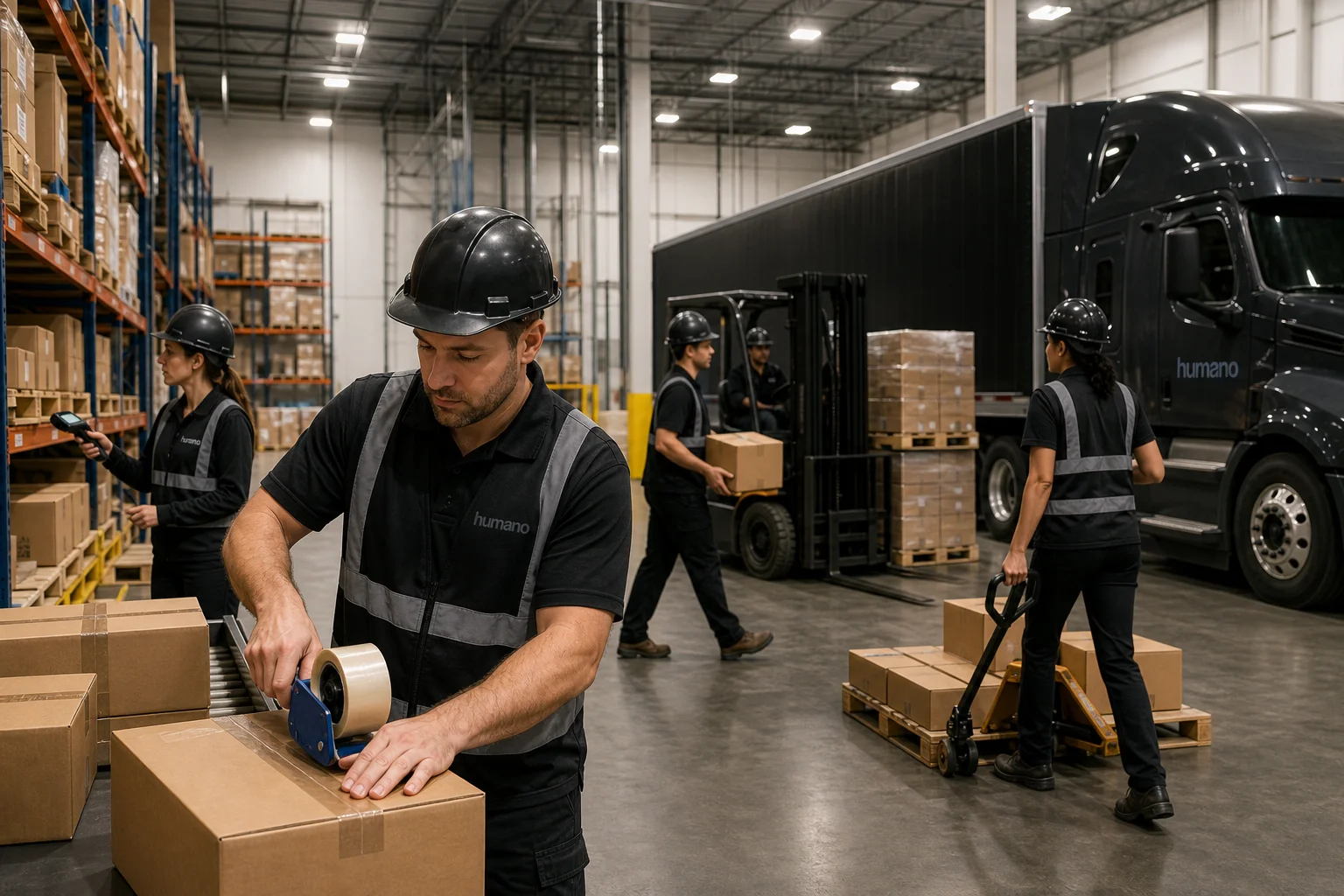
Most DTC brands don't chase long contracts for the sake of loyalty. Understanding why DTC brands sign annual cost-per-unit fulfillment contracts starts with predictability: a fixed rate per unit locks in cost even when order volume swings hard, and it guarantees dedicated Warehouse Labor coverage instead of scrambling for temp crews during peak.
By Humano Team, Logistics & Lumper Specialists
When a warehouse operator quotes a rate per unit instead of an hourly rate, the DTC brand is buying certainty. Finance teams can forecast fulfillment cost against unit economics instead of guessing at labor hours, and operations teams stop worrying about whether a crew shows up during a demand spike. That's the short answer to why DTC brands sign annual cost-per-unit fulfillment contracts: predictability beats a marginally better spot rate. Most brands that sign annual terms aren't doing it because the rate is always the lowest possible number, they're doing it because a locked per unit price removes an entire category of budget risk for twelve months at a time.
The commitment also works in the other direction. A logistics partner staffing to a guaranteed order volume can hire and train a stable pick pack crew instead of leaning on unpredictable temp agencies, which is exactly the kind of consistency that keeps damage rates and return rates low.
What Cost-Per-Unit Pricing Actually Covers
A cost-per-unit fulfillment contract prices the work by the unit, not the clock. Receiving, putaway, pick pack, packaging, and outbound shipping are usually bundled into a single per unit rate, while services like kitting, custom inserts, or returns processing are often billed per order or as line-item add-ons. Before signing, a DTC brand should get a written breakdown of what counts as one billable unit, a single SKU, a multi-item order, or a case pack, because that definition changes the effective cost per unit dramatically depending on how a product is packed and shipped.
This is one of the most common blind spots in dtc fulfillment pricing: two contracts can quote the same per unit number and represent completely different total costs once order volume and SKU complexity are factored in. The gap usually traces back to how pick pack cost per unit rates get structured in the first place.
The Trade-Off: Per Unit Pricing vs Hourly Temp Labor
Hourly temp labor looks flexible on paper, but it shifts all the volume risk onto the DTC brand. If order volume comes in under forecast, the brand still pays for scheduled hours. If it spikes, temp agencies often can't backfill fast enough to hit same-day or next-day cutoffs, and service levels slip right when customers are watching order status most closely.
An annual per unit contract flips that risk. The fulfillment partner absorbs the staffing volatility and is paid only for units actually moved, which is the same logic behind dedicated Logistic Lumper Services crews built for container and dock work: a fixed crew, a fixed rate, no guessing about whether enough labor will show up on a given morning.
The math isn't always simple. A brand with very stable, high order volume might actually do better negotiating a strong hourly rate with a dedicated crew, since the fulfillment partner has less volatility to price in as risk premium. That's the same trade-off behind cost-per-unit lumper crews versus hourly temp crews: the winning structure usually comes down to how steady a brand's order volume runs month to month, since a partner can price tighter against a predictable baseline than against a volume curve that swings hard.

How Order Volume and Seasonality Drive the Decision
DTC brands with sharp seasonal curves, holiday gifting, back-to-school, weather-driven categories, get the most value from annual cost-per-unit contracts because the rate holds steady whether order volume triples in November or drops in February. A fulfillment partner pricing purely on headcount has to staff for the peak and eat the cost of idle labor the rest of the year, and that inefficiency eventually shows up in the rate a brand is quoted.
Brands with flatter, more predictable demand still benefit, just less dramatically. The main advantage for them is administrative: one rate card, one invoice structure, and one number to model against margin instead of renegotiating labor costs every quarter as growth changes the shape of the business.
The same logic applies whether a brand sells purely through e-commerce or runs a hybrid model with wholesale orders alongside direct-to-consumer volume. A retailer buying in bulk changes the unit economics differently than a customer checking out one item at a time, and a fulfillment strategy that only accounts for one channel usually breaks down once the other channel scales. Inventory positioning, delivery speed promises, and how tightly a brand tracks fulfillment data all factor into whether an annual rate actually protects margins or just locks in a number that looked good on the day it was signed.
The key differentiator between fulfillment partners isn't the headline rate, it's whether they can flex across dozens of products without customers noticing a service dip, and whether pricing gets measurably better as order volume climbs instead of staying flat.
What to Negotiate Before You Sign a Multi-Year Rate
Market conditions and order volume both shift over a twelve-month term, so a DTC brand should negotiate more than just the headline per unit number before signing.
Volume tiers: what rate applies if order volume grows faster than forecast, and what happens if it comes in below the minimum. Returns handling: whether reverse logistics and restocking are priced separately, since returns volume for DTC brands can run well into double digits depending on category. Peak surcharges: whether the contract includes a defined peak season rate or leaves it open to renegotiation every fourth quarter. Exit terms: what notice period and transition support apply if the relationship needs to end before the term is up.
Most brands find that a partner willing to put these terms in writing upfront, rather than handling them as exceptions later, is also the partner that runs a tighter pick pack operation day to day. Beyond the headline rate, it's worth asking how a partner has handled volume swings, returns spikes, and peak season for other clients, since that track record is a better predictor of contract performance than the rate card alone.
Frequently Asked Questions
What does cost-per-unit actually mean in a fulfillment contract?
It means the fulfillment partner charges a fixed rate for each unit picked, packed, and shipped, rather than billing by the hour. The rate usually bundles receiving, pick pack labor, and standard packaging into one number per unit, with add-ons like kitting or returns processing billed separately or per order.
Why do DTC brands prefer annual terms over month-to-month contracts?
Annual terms lock in a stable per unit rate regardless of seasonal order volume swings, which makes budgeting and margin planning easier. Most brands also get staffing priority during peak season, since the fulfillment partner is contractually committed to their volume instead of treating it as overflow work.
Is cost-per-unit pricing always cheaper than hourly labor?
Not always. Brands with very stable, predictable order volume sometimes negotiate a competitive hourly rate with a dedicated crew. Cost-per-unit pricing tends to win for brands with seasonal spikes or unpredictable demand, since it shifts staffing risk onto the fulfillment partner instead of the brand.
What should be defined before signing an annual rate?
The contract should spell out what counts as a billable unit, how returns and reverse logistics are priced, whether there's a separate peak season rate, and what the exit or transition terms look like if the partnership ends before the term is up.
How does order volume affect the rate a DTC brand is quoted?
Higher, more predictable order volume generally earns a lower per unit rate, since the fulfillment partner can staff more efficiently and spread fixed costs across more units. Brands with low or highly volatile volume typically see higher per unit pricing to cover the added staffing risk.
Get a Cost-Per-Unit Quote for Your Fulfillment Operation
If order volume swings are making it hard to staff pick pack operations consistently, a fixed annual rate might be the simpler answer. Contact the Humano team to talk through what a cost-per-unit contract would look like for your warehouse.