
running your own dock crew vs an outsourced managed crew: the retail dc decision
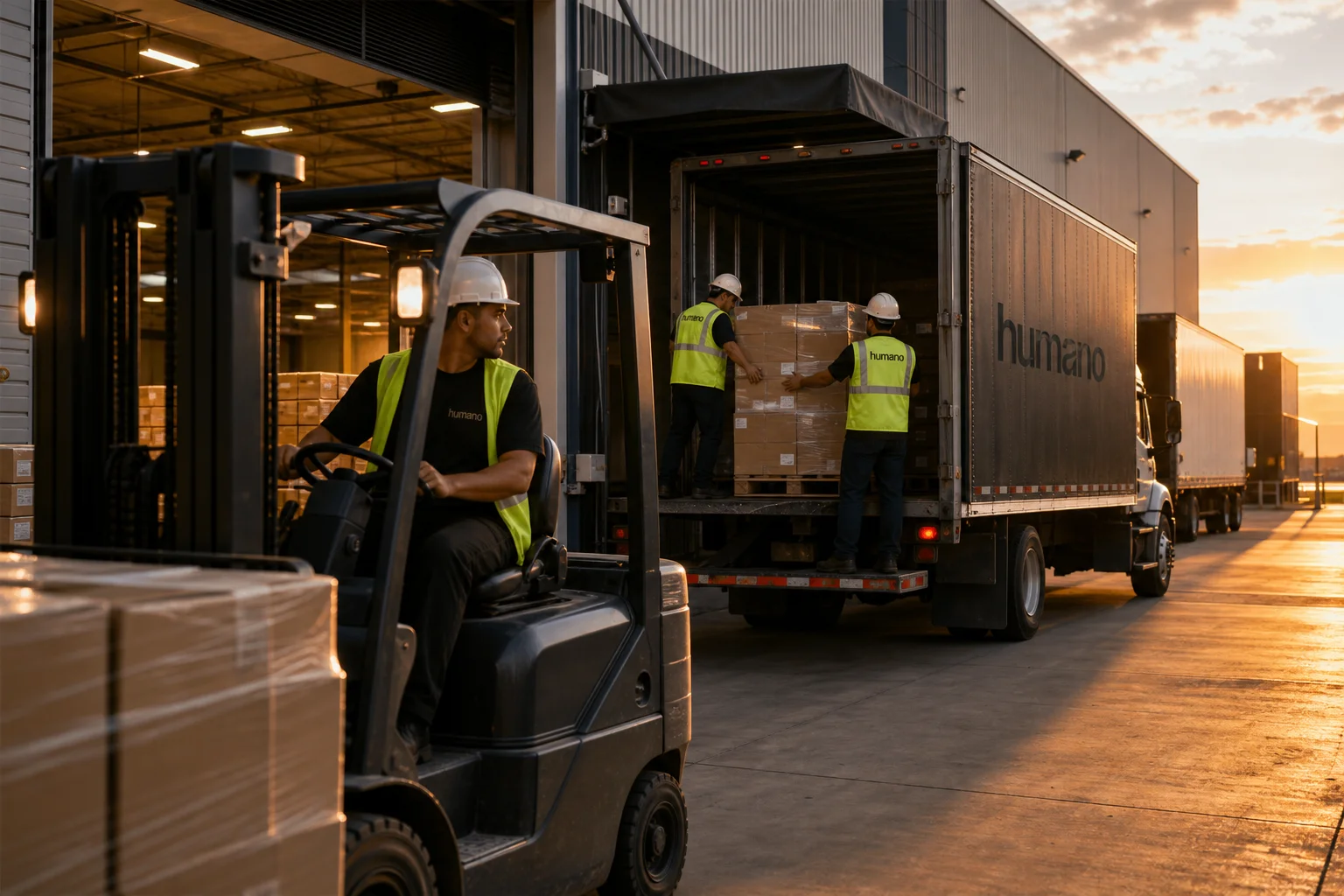
Retail distribution centers hitting steady volume face a real staffing choice: running your own dock crew vs an outsourced managed crew offering Logistic Lumper Services. The right call depends on turnover costs, workers' comp exposure, and how fast you need bodies on the dock when peak season or a new contract hits. Both models work, but they fit different operations.
By Humano Team, Logistics & Lumper Specialists
An in-house dock crew means your company recruits, hires, trains, schedules, and manages every person who touches a trailer or container on your dock. You own the headcount, the payroll, and the workers' comp policy, and you supervise the work directly. An outsourced managed crew means a logistics staffing partner supplies expert lumper crews and dock labor under a services contract: the provider handles recruiting, scheduling, training, and supervision, and you pay for output, cases unloaded, trailers turned, or hours worked.
The core difference isn't just who signs the paychecks. It's who carries the management burden when a crew member calls out, a forklift operator quits mid-shift, or volume spikes without warning. With an in-house crew, that risk sits with your operations manager. With a managed crew, it sits with the provider, and a good provider builds backup labor and supervision into the contract from day one.
What Does It Cost to Staff Your Own Dock Crew Versus Outsourcing to a Managed Crew?
The math behind running your own dock crew vs an outsourced managed crew starts with what each hour actually costs, not just the sticker wage. In-house costs go well past the hourly rate. Add payroll taxes, workers' comp premiums (dock and lumper work carries a high experience-modification rate because of lifting and forklift exposure), recruiting spend, onboarding and safety training, uniforms, overtime during peak weeks, and at least one supervisor per shift. Many companies underestimate this total by 20 to 30 percent because they price only the wage line.
A managed crew contract rolls most of that into a single rate, usually priced per hour, per trailer, or per case. You aren't carrying the comp premium, the recruiting spend, or the supervisor headcount, the provider is. The cost benefits of that structure show up fastest during peak season, when an in-house crew would otherwise need to run overtime or add temp hires with no training pipeline. The comparison mirrors the in-house versus outsourced cost breakeven that DTC fulfillment operators run: outsourcing tends to win at variable or seasonal volume, and in-house tends to win once volume is big enough and steady enough to keep a full crew busy year-round.
Is a Managed Dock Crew More Expensive Than Hiring In-House?
On a pure hourly rate, usually yes. On total landed cost, once you include comp claims, turnover, recruiting, and supervisor time, the gap narrows or reverses for many retail DCs, especially ones running seasonal peaks or a single shift that doesn't justify a full-time HR and safety function.
The Pros and Cons of Outsourcing Your Retail DC's Dock Labor
Once you're weighing how you run your dock crew against bringing in outside labor, the pros and cons split fairly cleanly. Outsourcing gives you flexibility to scale headcount up or down quickly without a hiring cycle, shifts most of the workers' comp and liability exposure to the provider, and frees up your operations team's time and resources for inventory and outbound flow instead of recruiting. It also usually means a faster ramp when a new contract or a big seasonal swing hits.
The tradeoffs: you have less direct day-to-day control over who shows up, you're relying on the provider's training standards and supervision quality, and switching providers takes more coordination than firing and rehiring a single employee. The fix for most of that is picking a provider with a strong safety record and clear supervision on-site, covered below.
How Do Labor Shortages and Turnover Affect an In-House Dock Crew?
Dock and lumper work is physically demanding, and turnover in this labor pool runs high across the industry. Recruiting gets harder during busy times of year, when every DC in the market is competing for the same short supply of qualified forklift operators and lumpers. Losing two or three people in the first few weeks of a new hire cycle is common, and each departure resets the training clock and puts the rest of the crew under more strain.
What Liability and Workers' Comp Risk Come With Running Your Own Dock Crew?
Dock work carries real injury risk: strains from manual lifting, forklift incidents, and trailer-edge falls are the most common claims. When your crew is in-house, those claims run against your workers' comp policy and your experience modification rate, which affects your premiums for years afterward. A strong safety program protects crew health and helps, but the exposure stays on your books as long as the crew is yours. Support from an outside provider's safety and insurance program shifts that exposure off your policy entirely.
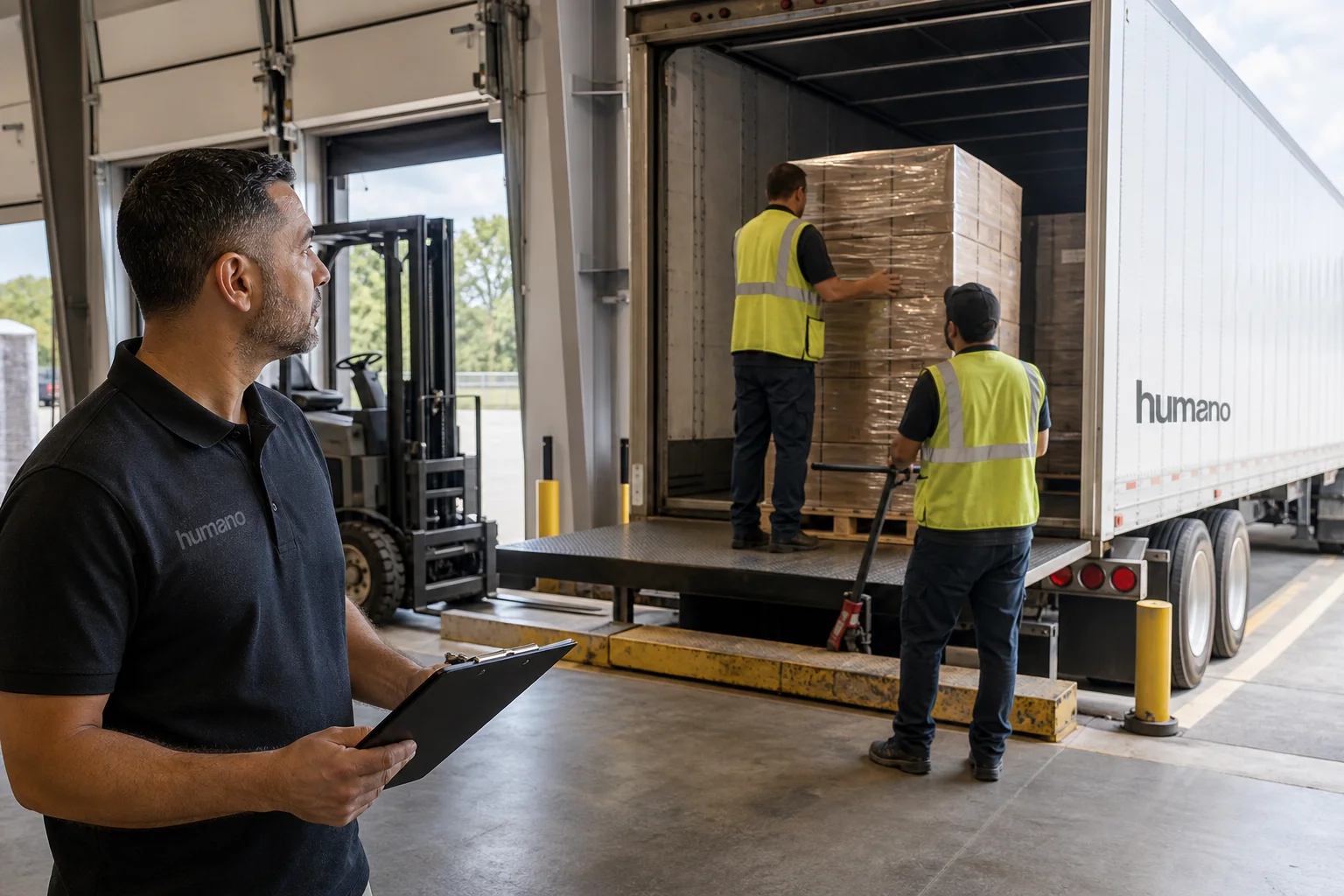
How Do You Know When a Retail DC Should Switch to a Managed Crew Model?
For most retail DCs, the decision on running your own dock crew vs an outsourced managed crew comes down to how predictable your volume is. A few signals point toward switching: chronic understaffing that forces overtime every week, rising workers' comp claims or premiums, or a new contract or seasonal swing that needs more hands than your current team can absorb. For example, a DC that normally runs six people on the dock but needs fourteen for eight weeks around a peak season doesn't need six new permanent hires, it needs a crew that can flex.
What Should You Look for in a Managed Dock Crew Provider?
Look for a documented safety record and training program, proof of workers' comp and general liability coverage, on-site supervision (not just labor drop-off), experience with your specific work, floor-loaded containers, palletized freight, or Warehouse Labor support, and a labor pool deep enough in your market to cover call-outs without missing a shift. The best providers will walk your dock with you before quoting, not just send a headcount estimate over email.
Switching Back, Liability, and Union Questions for Outsourced Dock Crews
Can a Retail DC Switch Back to an In-House Crew After Outsourcing?
Usually, yes. Most managed crew contracts include a notice period rather than a lock-in, and a good provider will help transition duties back to an in-house team if your volume or strategy changes. Review the contract's termination and transition terms before signing so this path stays open.
Who Is Liable for Injuries When Using an Outsourced Dock Crew?
In most managed crew arrangements, the provider's workers' comp and general liability policies cover their own employees while performing dock work under the services agreement, and the contract usually includes indemnification language. Liability terms vary by contract, though, so this is worth a direct legal review with your attorney before signing, not an assumption.
Does Outsourcing Dock Labor Work With a Unionized Warehouse?
Often, yes, but it depends on your collective bargaining agreement. Some CBAs include work-preservation or scope-of-work clauses that limit which tasks can move to outside labor. Before contracting a managed crew at a unionized facility, review the current CBA language with labor counsel and loop in your union representative and management team early, rather than after a contract is signed.
How Fast Can a Managed Crew Provider Staff a Retail DC?
This is where outsourcing usually wins outright. A reputable managed crew provider can often place a trained crew on your dock within days, since the labor pool, training, and supervision structure already exist. Hiring an in-house crew from scratch, background checks, safety training, and onboarding, typically takes several weeks at minimum, longer if the local labor market is tight.
Frequently Asked Questions
Is running your own dock crew cheaper than outsourcing?
It depends on volume stability. A steady, year-round dock usually costs less staffed in-house once training and turnover settle down. A seasonal or unpredictable dock usually costs less outsourced, since you aren't paying to keep a full crew on payroll during slow weeks.
How long does it take to outsource dock labor at a retail DC?
Many managed crew providers can start a trained crew within days of signing, compared to several weeks for an in-house hiring cycle. Exact timing depends on crew size, your local labor supply, and how much lead time the provider needs to source and train workers.
What happens to workers' comp claims if we outsource our dock crew?
Claims from outsourced crew members typically run against the provider's policy, not yours, since they remain the provider's employees while working your dock. Confirm this in writing with a certificate of insurance and the contract's indemnification clause rather than assuming it's automatically covered.
Can a managed crew work alongside our current in-house team?
Yes, a hybrid model is common in retail distribution. Many DCs keep a core in-house crew for steady-state volume and bring in a managed crew for peak weeks, new contracts, or coverage gaps, rather than choosing one model exclusively for the whole operation.
Get a Managed Dock Crew Quote for Your Retail DC
If chronic understaffing, rising comp costs, or an upcoming peak season has your team asking these questions, a conversation with a staffing partner is a low-risk next step. Contact Humano to talk through what your dock actually needs.