
express unload vs humano: comparing devanning crews for port-adjacent dcs
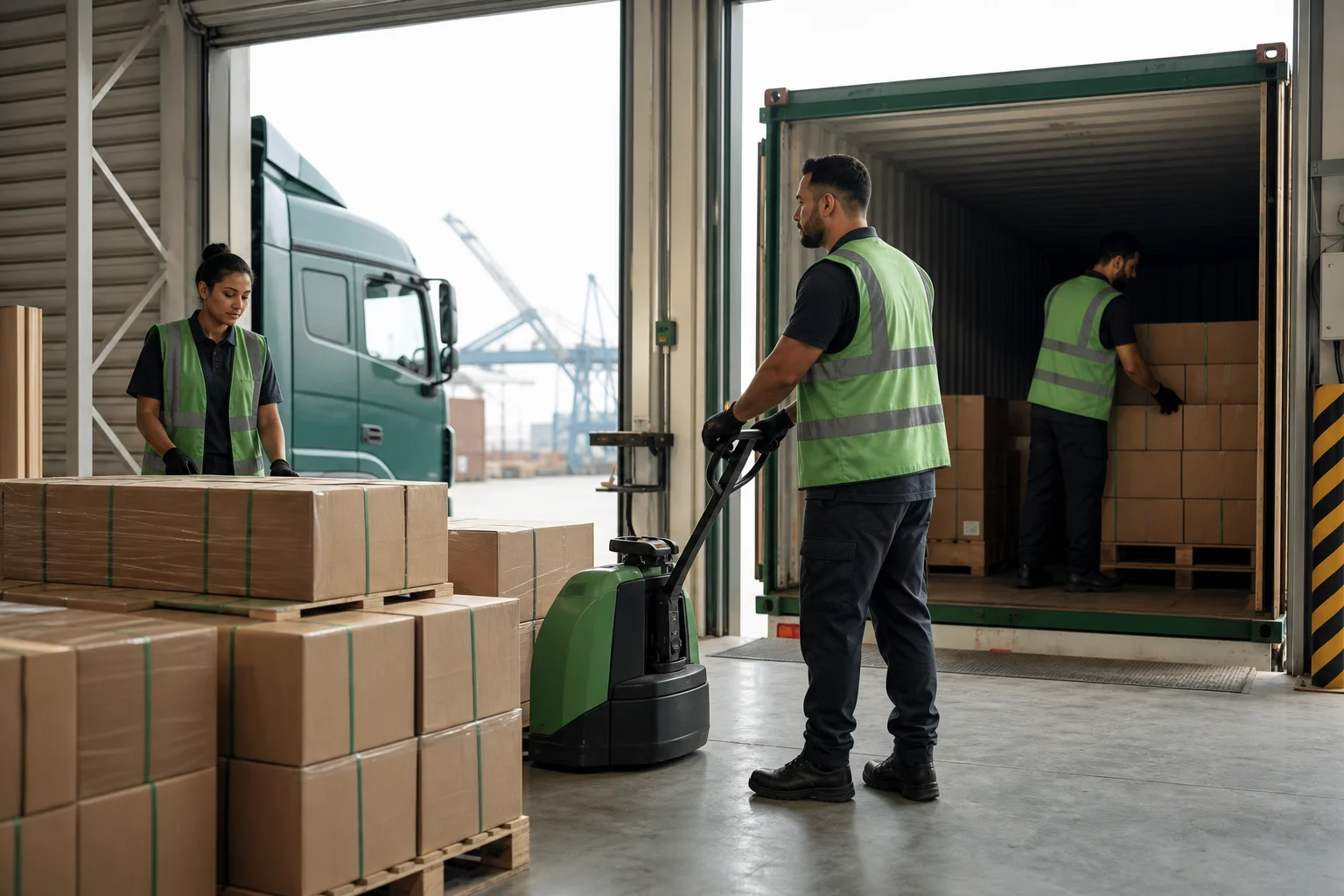
Express Unload vs Humano comes down to three things: pricing model, port coverage, and how consistently the same freight handlers show up at your dock. Humano runs dedicated Container Unloaders crews built for port-adjacent DCs, while devanning brokers vary in structure from one booking to the next. This guide compares turnaround, contracts, and true cost before you choose a provider.
By Humano Team, Logistics & Lumper Specialists
What's the Difference Between Express Unload and Humano for Container Devanning?
A devanning crew provides an unloading service at the dock: pulling cartons or pallets from an ocean or intermodal container, sorting by SKU, and staging goods for putaway. That baseline task is what both Express Unload and Humano compete to provide, so the real differences show up in structure, not the task list. Humano assigns dedicated freight handlers through its Logistic Lumper Services, the same team returning to your dock visit after visit instead of relearning your product mix and safety requirements every shift. Ask any devanning provider, Express Unload included, whether the crew that shows up is a consistent team or a rotating pool pulled from a general labor roster; that single question predicts more about reliability than anything on a rate sheet. It also tells you whether the provider is built around your business or around filling open shifts.
Express Unload vs Humano: How Pricing Models Compare for Devanning Crews
Devanning pricing generally runs on one of two models: per-unit, a flat rate per pallet, carton, or container processed, or hourly, billed per person per hour on the dock. Per-unit pricing gives a DC a predictable line item regardless of how long a container takes to clear, which matters when container density and load pattern change week to week. Hourly billing can look cheaper on the surface but creates a built-in misalignment: the slower the crew works, the more the invoice grows, and idle time between containers still bills. A closer look at lumper crew cost comparison data shows how turnover, retraining, and inconsistent pallet counts add hidden costs that a per-hour rate never shows on its own line. Neither Express Unload nor Humano publishes a public rate card, so the only reliable way to compare true cost is a written quote from each provider based on your actual container volume, dock hours, and product type.
Which Offers Faster Devanning Turnaround at Port-Adjacent DCs?
Turnaround time depends on crew size, whether the container is floor-loaded or palletized, dock scheduling, and how close the provider's labor pool sits to the port. A faster clear time drives down detention and demurrage exposure, which is often the biggest hidden cost in a port-adjacent DC's supply chain budget, bigger than the devanning invoice itself. Rather than taking a marketing claim at face value, ask each provider, Express Unload and Humano alike, for an average container-to-dock-clear time on your specific product type, and ask what backup crew capacity exists when a peak-season surge puts multiple containers on the same dock schedule. A provider that cannot answer with real operations data is asking you to take turnaround on faith, and a DC sitting on demurrage clock cannot afford that bet.
Do Express Unload and Humano Cover the Same Port Markets and Metro Areas?
Port coverage varies by provider and can expand or contract as a company grows its crew base, so treat any coverage map as a snapshot rather than a permanent fact. Humano's footprint centers on port-adjacent logistics hubs, where dedicated freight handlers can reach a DC's dock without long deadhead travel eating into the crew's shift. Before assuming either company serves your metro, confirm current coverage directly with the provider rather than relying on a directory listing that may be outdated. A DC that operates in more than one port market should also ask whether the same dedicated crew teams work at every location, since a provider that is strong in one metro is not automatically as deep in another, and a thin bench in a secondary market shows up fastest during peak season.
How Do Crew Training, Safety, and Reliability Standards Compare?
Dock safety is not optional at a port-adjacent DC, and it is one of the clearest ways to separate a professional devanning crew from a cheap one. Freight handlers should complete dock and container safety orientation, understand proper lifting and pallet jack operation, and know container ventilation and load-shift hazards before their first shift, standards consistent with general OSHA warehouse safety guidance. Reliability matters just as much: ask each provider about no-call-no-show rates, backup staffing when a scheduled team member is out, and whether crews carry their own insurance and bonding.
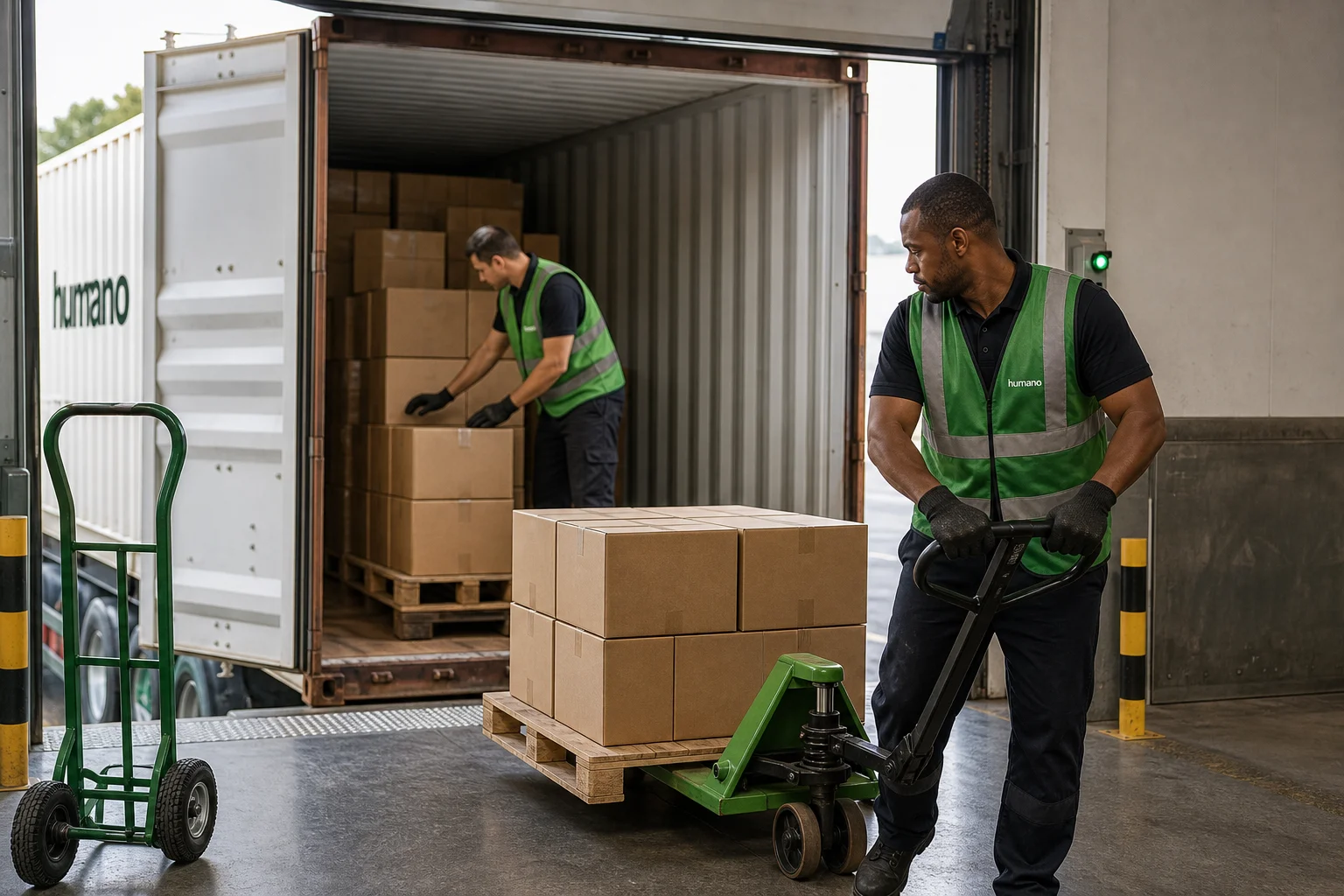
Crews that arrive with their own pallet jacks, dollies, and carts also tend to run a tighter, safer process, since the DC is not left supplying equipment on the fly mid-shift. When comparing Express Unload and Humano on this front, ask for performance history and references from DCs with a similar container volume, and hold both companies to the same list of safety and reliability questions rather than accepting a general reputation as proof.
Annual Devanning Contracts vs One-Off Jobs: Which Fits Your DC?
A high-volume port-adjacent DC that unloads containers on a predictable weekly schedule usually benefits most from a dedicated annual crew: the same team learns your dock, pricing is locked in, and scheduling gets priority over one-off bookings during peak season. A DC with occasional overflow, a single seasonal surge, or an irregular container schedule may be better served by an on-demand booking instead of committing to a contract it will not fully use. The Express Unload vs Humano decision often comes down to which model your DC's actual volume supports, not which company markets itself best. Whichever route you choose, ask about minimum commitment length, notice periods for changes, and whether the provider guarantees crew availability during high season to ensure consistent coverage, or simply prioritizes whoever books first. Both models carry real benefits and tradeoffs, so match the contract structure to your container volume rather than the other way around.
Frequently Asked Questions
What should a port-adjacent DC ask before choosing a devanning crew provider?
Ask about per-unit versus hourly pricing, average container turnaround time, whether the crew is dedicated or rotating, safety training and insurance coverage, and backup staffing during peak season. Get pricing and service terms in writing before a container arrives at the dock, since verbal quotes tend to shift once the actual load and product mix are on hand.
Can a DC switch devanning providers without disrupting operations?
Yes, in most cases, with a planned transition. Run the new crew alongside the outgoing provider for one cycle if possible, confirm the new team's safety orientation is complete before go-live, and align the old contract's notice period with the new provider's start date so there is no coverage gap on the dock.
Is Express Unload or Humano better for high-volume container unloading?
It depends on your DC's volume consistency and how much you value crew continuity. A dedicated freight handler team tends to perform best for DCs with steady, predictable container flow, while an on-demand model may suit irregular volume better. Request a proposal from each provider based on your actual monthly container count rather than relying on general marketing claims.
Does Humano serve the same port cities as Express Unload?
Coverage varies by provider and changes as crew bases grow, so the most reliable way to confirm is to ask directly rather than relying on a website's service area list, which can lag behind actual crew coverage. Humano's dedicated crews are built around port-adjacent logistics hubs; confirm current coverage for your specific metro before comparing quotes.
Get a Devanning Crew Quote From Humano
A dedicated, safety-trained crew is the difference between a devanning partner that stays predictable and one that creates surprises every peak season. Contact Humano to learn what a dedicated freight handler team would cost for your business's specific container volume.